‘Transit of Venus: 1631 to the present’ by Dr Nick Lomb
In 2012, on 6 June from Australia (5 June from some other countries) people will have the opportunity to witness one of the most famous of astronomical events, a rare transit of Venus. This event takes place when, as seen from Earth, Venus crosses in front of the Sun. It occurs in pairs eight years apart and there is approximately one pair during each century. The transit of 2012 follows the one in 2004 and will be the last chance in our lifetime to see a transit for there will not be another until 2117.
The Observatory’s former long–serving Curator of Astronomy, Dr Nick Lomb, has prepared a book (available for purchase online or at Sydney Observatory, Powerhouse Museum and good bookshops) that is the essential companion to the 2012 transit. It provides detailed information on when, where and how to observe this exciting event. More importantly, it explains its significance and relates the stories of the exciting and adventurous journeys undertaken by astronomers to observe transits in past centuries. One of these was that of Captain James Cook to observe the transit of 1769 from Tahiti, a journey that led to the European settlement of Australia.
Observations of Venus moving in front of the disc of the Sun in 1874, by Henry Chamberlain Russell, the director of Sydney Observatory. Powerhouse Museum Research Library
The book is extensively illustrated with rarely seen archival images of earlier transits plus stunning photographs from the 2004 transit. These are complemented by modern NASA images of Venus.
Jennifer Byrne, presenter of the ABC-TV program, ‘First Tuesday Book Club’, gave the book to her father for Christmas.
Description
The transit of Venus across the Sun in June 2012 will be the last chance in our lifetime to see this rare planetary alignment that has been so important in history.
Rich in historical detail and cutting edge science, along with practical information on how and when to view the transit, ‘Transit of Venus’ is the must-have companion to this extraordinary astronomical event.
An engraving of Captain James Cook who observed the 1769 transit of Venus from Tahiti. Brian Greig collection.
From Johannes Kepler’s first prediction of a transit of Venus in 1631, to Captain Cook’s 1769 transit expedition to Tahiti (which led to the European settlement of Australia), and on to our 21st-century quest to find distant Earth-like planets using the transit method, astronomer Nick Lomb takes us on a thrilling journey of exploration and adventure.
Endorsements
‘This is exactly what a great astronomy book should be: comprehensive, highly informative yet very accessible for lay readers, and beautifully illustrated to showcase the glory of the heavens.’
– Dr Kevin Fewster, Director, National Maritime Museum and Royal Observatory, Greenwich, UK
‘With this superb and lavishly illustrated book, astronomer Nick Lomb has provided the complete guide to Venus transits past and present. Essential reading for everyone.’ – Dr Professor Fred Watson AM, Astronomer-in-Charge, Australian Astronomical Observatory, Coonabarabran
‘Everyone should see the transit of Venus in June 2012,since it is the last chance until 2117. And everyone should read Nick Lomb’s fascinating book, which beautifully and dramatically highlights both the history and scientific importance of the transit of Venus.’— Professor Jay M. Pasachoff, Vice Chair, Historical Astronomy Division of the American Astronomical Society
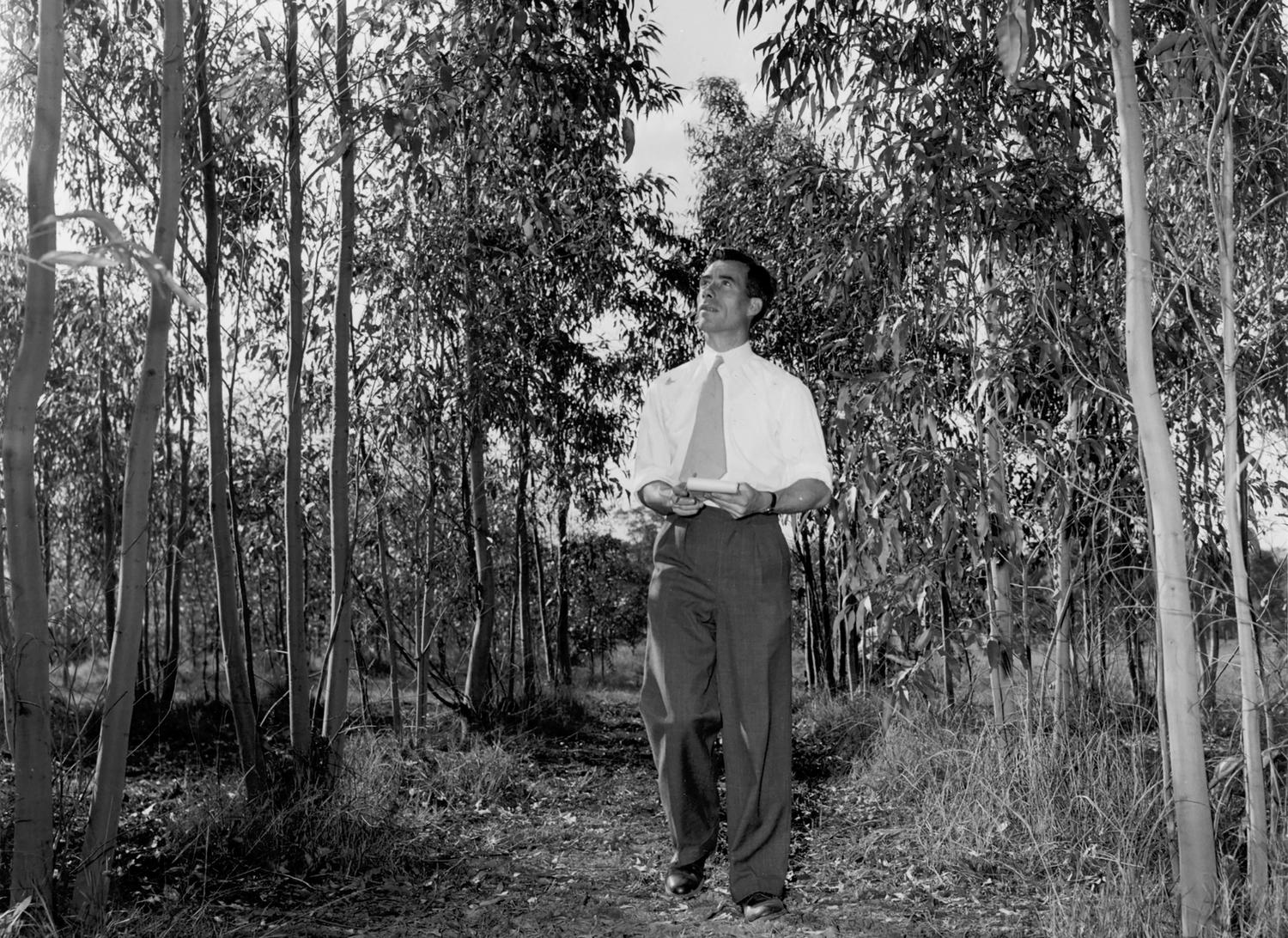
Nick Lomb at the site in Goulburn from where a Sydney Observatory team observed the 1874 transit
About the author
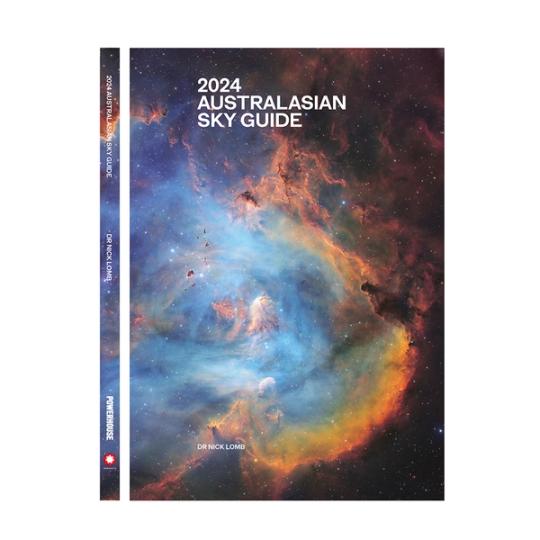
Dr Nick Lomb was Curator of Astronomy at Sydney Observatory for thirty years (1979-2009). He continues to work as a consultant astronomer for Sydney’s Powerhouse Museum and for Sydney Observatory. He is the author of the ‘Australasian Sky Guide’, published annually by the Powerhouse Museum, as well as several books on astronomy including ‘Astronomy for the Southern Sky’ (1986) and ‘Observer & Observed: A pictorial history of Sydney Observatory and Observatory Hill’ (2001). He led Sydney Observatory’s observations and celebrations of the transit of Venus in 2004.
Video of the book launch
‘Transit of Venus: 1631 to the present’ was launched at Sydney Observatory by science broadcaster, Robyn Williams, on 24 November 2011.
The video quality is uneven (shot on a hand-held compact camera) – but we thought the launch was worth sharing anyway for the scintillating quality of the speeches. Where else will you learn how a distinctive moustache can be an aid in picture research?
Scroll down for a transcript of the video.
Reviews/articles
Journal of the British Astronomical Association
“This is a lovely book – suitable as a present, a souvenir, for coffee table or library shelf. Popular astronomy at its best.” – Mike Frost, Director of the BAA Historical Section
January 2012
‘Cosmos’ magazine
“Author Nick Lomb takes readers through the science of these events; from Johannes Kepler’s first prediction of the transit in 1631 to how Venus is helping us search for Earth-like planets in other solar systems today.” – Laura Boness
November 2011
‘The Australian’ newspaper
“Like all Lomb’s books, worth every penny.” – Leigh Dayton
26 November 2011
ABC Radio National Breakfast
Fran Kelly interviews Dr Nick Lomb.
Thursday 24 November 2011
‘Transit of Venus’ website (Netherlands),
“Having a considerable number of books on the transit of Venus on my bookshelf, it’s hard to surprise or impress me. Nick did.” – Steven van Roode
3 November 2011
‘Sydney Morning Herald’ newspaper
‘Twice in a lifetime’
“With the next one fast approaching, he tells the many tales of triumph, misadventure and even death for those who made witnessing a transit their scientific quest.” – Deborah Smith
29 October 2011
‘Ice in space’ website
“Extremely well researched…. presented in a way that any layperson can understand…. fantastic photos…. The stories!….” – Mike Salway
25 October 2011
Details
‘Transit of Venus: 1631 to the present’
By Nick Lomb
Published November 2011
ISBN 9781742232690
NewSouth & Powerhouse Museum, 232pp, HB, 230 x 230mm
RRP AU$49.95
110 images, full colour throughout
Table of contents
Introduction
A spot of unusual magnitude: 1639
Frozen plains and tropical seas: 1761
Venus of the South Seas: 1769
Capturing the transit: 1874 and 1882
Space-age transit: 2004
Observing the 2012 transit
Glossary
Bibliography
Acknowledgements
Index
Errata at bottom of page
Nick Lomb’s beautifully designed and illustrated book brings the history and importance of the transit of Venus alive with his engaging and lively text. You can buy the book online or at Sydney Observatory, Powerhouse Museum or good bookshops.
The author, Dr Nick Lomb, and well known science journalist, Robyn Williams, who launched the ‘Transit of Venus’ book at Sydney Observatory on 24 November 2011. Photos by Robert Simons
The author, Dr Nick Lomb, and Toner Stevenson, Manager of Sydney Observatory, at ‘Transit of Venus’ book launch, Sydney Observatory, 24 November 2011. Photos by Robert Simons
Transcript of video of ‘Transit of Venus’ book launch
Transcript – ‘Transit of Venus’ book launch, Thursday 24 November 2011
TONER STEVENSON, Manager, Sydney Observatory:
Good evening and welcome. It’s my very great pleasure to welcome Robyn Williams here, because I was absolutely thrilled when he agreed to be the official launcher of this book
He’s so well known to everyone. He’s certainly made his mark in our country, and I think we own Robyn Williams now.
In reading some of your past, Robyn, I have to say: ‘The Goodies’, ‘Monty Python’, ‘Dr Who’ – I think we see some of that still come through in the way you entertain and engage us.
As a past President of the Australian Museum Trust, Chairman of the Commission for the Future, President of the Australian Science Communicators, and being proclaimed a National Living Treasure. I think that shows, very much, that humour, acting, science go together amazingly well.
And Robyn has written more than ten books, and all of that, to me, came together with the perfect person to launch ‘Transit of Venus’. It only happens on occasion. There won’t be another chance to launch this book for 105 years
So it is with very great pleasure that I’d like to hand over to Robyn. Thank you.
ROBYN WILLIAMS:
Thank you, Toner. To put all that into perspective, Paul WIllis, now the Director of the RiAus [Royal Institution of Australia] calls me a National Living Fossil.
I’m now going to read some excerpts from ‘The Transit of Venus.’
“By nightfall the headlines would be reporting devastation. It was simply that the sky on a shadeless day suddenly lowered itself like an awning.
“Purple silence petrified the limbs of trees and stood crops upright in the fields like hair on end.
“Whatever there was of fresh white paint sprang out of downs or dunes or lacerated a roadside with a streak of fencing. This occurred shortly after midday on a summer Monday in the south of England.
“As late as the following morning, small paragraphs would even appear in newspapers having space to fill due to a hiatus in elections, fiendish crimes and the Korean War.
“Unroofed houses and stripped orchards being given in numbers and acreage with only lastly, briefly, the mention of a body, where a bridge was swept away.”
Well, of course, that is not Nick’s ‘Transit of Venus’ but Shirley Hazzard’s, written in 1980.
But that too, in those opening paragraphs, has the dire threat. Something ominous: a deluge; a storm.
She goes on: “Farmers moved methodically, leading animals or propelling machines to shelter. Beyond the horizon, provincial streets went frantic at the first drops. Wipers wagged on windshields and people also charged and dodged to and fro.
Packages were bunged inside coat fronts. Newspapers upturned on new perms. A dog raced through a cathedral. Children ran in thrilling from playgrounds. Windows thudded. Doors slammed. Housewives were rushing and crying out, ‘My washing!’. And a sudden strike of light split Earth from sky.”
As you can see – it’s happening now. Venus can kill.
Actually the ‘Transit of Venus’ written by Shirley Hazzard, a classic, is a story of relationships. Not necessarily happy ones. And one person of the coupledom which isn’t quite a coupledom is a patient astronomer waiting for his love to be requited. And it isn’t.
He is the kind and the patient. The one who solemnly waits. And is done without. I mean astronomers are like that, aren’t they? It’s very sad.
They’re such nice people. They’re so diligent. They stay up late at night – but not for that.
[Laughter]
And in that novel, which you’ve probably read, and is probably worth reading again – just to get that kind of poignancy.
Now, if it weren’t for the transit of Venus, we’d all be sitting here talking French or Portuguese, or something. Because, if you think about it, it’s quite extraordinary that Captain Cook should have gone out in 1769 all that way from England to look up at the sky.
They were diligent then, weren’t they? I mean, crossing the world in that tiny boat which was no bigger than this tent. Smaller, in fact. And finding his way. And doing that piece of observing which, as Nick says in the book, they thought they’d botched somehow. But in fact they’d got it quite well. Measurements taken very nicely. And certainly as good as the other people who had a go.
But think about Venus itself. Venus is a wonderful word. The goddess of love. But what an actual planet. If you were to stand there for five minutes in boiling acid. How long would you last? Ten seconds? Five seconds?
And you look up at the sky, on the other hand, on many an early evening and see that bright light amongst the first romantic signs of something happening that precedes maybe a romantic thought.
So there it is: it should be the ‘transit of Hades’.
[Laughter]
Partly because if you look around at our present politics and our present concerns about science, and you think of Carl Sagan, and you think of the measurements done of why that atmosphere on Venus which should have been a planet a bit like ours with gardens of Eden and lovely brooks and all sorts of wild animals – you know, somehow, careening and being terribly sweet with each other.
Instead you’ve got this bare rock and this filthy temperature of 400 degrees. And Carl Sagan tried to work out why it was so unbelievably hot. And worked out that it was the density of the CO2 as an ominous warning to us if we followed that path.
Not that there’d been a civilization on Venus, as he said, that had driven too many cars and burned too much coal. No, they’d got their CO2 their own way. But it was those experiments done by Sagan and others to try to work out what was going on on Venus and why it was so unbelievably hot and hostile that led us to understand what the greenhouse effect was like here on Earth and perhaps the portent of what was going to happen.
And many people looked at Venus, like David Allen, who is now well remembered by some of us as a great friend, and a brilliant astronomer, looking, peering, through those clouds and being able to see what it was actually like on Venus. Because you couldn’t actually look through on a telescope to see what was going on down there. And people like David Allen who lived in Sydney for so long and died some time ago did that original work.
So there we are. There’s a planet which in some ways is romantic and in some ways is ominous, and a transit of Hades is something that often crosses my mind.
Let me have another reading from, in fact, this time, Nick’s book. And this is him speaking now:
One of the best known comments about the transit of Venus was made in August 1882 by US Naval Observatory Astronomer, William Harkness who observed the 1874 transit from Hobart, Australia.
As we approach the 2012 transit of Venus, we too might like to think about what the world will be like for our descendants when the next transit takes place in the northern winter and southern summer of 2117.
And this is the quotation:
“Transits of Venus usually occur in pairs, the two transits of a pair being separated by only eight years. But between the nearest transits of consecutive pairs, more than a century elapses. We’re now on the eve of the second transit of a pair after which there will be no other till the 21st century of our era has dawned upon the Earth, and the June flowers are blooming in 2004.
“When the last transit season occurred, the intellectual world was awakening from the slumber of ages and that wondrous scientific activity which has led to our present advanced knowledge was just beginning.
“What will be the state of science when the next transit season arrives, God only knows.
“Not even our children’s children will live to take part in the astronomy of that day.
“As for ourselves, we’ll have to do with the present.”
So he was writing about now. What it was like then, looking forward to the 21st century, now. And, if you look at this book, which, Nick, it’s a treasure, it’s beautiful.
It’s got the pictures, but it’s also got the people. And it’s got some celebration of each time there was a transit.
And it’s got a celebration of people like Kepler, Halley, and Charles Todd. By coincidence I have him on the radio next week; not him himself, but talking about how they got the telegraph across Australia. And John Tebbutt. Do you remember when you used to be able to have hundred dollar notes. Haven’t seen those for a while. But there was John Tebbutt. We used to have lots of scientists on our notes.
But there you have the human story of what it was like marking the transits of Venus.
So, for me, it’s a mixed message. Its ominous and something stark. It’s something that, on the other hand, can be a celebration and romantic and even tremendous fun. And if you look at the actual date, OK it’s June 6th in some parts of the world but June 5th in others, which by a wonderful coincidence is International Environment Day.
And so you have a great number of people who’ve got together led by a couple of artists and filmmakers here in Sydney, Lynnette Woolworth being one of then. And on that day, June 5th, they’re going to link all sorts of astronomical as well as environmental organisations.
They’re going to look up the sky celebrated through planetaria which are going to be linked up and that will enable a whole number of communities to be looking at the same thing and enjoying the same revelations. But they’ll also be looking down at the Barrier Reef and, in a funny way, remembering Captain Cook, and how he came to the South Pacific, and look at the ocean and what it meant as well as the heavens.
And so there will be something called ‘Rekindling Venus’, which is a film, which is a piece of music, and which will be, we hope, who knows, be a world-wide television hookup like we did in 1987 with a chap called Attenborough who hosted it in London and we had 15 nations linked live. And it was a big deal then, in 1987. I actually sat, suitably, in Tidbinbilla, which is both a nature reserve and a tracking station.
And I was supposed to sit there and show kangaroos behind me. And it came pouring with rain, and they all pissed off very sensibly and got some nice shelter.
And David came to me and asked, “What’s it like?” and I said, “You should have been here yesterday.” Because on that occasion, for once, it was not raining.
But that’s the kind of event we hope to have on June 5th, June 6th, around the world. We, of course, have got the pride of place to look at what happens. And, OK, if there’s a bit of cloud, we can always nip somewhere where there isn’t. And, who knows, yes, there will be observations from the sky as well. So, ‘Rekindling Venus’ is going to be the event that celebrates it.
And I really think that we should prepare over the next few months and get lots of organisations, including our museums, the Powerhouse certainly, some of the others. We don’t have a planetarium in Sydney but there is discussion at having a portable one – which is like a great big tent; a circular thing where we can actually look at the heavens that way.
I think it’s a wonderful thing you’ve done, just in time. I think a few months later and I’d have been slightly worried.
But you need to get there attention. You spoke about it on breakfast this morning. They allowed you at least, well, eight minutes which is terribly nice of them. But I think the book is fantastic.
It’s the sort of thing that you can give to all children, teenagers, older people, and they will be able to get some sort of proper preparation for a wonderful event.
Congratulations, Nick, and let’s consider it launched.
Thankyou.
DR NICK LOMB:
Thank you very much, Robyn, for those very nice words. And thank you very much for doing the official launch and for coming along this evening. It’s very much appreciated.
Good evening, ladies and gentlemen. I’d like to start off with some good news, with an apology and a few, just a very few acknowledgements before I get on to what I really want to say.
Now you all know – starting with the good news – you all know there is going to be a transit of Venus on 6th June next year. And probably most of you also know that Australia is one of the best places in the world to view the transit in 2012. From the eastern part of Australia it’s visible from beginning to end. So it’s a very nice place to see the transit.
There will not be another transit, as has been mentioned by Toner and by Robyn, for another 105 years and 6 months.
I know that some of you have been having sleepless nights, worrying about whether your unborn descendants in the 22nd century will be able to see the transit of Venus from Sydney.
I know that some of you are worried about whether they would have to take the time and the trouble to take the 30 minute hyper-flight to Los Angeles. Or maybe take a really long flight, a 40 minute flight to London to see the transit. So I’ve got good news. Sydney will be one of the best places in the world. In fact it will be better on 11th December 2117 than in 2012 because it’s summer and the Sun will be higher in the sky.
As you might see with that graphic, you can see Venus down the bottom there it’s a little bit hard to see – I know some of you have to strain. Well, unfortunately for some of the time next year, that will be the case. Because Venus will appear to cross the lower half of the Sun. But in 2117, your future 22nd century descendants will have no problem.
Now, the apology. Some of you might know that I worked here at Sydney Observatory for many decades. But for the past two years I’ve lived in Melbourne. Whenever I come up to Sydney, it’s always a great pleasure, especially coming up to Sydney Observatory, it’s like coming back home, coming to the Observatory.
Whenever I come up, I try and pack very light, not putting too much in my luggage. Well, unfortunately, on this occasion something seems to have gone wrong, and I seem to have brought the Melbourne weather with me.
And I do apologise – but I promise that when I come up in June for the transit, I’ll try and pack very carefully so the Melbourne weather doesn’t come up and we’ll have beautiful Sydney skies and be able to see the transit.
Now, I just want to acknowledge a couple of people. A lot of people were very involved in getting the book from its beginning to its published form. And to its, I think, a very nice published form – and they’re all acknowledged in the book, so I won’t mention them.
But I’d just like to highlight just two people. One of them is the editor of the book. He really brought the book together. He focussed my attention and didn’t let me diverge to different places or tell side stories. It had to be focussed on the transit of Venus, and I think it really improved the book. I only met John Mapps [NICK - IS THIS SPELLING CORRECT??] here this evening. And I’d like to thank him for his assistance.
[Applause]
And the other person I’d like to acknowledge is Brian Greig, who’s sitting at the very back there. Brian Greig is the orrery maker. When you go inside the Observatory, there are three beautiful orreries that Brian has made. And Brian has got a very extensive collection of historical material on astronomy, and he very kindly let me to use quite a number of his images in the book. And they really add to the book. And not only that, Brian came up from Melbourne especially for this launch. Thank you.
[Applause]
Now I’d like to actually get to what I really wanted to tell you about – is to tell you a little bit about the images in the book.
Goodbye to those people who are going to see – ‘Mary Poppins’, I think, that’s where they’re going. Where do astronomers spend their time?
So what I’d like to do is tell you a little bit about some of the images. Each image in the book has its own story. So I just picked out a couple of the images.
Plus I’ll show you some of the images from Henry Chamberlain Russell. Russell was Director of the Observatory from 1870 to 1905. So during the period of the transit of Venus. And he arranged observing stations around New South Wales in case the weather was not suitable in Sydney.
And then after the transit, he pulled together all the observations of the people, and all the images that people had drawn and recorded of the transit. And he published a very beautiful book in 1892 on the transit of Venus.
Now, that book, you’ll see images from that book in every article, every book anybody’s published in the last hundred years on the transit of Venus – they all have images from Russell.
But what we have in the new ‘Transit of Venus’ book is the originals, the original water colours that he used. So I’ll show you a few of those.
Now, this photograph is the only existing photograph, at least, as far as anybody knows of the transit of Venus, photographed from Melbourne in 1874.
Somebody in Melbourne, a very knowledgeable person, a man called Barry Clark, put me in the direction of this image. And it was credited to PPARC, Particle Physics and Astronomy Research Council in the UK. So once he told me about it, I could track it down.
Now of course as the astronomers and scientists in the audience know, PPARC no longer exists. It has been replaced by the Science and Technology Facilities Council.
So I had to contact the Science and Technology Facilities Council. I didn’t have much hope when contacting them. I mean, they look after million dollar projects. Multi-million dollar telescopes. Nuclear experiments – extremely expensive experiments. The latest scientific developments. So how would anybody know this old photograph taken over 130 years ago. So first I found an email for their press office, and the email bounced, which was not a good sign.
Eventually I tracked down the name of the External Communication Manager, and I sent off an email. I didn’t get a reply for a week or so. Eventually I got a very nice email back apologising that the person had been on holidays. But she said, just as I expected, that she knows nothing about the image – probably never belonged to PPARC in the first place. But she’ll make enquiries just on the off chance that anybody in the office knows about it.
So I thought that’s about it. But I got an email about it the next day. Not only did somebody in the office know about it – they actually had the photographic plate sitting on their desk.
To me it was like winning the lottery – the probabilities involved.
Apparently it had just been borrowed by a museum in Oxford and had just been returned, and it was sitting on somebody’s desk in the office. So I managed to get a scan of the image and also permission to use it.
And what’s nice, though you may not be able to pick it out, it says ‘Melbourne’ at the top, it’s been scratched in there. Also the number ’11′ scratched in there.
When I first started working here at Sydney Observatory, like my colleague, David King, who’s somewhere around the place, we were still taking photographs of the sky. And the first thing that you do when you load up the photograph into the plate holder and telescope, is you scratch a number on it just so you can keep a record of what that plate was and when it was photographed.
The tricky bit was finding out which was the emulsion side where you can scratch, and not the glass side.
[BREAK IN RECORDING]
2004 – it’s a very spectacular image – you probably can’t quite see how spectacular it is because there’s just a bit too much light around it – not enough contrast. But it’s a very spectacular image of the 2004 transit of Venus. And I wanted to have some modern images of the 2004 transit, as did the publishers. And the publishers were very keen on this particular image.
No problem. All you have to do – it was taken by a man called Denis Langlois – is find Denis Langlois.
Unfortunately that didn’t turn out to be very easy. It seems to be a very common French name – the equivalent of John Brown in English-speaking countries.
So, there are hundreds of Denis Langlois that I found through internet searches.
After a very long and difficult search, I finally found the website of a small astronomy club in Quebec, Canada. Now the club itself doesn’t seem to exist any more. But they listed their members. And among the two dozen or so members, there was a Denis Langlois.
And there was even a web link to his astronomical photographs – but of course the web link was broken – so that didn’t help.
But what did help is that for their members they not only listed their names, they also had little photographs.
I could see from Denis Langlois’ photograph that he had a fairly distinctive moustache. That’s all I knew about him.
So the next step was looking through FaceBook. Again, hundreds of Dennis Langloises listed in FaceBook. But this astronomy club had been in Quebec, so I could focus on Quebec, and then look at those which had their photographs, and one of them did have a distinctive moustache.
And hopefully that was the right person, and I sent him an email – and he wrote back and said, ‘Oui, c’est moi.’
And I thought after tracking him down, I could put ‘Sherlock’ as my middle name.
Now, unfortunately all this took place at the very last minute just before the book was sent to the printers and we had given up hope of finding him, so in the end, we found another even better picture which went on the particular page. So even though I found him, he missed out on being in the book.
Now coming to the publication by Henry Chamberlain Russell, as I said earlier. Russell published this very beautiful book on the transit of Venus. And as I relate in the book, it was actually controversial because he left out John Tebbutt. That didn’t give rise to good feelings between John Tebbutt and Sydney Observatory. That’s in the book
So, Russell published this very beautiful book. This is the published image. These are the originals. And that was one of the triggers for writing the book. I found before the 2004 transit the originals of the watercolours in the archives of Sydney Observatory.
So this is the published version. And this is Russell’s. And what this denotes – this is the Sun, and Venus leaving the Sun at the end of the transit in 1874 just slowly, and his observations as it left the Sun. Now with this one you can see – well, you may not be able to see it here but you can see it in the book – he actually denotes this thin line of bright light here – and that is Venus’s atmosphere. And here it is again a few minutes later. It’s Venus’s atmosphere but there is a bright spot here near the pole of the planet. And then again, in this one, there is again a bright spot, and the spot is much brighter than the light scattered from the rest of the atmosphere of Venus.
Now, there was no explanation at the time, in 1874. There was no explanation until 2004 until satellite observations again found the same phenomenon of the bright polar spot as Venus was either entering or leaving the Sun.
And this is a satellite image taken in 2004 from the TRACE spacecraft and again you can see a brightening near one of the poles of Venus. So all of this is scattered light from Venus’s atmosphere but there is extra light near Venus’s poles.
And the people in 2004 could explain it but only using satellite information on the structure of Venus’s atmosphere – that Venus’s atmosphere around the poles is colder than the rest of the atmosphere. The clouds are a little bit lower and allow more light to be scattered towards the Earth.
So this observation by Russell back in 1874 actually tells us some very deep information about the structure of Venus’s atmosphere though they had no way of knowing that.
And the people who worked this out on the basis of the 2004 observations, refer back to Russell.
And I’ll just quickly show you a couple of other images from the book. This shows the dreaded ‘black spot’. This is a very famous phenomenon – or an infamous phenomenon – associated with the transit of Venus – this is the published one and this is the original.
This ligament of darkness which joins Venus to the edge of the Sun, and it’s a major nuisance because people were trying to time exactly when Venus was level with the edge of the Sun. And this darkness and fuzziness in between made the timing very difficult. And that’s part of the whole story of the transit of Venus.
And then this is just a final image. Mr Alfred Fairfax up in Woodford in the Blue Mountains, made this observation – again on your right is the published version; on the left is the original version.
He does say that he exaggerated the width of these spikes. So it probably is denoting structure in what he claimed to see in the light scattered by the atmosphere of Venus.
And this very spectacular image was actually used as the logo for Sydney Observatory for quite a number of years.
So if you’d like to know a little bit more about the transit, I hope you read the book and enjoy it. Thank you very much.
[Applause]
Transit of Venus errata
(Australian print edition published November 2011)
P21, insert caption:
A crescent Venus shining in daytime blue sky as seen through the circular field of view of a 25-centimetre Meade telescope. The photograph was taken using a small digital camera held to the telescope eyepiece with a shutter speed of 1/250 second and at ISO speed of 80. Photo: Nick Lomb
P23, insert caption:
An artist’s impression of the Gaia spacecraft that is scheduled to be launched in 2013 with the aim of measuring the distances to a billion stars. ESA
P29, first line of last para:
Remove the duplicated ‘the’
P39, 2nd column, change the last two lines to:
‘at about 96 million kilometres. Though this value
is too low and Horrocks’ method of estimation’
P111, 2nd column, last para, first line:
Change ‘begining’ to ‘beginning’
P216, GLOSSARY
Change ‘Bark-barque (ship)’ to ‘Bark (ship)’
P221, BIBLIOGRAPHY – Column 3, at bottom of page:
Lomb, N & George M, delete ‘in preparation,’
Inside back cover:
Change ‘Australian Sky Guide’ to ‘Australasian Sky Guide’