


Observations - news and views on astronomy from Sydney Observatory

Observing the transit from Down Under

Published by Nick Lomb on May 15, 2012 3 Comments

The position of the Sun and Venus from the beginning to the end of the transit as seen from Adelaide. Drawing Nick Lomb

From New Zealand and from most of Australia all the six and a half hours of the 2012 transit of Venus is visible, weather permitting. From Western Australia the transit will already be underway as the Sun rises. Just because the transit is visible from beginning to end does not, however, mean that it will be easy to see all of the transit, for June is winter in the Southern Hemisphere and the Sun will be low in the sky.

As the Sun will be low in the sky prior planning is essential to see the required phases of the transit. For those who just want to see Venus on the Sun the best time will be in the middle of the transit when Venus is well inside the Sun and relatively high in the sky. It will be possible to take interesting photos at that time, especially if there are wisps of cloud around to give a sense of drama.

The position of the Sun and Venus from the beginning to the end of the transit as seen from Melbourne. Drawing Nick Lomb

Historically the more interesting phenomena occur at the beginning of the transit (ingress) as Venus moves onto the disc of the Sun and at the end of the transit (egress) as Venus moves off the Sun. The infamous black drop effect is a dark linkage joining the dark silhouette of Venus to the inside edge of the Sun at about the time of second and third contacts – when Venus appears to touch the inside edge of the Sun at ingress and then at egress. For James Cook and many other observers of transit in past centuries this effect made it difficult to time the contacts as accurately as they wanted.

Today we know that this effect depends on factors such as the size and quality of the telescope being used and the atmospheric conditions. With the Sun low in the sky during ingress and/or egress as seen from Australia and New Zealand there is a strong likelihood that some observers will witness the black drop effect. That will be an interesting and exciting link to the past.

The position of the Sun and Venus from the beginning to the end of the transit as seen from Sydney. Drawing Nick Lomb

From Adelaide the transit begins about half an hour after sunrise so the Sun is very low in the sky at that time. For those who want to see the ingress, clouds permitting, then a suitable location with good sightlines towards the north-east has to be found in advance. As at that time of the year the Sun does not change position much from day to day, it is possible to check possible observing spots a few days before the transit with the actual Sun.

As we move eastwards across the continent to Melbourne, we find that the Sun is a little higher, but still low in the sky at ingress. Conversely, at egress the Sun is starting to move towards the horizon. Further east from Sydney, again the Sun appears a little higher in the sky at ingress, but still low enough to be easily blocked by trees or houses.

It should be noted that ingress takes about 18 minutes and egress the same time, so that there is almost six hours in between them. This gives time to move observing locations between ingress and egress, if necessary. Some people may even want to go to a third location for the in-between time with Venus fully on the Sun.

The position of the Sun and Venus from the beginning to the end of the transit as seen from Auckland, New Zealand. Drawing Nick Lomb

Moving across the Tasman to New Zealand we find that from Auckland the Sun is quite acceptably high at the beginning of the transit. However, as there is always a price to pay for any gain, the Sun is very close to the horizon at the end of the transit.

It is dangerous to look directly at the Sun as permanent eye damage can occur. In a subsequent post we will look at safe ways of viewing and photographing the Sun. Still unless you really know what you are doing, it is best to check if there are transit viewing sessions held by your local observatory, planetarium or amateur astronomical society and join them if you can.

Two views of AR11476 sunspot group at different times on 5 May 2012 (UT). Sketches and copyright Harry Roberts ©, all rights reserved

A big spot group emerging on the sun can host a wide range of amazing phenomena when viewed in hydrogen-alpha. While attention is mostly on any big flares there is a lot more to record that, over a two-hour session say, can be almost overwhelming. To show this let’s review the logs for May 5 and May 9, 2012.

May 5 summary: First views of AR11476 (476 for short) showed remarkable surges erupting from the group (Fig1). These arose as narrow jets near 476’s central spots and bent almost horizontal to travel north for 60Mm. There they turned upwards for a further 40Mm – in a flattened ‘S’ shape 100Mm in length! New surges joined the earlier ones and engaged in an “out there and back again” display of plasma physics. Several records of these were made and two are shown. Some surges were dark (in absorption) against the disc, while a smaller surge at the site was bright against the disc; some were both bright and dark against the disc: a rare display!

Flare M1.3: At 23:02 the surface (i.e. chromosphere) between the large preceding (p) spot (+9, 189) and the intermediate spots was lit-up in a scatter of brilliant points – a flare that, I later found, was a short-lived M1.3 that peaked just sixty seconds earlier as I switched from WL back to H-alpha (!).

White light: This showed the group stretched across 14 degrees of longitude from a large double (p) spot sited at +9, 189 (twenty degrees onto the disc) to a single following (f) spot at +10, 175, just six degrees from the sun’s limb. Smaller spots lay between the two. This was a very big group and contained ten spot umbrae. Helio freeware gave an aggregate area of 500 units – it was another northern ‘supergroup’ arising (cf 11429 in March)

Magnetic class: at this stage 476 was a relatively simple Beta-preceding group, with a well-defined separation of violet spots in front and red in the rear.

White light image of the whole Sun on 10 May 2012 at 0:13 UT. Photo and copyright Nick Lomb, all rights reserved

May 9 summary: From the fifth to the ninth the logs shows a slow increase in magnetic complexity. On the 7th (not shown) a single red polarity spot arose in the large “violet” (p) spot on the south side, promoting the entire group to Hale class Gamma-Delta (i.e. opposite polarities in a single penumbra: the most complex type).

Sunspot group AR11476 on 9 May 2012 (UT). Sketches and copyright Harry Roberts ©, all rights reserved

By the 9th this was well advanced (Fig3) with the huge and complex “violet” (p) spot sprouting “red” spots on its south side. As expected the group produced a burst of GOES Class M flares that peaked with three on the 9th.

The fit between the WL spots and the Mt Wilson magnetograph on 9 May 2012. © Regents of University of California

Fig 4 suggests the fit between the WL spots and Mt Wilson’s magnetograph of the ninth of May. The possible inversion line is marked in black with triangle arrows.

Flaring: No large flares were logged on the 9th during the two-hour session but three small one were. These are coloured in the figure; the brightest, a C1.5 at 22:45, is orange. All were small with only the latter being ‘bright’, and they arose near the “inversion line” cited – the boundary between opposite polarities in the group (outlined, Fig4).

Surges: as on the fifth surges were very active. The largest (Fig3, partly shown upper left) was 60Mm long and showed Doppler ‘blue-shift’ in approach at 21:30, presumably during retraction. On the west side of the (p) spot are several smaller surges (arrows in Fig) that emerged and retracted during the session. Some faint active region filaments were also present, captioned ‘arf’, but such filaments were unusually faint in Group 476. Why?

Summary: These two records of AR11476 are not meant to be a comprehensive history of the group. Developments in the huge preceding spot, as well as the fantastic surges of the fifth, will need to be treated in more detail (Ed willing!)

At 80 magnification the sun’s disc is a little larger than the eye-piece FOV, and the image is full of detail that changes moment by moment. Recording everything is at times impossible – but it sure is fun trying. Keep your h-alpha ‘scopes at the ready!.

Harry Roberts is a Sun and Moon observer, a regular contributor to the Sydney Observatory blog and a member of the Sydney City Skywatchers

Woldene as it looks today. Thanks to the care of past and present owners, its appearance is almost unchanged from the time when Professor William Parkinson Wilson lived in this house at Mornington, Victoria, Australia, in the 1870s. Image and copyright Nick Lomb ©, all rights reserved

Yesterday (8 May 2012) I visited Mornington, a small town about 50 km south of Melbourne that is beautifully situated on the shore of Port Phillip Bay, to talk about the transit of Venus to the Mornington & District Historical Society. Of course, I began with William Parkinson Wilson, professor of mathematics at Melbourne University, who observed the 1874 transit from Mornington.

Wilson was born in Peterborough, Northamptonshire, England. The exact date does not appear to be known, but he was baptised on 1 February 1826. After attending a local grammar school, he went on to Cambridge as a sizar (a student who does some work in lieu of fees). There he was most successful, completing the Mathematical Tripos as Senior Wrangler. The Senior Wrangler was the top student in mathematics at the end of the third year undergraduate degree. They were highly celebrated and their names reported in the newspapers. Other Senior Wranglers include some of the best known people in the history of science such as John Herschel, Lord Rayleigh and Arthur Eddington.

In 1854 he was offered the position of professor of mathematics at the newly established University of Melbourne. He arrived at the end of January in the following year and gave the very first lecture at the university on 13 April. As well as mathematics Wilson taught physics including astronomy and set up a course in engineering.

Professor Wilson lived in rooms at the university, but he also maintained a house at Mornington. The house, named Wolfdene, had been built in 1858 and during its long history has had various uses including as a hotel and as a boarding school. In Wilson’s time access to Mornington was not easy, as it was only on horseback or by water, so he would normally only have stayed there out of university term.

On the day of the transit, like at Melbourne, the weather was poor at Mornington as there were ‘Dense clouds, with thunder and lightning.’ Though Wilson ‘had given up all hope’, he still set up the equipment in readiness at his observing site. He pointed the 4½ -inch (11.5-cm) Troughton & Simms telescope to where he expected the Sun to be and waited. Eventually, the clouds cleared sufficiently so that he could make out one edge of the Sun. Five minutes before internal contact he noted that the part of Venus off the Sun was outlined ‘by a narrow luminous arc.’ Three and a half hours later, just before egress or Venus moving off the Sun, the sky cleared though the clarity of view was not as good as previously.

Nick Lomb at Mornington’s Venice Reserve, a possible site for Professor Wilson’s observations of the 9 December 1874 transit of Venus. Image and copyright Nick Lomb ©, all rights reserved

Strangely, the location of Professor Wilson’s observing site is unclear. It would be logical to assume that he observed from his home, which at that time had extensive associated grounds. However, as has been pointed out to me by Ian Sullivan of the Mornington Peninsula Astronomical Society, the coordinates that Wilson gave in the report of his observations, centre on a small and little-known park in Mornington, called Venice Reserve. Prior to modern GPS receivers, determining longitude was notoriously difficult and the difference between the longitudes of Wolfdene and the reserve could well be within the errors. Latitude should have been easier to measure, yet the difference in latitude between Wolfdene and the park seems too great to be explained by measurement errors. So maybe, for unknown reasons, he decided to make his observations from Venice Reserve or its vicinity.

The gravestone of Professor William Parkinson Wilson in Mornington Cemetery. Image and copyright Nick Lomb ©, all rights reserved

Professor Wilson’s observations of the transit had a tragic ending. He had been in ill health for some time and after the transit complained about the heat and about being fatigued. Two days later his doctor was called by telegram to his Mornington home. Sadly, he died of a cerebral haemorrhage, a type of stroke, two hours before the doctor could reach him. Although what caused the stroke can never be known, it is reasonable to assume that the stress, excitement and exertion associated with the transit observations had contributed to the sad event. Like Chappe d’Auteroche in Mexico in the previous century, we can regard William Parkinson Wilson as a casualty of the transit of Venus.

Two southern sunspot groups. Sketches and copyright Harry Roberts ©, all rights reserved

Activity on the sun can be very unevenly distributed, both in location on the disc, as well as in time. Waves of activity come – and go. For the whole of SC24 (so far) northern hemisphere spots have greatly outnumbered southern ones. Why is this so?

Recently a burst of southern activity produced some interesting spots, interesting due to their differences rather than their similarities. Let’s look at three southern groups, 11459, 62, 65 and one northern, 11467. These groups were all so different it is hard to believe the same process produced them; and all were on the sun during the last half of April 2012.

AR11459 arose mid-month as an open grouping of scattered nuclei with very little penumbra, stretched across a large solar latitude as well as longitude. Emerging spots mostly spread east-west (due to the Hale-Nicholson force) with little north-south spread; but this group covered more than 5 degrees of south latitude. While it grew somewhat, it remained by far the most open and scattered of our examples (Fig1, lhs).

Umbral fields in its main spots were weak, with R21 (red 2100G) in the preceding spots, and V21 and V20 in the following ones. Fields > 2000G are needed to form penumbrae – and this group’s penumbrae were faint and hard to see. Almost 40 tiny spots could be counted in this group.

AR11459 looked like the “skeleton” of a major spot group, one that needed stronger fields to put “flesh” on its scattered “bones”.

Two views of sunspot group AR11462 with the second showing the group as it reached the edge of the Sun. Sketches and copyright Harry Roberts ©, all rights reserved

AR11462 by contrast, looked much healthier (Fig2, lhs). This was a classic bipolar group with fields in the range R22 to V23, resulting in large penumbrae with multiple umbrae, some elongated, in both the preceding (p) and following (f) spots. It emerged on the 18th and grew to its impressive size in little more that 24 hours. Despite this growth and strong umbral fields flaring was modest, no more than GOES C2.

This group was a fine sight at the SW limb April 23(Fig2, rhs) with several bright surges above it. Surges a and b are the type that appear near large penumbrae where emerging fields turn almost 90 degrees, and c is perhaps also a surge, tightly collimated, in more vertical fields of the following spot. Prominences x and y may be ejecting filaments unrelated to the spot group.

AR11465 emerged on April 19 and by 23rd had the appearance of a major active group (Fig1, rhs). It was compact with a dark penumbra holding many elongated umbrae and chains of smaller spots. And by the 24th the following V20 violet spot to the NE had joined with the main mass – promoting the group to Hale delta class: a sure predictor of strong flares (Zirin “Astrophysics of the Sun” Cambridge Uni Press. P402). Yet they did not occur. The strongest flare for this group was C2.5, only a bit stronger than those of tiny group AR11467, below.

A flare from the northern sunspot group AR11467. Sketch and copyright Harry Roberts ©, all rights reserved

AR11467, a northern group, was one that flared during the writer’s “watch”. This group is the easiest to describe: it was just a tiny dark speck or two, almost without penumbra. Despite its puny size it had three GOES X-ray class C flares (all

The flare had some ribbons and two bright flare loops (Fig). The scale bar shows the loops were <20”arc in length: typical for a small event. The flare peaked at 22:14 and by 22:19 began fading. Only one tiny spot was seen- showing that small groups can flare like big ones, at times.

A preview of May’s activity – the large southern sunspot group AR11471 on the morning of 4 May 2012. Photograph and copyright Nick Lomb ©, all rights reserved

Overview. These active regions give a sense of April’s activity. There were many new groups, often short-lived, and they remained magnetically simple. AR11465, April’s only delta group, hosted some modest flares, but nothing like the month before. The contrast with March’s multiple X and M class flares was striking- but giant northern group AR11429 had dominated March’s activity. What will the month of May reveal?

Harry Roberts is a Sun and Moon observer, a regular contributor to the Sydney Observatory blog and a member of the Sydney City Skywatchers

The entrance to Stardome Planetarium and Observatory in Auckland photographed on 28 April 2012. Image and copyright Nick Lomb ©, all rights reserved

Last weekend, 28-29 April 2012, I attended the annual meeting of the Australasian Planetarium Society at Auckland Stardome Planetarium and Observatory in New Zealand. The agenda for the meeting included the showing of many exciting planetarium shows and two talks to which members of the Auckland Astronomical Society (AAS) were also invited. One was a talk by me on the forthcoming transit of Venus and the other was by Dr Grant Christie of Stardome and the president of the AAS on the detection of exoplanets, that is, planets around distant stars.

Here I report on Dr Christie’s fascinating talk that was held in the very comfortable surroundings of the planetarium dome. Of course, any errors in the report are my own and possibly due to those comfortable surroundings.

Astronomers, like almost everyone, else are curious to know if there is life elsewhere in the Universe. Judging by our own situation on Earth, good places to search are on planets around stars other than the Sun. The first step in this quest is to find those planets. Since the mid 1990s many exoplanets have been discovered, initially by looking for a small wobble in the motion of stars due to planets circling around them. More recently, the Kepler spacecraft has been finding numerous candidate planets with the transit method, which is looking for the slight dimming due to a planet moving in front of a star.

There is, however, a third method involving gravitational microlensing, which is particularly useful in finding planets in the Goldilocks or habitable zone, that is, at a distance from its parent star that is neither too hot or too cold for water to exist in liquid form. Liquid water is likely a necessity for life.

Any star can act like a lens increasing the brightness of another star that happens to pass behind it. Such events are, of course, so rare that calculations suggest that the probability of it happening for any star is one in a million. In spite of this low probability, astronomers are finding hundreds of such events a year by monitoring areas near the centre of the galaxy where many millions of stars are bunched together.

If the lensing star is a single star it forms is a symmetrical lens so that it appears to brighten and then fade smoothly. If, however, the lensing star has an orbiting planet there are distortions in the shape of the lens and in the brightness curve as the source star passes behind. Auckland Observatory is part of an international collaboration called MicroFun – Micro Lensing Follow-Up Network – that picks out microlensing events that could be suitable for detecting a planet and then arranges for intensive 24-hour coverage through the various observatories that are part of the network.

The research telescope at Auckland Stardome is a Meade 40-cm telescope. Stardome also has another, larger telescope for public use. Image and copyright Nick Lomb ©, all rights reserved

Auckland Observatory uses a Meade 40-cm telescope on a solid Paramount mount. Once the observatory receives a request it uses the telescope on every available clear night to continually take images of the target star. At the end of each night of observing the images are sent to Ohio State University, the headquarters of MicroFun, where the images are processed to yield brightness measurements, merged with data from other observatories and the brightness curve is put together.

MicroFun has now detected a number of planets including one in April 2005 with a mass three times that of Jupiter and soon afterwards another with a mass similar to Neptune. This is cutting edge science and it is highly admirable for a small institution like Auckland Stardome, with its relatively small telescope, to have a major involvement.

To help you learn about the southern night sky, Sydney Observatory provides an audio guide/podcast, transcript of that audio, and a sky map or chart each month. This month’s guide is presented by Melissa Hulbert, an Astronomy Educator at Sydney Observatory.

Mel points out constellations to look out for this month (Orion the Hunter, Scorpius the Scorpion, and Crux or the Southern Cross), planets (Venus, Saturn, Mars and Mercury) and tells us about the Eta Aquarid Meteor Shower which should be visible until 27 May, with the peak on 5 May.

Mel also gives a preview of the rare astronomical event on 6 June this year – the transit of Venus. The following one won’t be until 2117! You can buy the book, ‘Transit of Venus: 1631 to the present’, by Dr Nick Lomb, which is beautifully designed and full of fascinating information about this historically important astronomical event. Also, keep posted for news about our iPad version of the book which will be available in the iTunes store soon. We’ll let you know when it’s available and we also provide more information about the transit of Venus on our web pages.

All this and more in the audio and transcript below.

HEAR THE AUDIO
You can subscribe with iTunes or upload the (12 mins 36 secs) audio to your iPod or mp3 player, or listen to it on your computer.

SEE THE SKY CHART

We provide an embedded sky map (below) and a May 2012 night sky chart (PDF) which shows the stars, constellations and planets visible in the night sky from anywhere in Australia. To view PDF star charts you will need to download and install Adobe Acrobat Reader if it’s not on your computer already.

May 2012 night sky chart

BUY THE BOOK
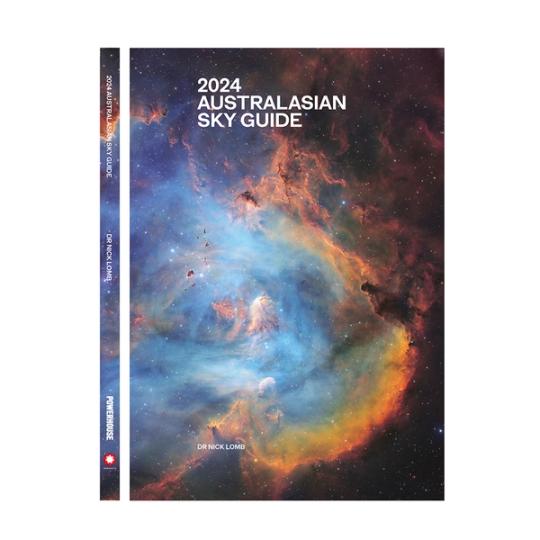
Our annual book, ‘The 2012 Australasian sky guide’, by Dr Nick Lomb has more information and star maps for months from December 2011 until December 2012 inclusive, plus information about the Sun, twilight, the Moon and tides, and a host of other fascinating astronomical information. You can purchase it ($16.95) at Sydney Observatory and Powerhouse Museum shops or other good bookshops, or online through Powerhouse Publishing (additional packing/postage costs apply).

READ THE TRANSCRIPT (after the jump)

(more…)

2012-06-04 Partial lunar eclipse

Published by irma on April 26, 2012 No Comments

7.45pm – 10.15pm, Monday 4 June
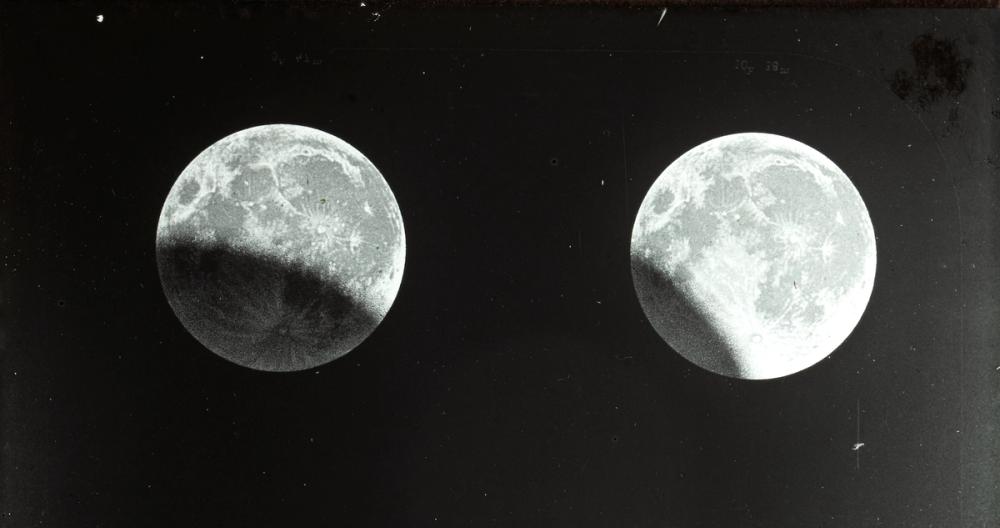
Lunar eclipseOn Monday 4 June, the Moon starts to move into the Earth’s shadow at 7:59pm, leaving the shadow at 10:07pm. At Sydney Observatory, there will be telescope viewing and a 3D Theatre program with talks about the Moon. The event runs from 7:45pm to 10:15pm.

No catering is provided although you will be able to purchase tea, coffee and snacks.

Usual night tour costs apply. Book online or phone 02 9921 3485.

The northern sky over Anzac Cove at 3:00 am EET on 25 April 1915. Calculated with the Stellarium planetarium program

On 25 April each year in Australia we commemorate the landing by Australian and New Zealand troops at Anzac Cove in Turkey. To try to gain some advantage of surprise over the enemy the landing had to be carefully coordinated with the time of moonset and sunrise. Here we look at how those times matched the events of the landing.

All calculated times are in Eastern European Time (EET) which is two hours east of Greenwich. That is the appropriate time zone and, as far as I can ascertain, that is the time zone used by the military for the landing. Note though that back in 1915 watches were not coordinated amongst the navy and army personnel and, in any case, would not necessarily be running exactly on time.

That night the Moon was gibbous, two and a half days after first quarter phase, so it was fairly bright. It set at 2:57 am.

The first report on the landings was by war correspondent Ellis Ashmead-Bartlett. It appeared in the Hobart Mercury on 12 May 1915. Here are a few extracts with inserted comments in square brackets:

“As the moon waned [he meant was setting], the boats were swung out. The Australians received their last instructions, and these men, who only six months ago were living peaceful, civilian lives, began to disembark on a strange, unknown shore, and in a strange land to attack an enemy of a different race.”

“At 3 o’clock it was quite dark [the Moon had set], and a start was made towards the shore with suppressed excitement. Would the enemy be surprised, or be on the alert?”

“Not a sound was heard, not a light seen, and it appeared as if the enemy had been surprised. In our nervy state the stars were often mistaken for lights ashore.”

No wonder that the stars were mistaken for lights as they would have been unfamiliar constellations and stars for the Australians. As indicated in the diagram above, in the northern sky they could see Ursa Minor or the Little Bear as well as Ursa Major or the Great Bear plus the ‘W’ of Cassiopeia. These are all well-known star groups in the northern hemisphere, but either not seen or not seen well from Australia.

Nautical twilight – that is the time when the horizon starts becoming visible – began at 4:21 am. Civil twilight – when lights can be switched off for outdoor activities and possibly dawn in this context – was at 4:55 am. The Sun rose at 5:24 am. Thus the opportunity for surprise only lasted until shortly after 4:00 am though at the same time the light started becoming sufficient for the landing.

“The progress of the boats was slow, and dawn was rapidly breaking at 4.50 when the enemy showed alarm for a light which had flashed for ten minutes then disappeared. The boats appeared almost like one on the beach. Seven torpedo-boat destroyers then glided noiselessly towards the shore.”

You can read more of Ashmead-Bartlett’s report here. We will finish with an extract from Laurence Binyen’s famous poem:

They shall grow not old, as we that are left grow old:
Age shall not weary them, nor the years condemn.

At the going down of the sun and in the morning,
We will remember them.

Some recent spectacular views of the Sun from Monty

Published by Nick Lomb on April 19, 2012 No Comments

A bright prominence at the edge of the Sun that reached a height of 149 000 km on 3 April 2012 (UT). Image and copyright Monty Leventhal OAM ©, all rights reserved

Serious observers of the Sun like Monty Leventhal OAM of the Sydney City Skywatchers use special filters called hydrogen alpha filters. These are safe to use as they cut out all light from the Sun except for the red light of hydrogen atoms. Hence these filters emphasise features that radiate at that wavelength, which are those composed of hot hydrogen atoms. Features on the Sun that can be seen with a hydrogen alpha filter includes prominences, filaments and flares.

A prominence at the edge of the Sun reaching 93 000 km on 19 March 2012 (UT). Image and copyright Monty Leventhal OAM ©, all rights reserved

Prominences are hot clouds of gas travelling along lines of magnetic field. They can exhibit all sorts of shapes such as arches and loops and can sometimes stay above the edge of the Sun for days. Others can detach from the Sun’s visible surface and float away.

It should be noted that the Sun’s visible surface is not solid. Nothing on the Sun is solid as it is a gas even towards its central regions. The visible surface is a region of surface temperature around 5500°C with the deeper regions beyond it too hot and opaque to be visible.

A long filament viewed in the red light of hydrogen atoms stretching 297 000 km across the Sun on 3 April 2012 (UT). Image and copyright Monty Leventhal OAM ©, all rights reserved

When prominences are seen against the bright solar disc instead of the darkness at the edge of the Sun they appear as filaments – long dark lines snaking across the Sun.

The most exciting and the rarest events on the Sun are flares. These are explosions on the Sun that can be seen as the brightening of regions of the Sun near sunspot groups. They can last from for just a few minutes to a few hours. Satellites such as the GOES satellites provide continuous measurements of the X-rays emitted by the Sun and so provide complementary information to what can be seen visually.

About

The 'Observations' blog is run by the staff of Sydney Observatory which is located at Observatory Hill, The Rocks, in Sydney, Australia.

This site is for discussion purposes only and does not represent the official views of Sydney Observatory. Any views expressed on this website are those of the individual post author only. Sydney Observatory accepts no liability for the content of this site.

Please direct any correspondence to web [at] phm.gov.au.

Search