








Archive for the ‘Sky & Observatory news’ Category

Daily cosmobite: crowing in the sky

Published by Nick Lomb on May 25, 2013 No Comments

Corvus_May_Australasian-Sky-Guide-2013After dusk the constellation of Corvus the Crow is high in the eastern sky. It is easily recognisable as it is made up of four stars close together in a sort of kite shape. An imaginary line joining two of the stars points to the bright star Spica, directly below.

Corvus and Spica. Diagram courtesy 2013 Australasian Sky Guide

Daily cosmobite: the brightest star

Published by Nick Lomb on May 24, 2013 No Comments

Sirius_Hubble_hs-2005-36Sirius, visible high in the west in the early evening, is the brightest star in the sky. The brightness of stars is measured in magnitudes. A typical bright star has a magnitude of 1 while the faintest stars visible to the unaided eye at a dark spot have magnitudes of 6. Sirius has a magnitude of -1.4.

A close up of Sirius showing both the A and the tiny B components. Courtesy NASA, H.E. Bond and E. Nelan (Space Telescope Science Institute, Baltimore, Md.); M. Barstow and M. Burleigh (University of Leicester, U.K.); and J.B. Holberg (University of Arizona)

Daily cosmobite: Saturn and the Moon

Published by Nick Lomb on May 23, 2013 No Comments

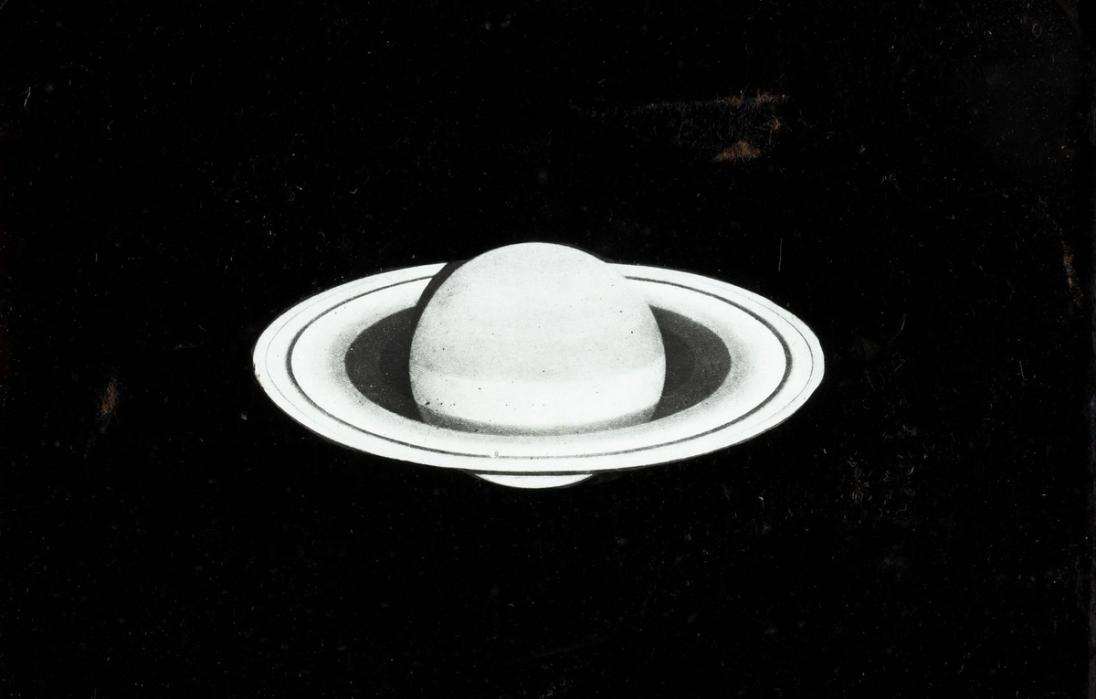
Saturn3_Monty-Leventhal1The ringed planet Saturn is favourably placed for observation and, after last month’s opposition, is still a wonderful object to view through a small telescope. In the evenings after dusk it is low in the east, but rises higher in the sky during the night. Tonight the gibbous Moon is above and to the right or south of the planet.
Saturn. Courtesy Monty Leventhal OAM

Daily cosmobite: good bye to Orion

Published by Nick Lomb on May 22, 2013 No Comments

Orion-from-Sydney-Observatory_Nick-LombThe famous summer constellation Orion is now low in the west near the horizon in the early evening. It is lying on its side with reddish coloured Betelgeuse to the right (north) and the bright star Rigel to the left (south). Over the next few weeks it will disappear below the horizon.

Orion as seen from Sydney Observatory. Photo Nick Lomb

Planet Dance 26 to 31 May 2013

Published by Nick Lomb on May 21, 2013 1 Comment

anigif_planets_May 2013

The changing aspect of the planets Jupiter, Venus and Mercury close to the north-west horizon from 26 to 31 May 2013 as seen from Sydney at 5:45 pm each evening. Animated GIF compiled by Nick Lomb using Stellarium

At the end of May the two brightest planets Venus and Jupiter are approaching each other in the evening sky and are joined by the elusive planet Mercury. Over a period of a few evenings they take on a variety of close configurations that gives a spectacular view and a great demonstration of the movement of the planets.

Each evening during that period has its interesting aspect, but the two bright planets, Venus and Jupiter are the closest on the evenings of 28 and 29 May. During those evenings the separation between them is just over one degree or two moon-widths.

Unfortunately, this ‘planet dance’ takes place during twilight and very close to the north-west horizon. Those who would like to view the planetary alignment need to find a location that gives a good view of the north-west horizon clear of houses, trees and other blockages to the line of sight.

Venus should be visible to the unaided eye from the start of civil twilight, which is about half an hour after sunset. Binoculars should make Jupiter and Venus visible as well. Remember, do not search for the planets with binoculars before sunset as you could do serious damage to your eyes! After civil twilight Jupiter and Mercury start becoming visible to the unaided eye as well, but disappear or are about to disappear below the horizon just as it becomes dark enough to see them clearly.

Planet positions 28 May 2013

The position of the planets on 28 May 2013 shown in an oblique view from above the south pole of the Sun. Motion of the planets is anti-clockwise. Diagram Nick Lomb

Although the three planets appear close together in the sky, they are separated by large distances. Their apparent closeness is purely a line of sight effect. Their aspect changes so quickly from evening to evening because the two planets closest to the Sun, Mercury and Venus move very rapidly. On the diagram above, they move to the left while our observing platform, the Earth, moves to the right. Over such a small period Jupiter can be regarded as stationary since it takes 12 years to circle the Sun; during one stately Jupiter year Mercury has darted around the Sun almost 50 times.

Enjoy the dance!

keckTelescopes-browseAs discussed on Monday, the wider the mirror of an optical telescope the fainter the stars and galaxies that it can show. The world’s largest telescopes are the twin Keck telescopes in Hawaii that each have mirrors that are 10 metres across. These mirrors are not made of one piece of glass, but of 36 hexagonal segments.

The domes of the Keck telescopes. Courtesy NASA/JPL

Daily cosmobite: large telescopes

Published by Nick Lomb on May 20, 2013 No Comments

AAT_June-2012_Nick-LombWith optical telescopes bigger is better. The important size in a telescope is the width of the mirror that collects starlight. A wide mirror can collect more light than a smaller one and so show fainter stars and galaxies. Which is the largest telescope in the world? Answer Tuesday.

The Anglo-Australian Telescope at Siding Spring Observatory, NSW in June 2012. Photo Nick Lomb

Daily cosmobite: Apollo anniversary

Published by Nick Lomb on May 19, 2013 No Comments

Apollo-10_Philatelic-Envelope_Powerhouse-MuseumOn this day (AEST) in 1969 NASA launched the Apollo 10 mission towards the Moon. Astronauts Thomas Stafford, Eugene Cernan and John Young spent two and a half days circling the moon in the final dress rehearsal for the lunar landing.
Apollo 10 philatelic envelope. Courtesy Powerhouse Museum

Daily cosmobite: happy birthday Norman

Published by Nick Lomb on May 17, 2013 No Comments

Joseph_Norman_Lockyer_Wikipedia-CommonsBritish scientist and astronomer Sir Norman Lockyer was born on this day in 1836 in Rugby, England. Working together with French astronomer Jules Janssen, Lockyer discovered the element helium on the Sun before it was identified on Earth. He also founded the leading scientific journal Nature, which he edited for half a century.

Norman Lockyer in about 1873. From Popular Science Monthly

Daily cosmobite: zodiac constellations

Published by Nick Lomb on May 16, 2013 No Comments

Zodiac-constellation-Leo_Nick-LombThese are the constellations that the Sun passes through during the course of a year. Looking from west to east in the early evening the following zodiac constellations are visible: Gemini, Cancer, Leo, Virgo, Libra and Scorpius.

The zodiac constellation Leo the Lion. Drawing Nick Lomb

About

The 'Observations' blog is run by the staff of Sydney Observatory which is located at Observatory Hill, The Rocks, in Sydney, Australia.

This site is for discussion purposes only and does not represent the official views of Sydney Observatory. Any views expressed on this website are those of the individual post author only. Sydney Observatory accepts no liability for the content of this site.

Please direct any correspondence about the content of the blog to:
observatory [at] phm.gov.au
and about web matters to:
web [at] phm.gov.au.

Search