The weather reports for the last week or so have been something along these lines;
Fine and sunny.
Fine and sunny,
Fine and sunny,
Fine and sunny,
Fine and sunny,
Fine and sunny,
RAIN, RAIN, RAIN,
RAIN, cloudy then clear, and
Fine and sunny.
Can you guess which two nights the Festival of the Stars fell on?
Sadly, Friday night was 90% cloudy after heavy rain falls all day but when it did clear the view of Jupiter was nothing less than spectacular for the 300 visitors that came along.
Saturday was much better. Although cloudy for most of the day it did clear for a beautiful night from about 5pm onwards. 900 people came along and had a most wonderful evening.


…and finally I must thank Gretchen Klees from Augustana College in the United States who worked as our intern in January this year who did much of the groundwork for this event. Thankyou Gretchen and thanks to the RTA, Sydney Opera House and the major buildings in the CBD and North Sydney that cooperated by turning unneeded exterior lights off for our Festival of the Stars 2008.
Similar posts:
Planets align for Sydney Observatory’s 2008 Festival of the Stars
0 Comments Published by Nick Lomb July 4th, 2008 in 150th anniversary, Activities
The view from Sydney at dusk on Friday 4 July 2008 - Venus, the crescent Moon, Mars and Saturn, drawing by Nick Lomb
Tonight, Friday 4 July 2008, is our first opportunity to see the bright planet Venus return to the evening sky since it moved into the morning sky in mid August 2007. We have to be quick though as Venus sets below the western horizon at 5:27 pm, which is only 29 minutes after sunset. A very thin crescent Moon is above Venus.
Venus and the Moon just form the prelude to the evening as they have both set by the time Sydney Observatory’s 2008 Festival of the Stars gets under way. Details of the Festival are here. Observable during the Festival though are Mars and Saturn that form a nice pair further up the western sky just near the bright star Regulus. It is worth keeping an eye on these two planets over the next few nights as Mars is slowly approaching Saturn and will pass by it on 10 and 11 July 2008.
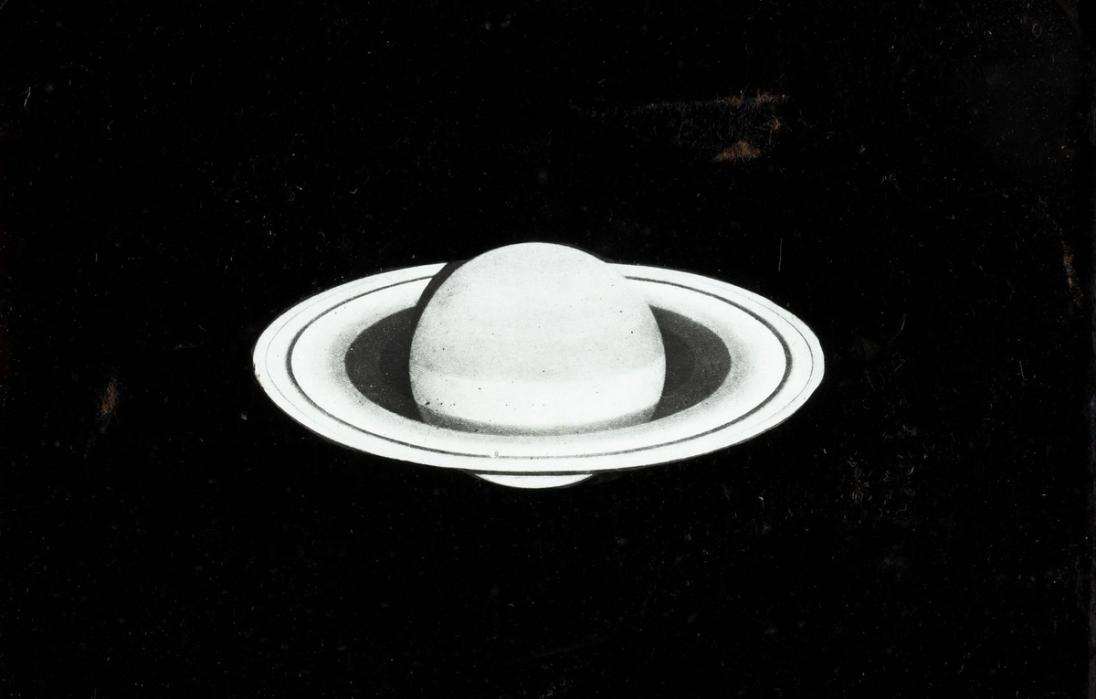
During the Festival there will plenty of telescopes at the Observatory for visitors to see Saturn’s wonderful rings and, over in the east, to look at bright Jupiter and see its cloud belts and its four largest moons, Io, Europa, Callisto and Ganymede.
With many structures and buildings in the City and North Sydney dimming their lights and the planets lining up, this year’s two-night Festival of the Stars is shaping up to be the best so far.
Similar posts:
What do astronomers do on cloudy nights? - talk at Sydney Observatory
0 Comments Published by Nick Lomb July 3rd, 2008 in Activities, Amateur groups
Clouds over Sydney Observatory, image Nick Lomb
I am often asked the question, “What do you do on cloudy nights?”. I have to patiently explain that astronomers normally work during the day and only occasionally spend a few nights using a telescope. This is especially the case for research astronomers utilising large telescopes, as time on those telescopes is very heavily subscribed.
This month’s talk for the Sydney City Skywatchers is about clouds themselves so looking at them could provide an activity for cloudy nights.
When: Monday 7 July 2008 at 6:30 pm
Where: Sydney Observatory, Discovery Room
Cost: $2 for supper and door prize
Title: Cloudy Nights
Speaker: Julie Evans
The fairest things are those which live,
And vanish ere their name we give;
The rosiest clouds in evening’s sky,
Are those which soonest fade and fly.
- Mary Russell Mitford, 1811.
Clouds may be the bane of astronomers but to meteorologists they are indispensable. Julie will discuss the history and science behind the forecasting of these most fascinating of weather phenomena.
Bio: Julie Evans is a senior meteorologist with the Bureau of Meteorology in Sydney, Australia. Her current role includes service development, communication and education. Previously Julie has worked in climate consulting and severe weather forecasting, and in 2000 she helped provide the weather services for the Sydney Olympic Games.
All welcome
Similar posts:
July 2008 night sky guide and podcast
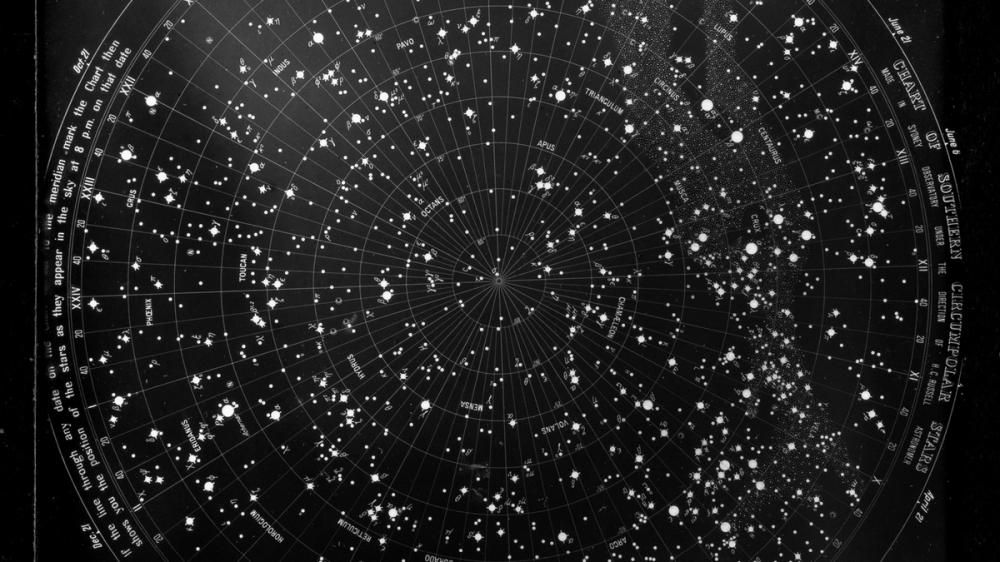
0 Comments Published by sebc July 1st, 2008 in Monthly sky guidesTo help you learn about the southern night sky, Sydney Observatory provides a night sky star map or chart for each month of the year. We also provide an audio guide of the month’s night sky, presented this month by Stephanie Parello, Education Officer at Sydney Observatory. You can listen online, or download the audio onto your ipod or mp3 player. Links to the audio and the star map are below.
Highlights to look out for in July include the constellations of Scorpius and Crux (the Southern Cross) and the planets Venus, Mars, Jupiter and Saturn.
For much more information and detail in star charts for months from December 2007 until December 2008 inclusive, plus information about the Sun and twilight and the Moon and tides, and a host of other fascinating astronomical information, we recommend you purchase (only $16.95 and available now) the 2008 Australian sky guide by Sydney Observatory’s Dr Nick Lomb. Available online and at Sydney Observatory and Powerhouse Museum shops.
The free monthly night sky map PDF (below) shows the stars, constellations and planets visible in the night sky from anywhere in Australia. To view PDF star charts you will need to download and install Adobe Acrobat Reader if it’s not on your computer already.
Read the transcript.
Similar posts:
- None Found
Sydney Observatory Work Experience Students for June 2008
0 Comments Published by Geoff Wyatt June 27th, 2008 in Work experienceJoin Emma, Grace and Dialni as they talk about gravity at Sydney Observatory.
Similar posts:
TV reports described how strong the winds in Sydney were earlier today and I was perhaps one of the few people that enjoyed the gusts. Why? Well look at this wonderful set of flags and you’ll understand.

They flags were: Sydney’s expected maximum temperature of 19 degrees, last quarter Moon, Jupiter, Saturn and Scorpius as the visible objects in the sky.
Similar posts:
Sydney amateurs plot Pluto’s shadow - a great achievement
0 Comments Published by Nick Lomb June 26th, 2008 in Amateur groups, Observations
Pluto lightcurve on the morning of Monday 23 June 2008 obtained by Ted Dobosz and Dave Gault
At 5:06am Monday morning (23 June 2008) the shadow of Pluto swept over Sydney as the tiny dwarf planet moved in front of a faint star. Two members of the Western Sydney Amateur Astronomy Group WSAAG, Ted Dobosz and Dave Gault managed to observe the event. Their observations, shown above, indicate the dip in the brightness of the star as Pluto moved in front of it. The quality of these observations are amazing. Below Dave gives details of the event and explains its significance:
At just after 5am on Monday morning, Pluto and its moon Charon would move in front of a magnitude 12.4 star in Sagittarius. The shadows created would sweep over the Earth at about 75,000km per hour.
Observers from Paris Observatory and Lowell Observatory planned to observe from Canberra, Tasmania, South Africa and La Reunion Island as well as local observers in Brisbane, Sydney, Canberra, Melbourne, Adelaide and Perth planned to lend support.
The goal was to accurately measure the rate of dimming of the starlight as Pluto and its atmosphere absorbed light. Yes, Pluto does have a feeble atmosphere, consisting of mainly nitrogen and lesser amounts of Methane and carbon monoxide and pressures are measured in micro bars. Just what kind of atmosphere exists at -235° C is hard to imagine.
Sadly, Monday morning weather was not kind to observers in Tasmania, Melbourne, Canberra and Adelaide as well as Brisbane. Luckily though local observers in Sydney and Perth had good weather and managed to have their telescopes and cameras happily taking photos at 1 exposure per second during the nearly two minutes of the event’s duration. Also fortunate were the observers on La Reunion Island where they managed to observe the occultation of Charon.
Shown above is the light curve produced by measuring the intensity of the light from the star and Pluto. The light from the star is absorbed the deeper it goes into the atmosphere and, of course, when the star is completely hidden by Pluto the amount of light recorded is from Pluto only. From this estimates of pressure and temperature are calculated and even inversion layers can be detected. All the images (called a dataset) will be sent to Paris Observatory and will aid in ongoing studies of Pluto and its atmosphere.
Dave Gault’s video of the Pluto dimming the star
Why is this important? Well apart from the pure knowledge obtained, we humans are sending a space craft to Pluto, called New Horizons and we’d like to know what to expect when it gets there.
Dave Gault
Similar posts:
ABC astronomy program “StarStuff” to be scrapped
9 Comments Published by Nick Lomb June 25th, 2008 in InformationLogo for StarStuff from the ABC NewsRadio website
Starstuff is a long running program on the ABC’s NewsRadio presented by Stuart Gary. It is the only regular program on astronomy and space on the ABC and it is popular with many people, even those with only a slight interest in those topics. I often get people telling me about what they have heard on StarStuff or asking me what time the program is now on. The program used to be a full hour program first heard on Sunday evenings and repeated on the following Saturday evening and at least one other time in the week. More recently, it has been cut back to 30 minutes only heard on Sundays from 12 noon. However, it is available on demand as a podcast.
Now it seems that it has been completely axed, possibly to make room for more sport with which ABC radio seems to be increasingly inundated. This country needs more people interested in science - many of the big government decisions essential to Australia’s future on topics like climate change and future power supplies will depend on a scientifically literate public. Astronomy and programs like StarStuff provide a hook to grab and keep people’s interest in science. StarStuff is essential, while more sport is not.
If you would like StarStuff to continue, the Astronomical Society of Australia suggests, among other avenues, to show your support of the program by writing to the ABC’s Managing Director, Mark Scott.
Note added 26 June 2008
Other, possibly more worthwhile, avenues for complaint are contacting newspapers and your local Federal member and/or writing to the Minister for Science, Warren Snowdon (warren.snowdon.mp@aph.gov.au) and/or the Federal Minister for Broadband, Communications and the Digital Economy, Senator Steven Conroy (senator.conroy@aph.gov.au).
Similar posts:
The winter solstice and the “Newgrange effect” at Elizabeth Bay House
0 Comments Published by Nick Lomb June 21st, 2008 in Reports
Elizabeth Bay House in Sydney illuminated by the Midwinter sunrise, image Nick Lomb
This morning (21 June 2008) the sun was at its furthest north and hence today is Midwinter Day and the shortest day of the year. To celebrate the phenomenon I was invited to a Winter Solstice Breakfast at the Historic Houses Trust’s Elizabeth Bay House. The event was to view a rare and spectacular phenomenon - the central axis of the house flooded with sunlight soon after sunrise. This effect was discovered last year by Gareth Malone, an HHT staff member. Fortunately, after days of rain the Sun managed to climb out of a bank of clouds on the horizon and provide great viewing for all those present at the breakfast.

Looking along the central corridor of Elizabeth Bay House, image Nick Lomb
The sunlight does not reach into the corridor until a few minutes after sunrise as the house is built above sea level and the Sun takes that time to rise a degree or so above the horizon. The light can reach into the corridor on other mornings but then it is higher above the horizon and so would not penetrate through the house to the cliff face beyond as it does at Midwinter. As everything else about the design of the 1835 house shows careful thought by its original builder Colonial Secretary Alexander Macleay and the architect John Verge, the alignment of the house is unlikely to be accidental. There is, however, no known written reference to the subject in the archives.

Looking into the Sun along the main corridor of Elizabeth Bay House, image Nick Lomb
The whole effect is reminiscent of the one at the famous megalithic tomb at Newgrange in Ireland. There at sunrise on the winter solstice (about 21 December in the northern hemisphere) the Sun illuminates the dark interior of tomb through a “roof box” above the entrance. It is not easy to be allowed into the tomb to witness the phenomenon: a lottery is conducted each year with over 28,000 people applying last year and only 50 names drawn. Interestingly, neither Alexander Macleay nor John Verge could have known about Newgrange as the effect was only rediscovered by Professor Michael O’Kelly in 1967.
As Newgrange is far away and difficult to get into at the Midwinter, try and make it to Elizabeth Bay House on the winter solstice in 2009, the International Year of Astronomy.
Similar posts:
Observing the weather - a great new exhibition at Sydney Observatory
0 Comments Published by Nick Lomb June 19th, 2008 in 150th anniversaryHistorical and modern weather instruments at Sydney Observatory, image Nick Lomb
The Observing the weather exhibition opened at Sydney Observatory during its 150th anniversary celebrations. The picture above gives an idea of how attractive this new exhibition looks. It has a mixture of interesting historical instruments used to measure temperature, rainfall and humidity as well as modern instruments like radiosondes that take measurements of atmospheric conditions from a balloon and radio the information to the ground.
The sign for Dr Draper’s recording thermometer, image Chris Brothers, Powerhouse Museum. The thermometer itself is visible on the right of top image.
* Would you like to know what the weather was like on the day you were born? Try the What was the weather interactive.
* Do you want to know how the Bureau of Meteorology records rainfall? Try the Tipping bucket interactive.
* Do you want to know how you get rain from a cloud? Try The clouds interactive.
* Do you remember the destructive hailstorm of 14 April 1999? See what the children of the badly damaged Kensington Public School wrote of their experience.
There is much else in the exhibition. Truly something for everyone. Come and have a look.
Similar posts:
About
Observations is run by the staff of Sydney Observatory located at Observatory Hill, The Rocks, in Sydney, Australia.
This site is for discussion purposes only and does not represent the official views of Sydney Observatory. Any views expressed on this website are those of the individual post author only. Sydney Observatory accepts no liability for the content of this site.
Please direct any correspondence to sebc [at] phm.gov.au.
Categories
- 150th anniversary (13)
- Activities (22)
- Amateur groups (49)
- Historical letters (1)
- Information (80)
- Lights in the sky (11)
- Monthly sky guides (21)
- News (44)
- Observations (62)
- Reports (31)
- Sky guide transcripts (18)
- Uncategorised (13)
- Upcoming sky events (4)
- Work experience (5)
Latest
- Festival of the Stars 2008
- Planets align for Sydney Observatory’s 2008 Festival of the Stars
- What do astronomers do on cloudy nights? - talk at Sydney Observatory
- July 2008 night sky podcast transcript
- July 2008 night sky guide and podcast
- Sydney Observatory Work Experience Students for June 2008
- Flags for June 26, 2008
- Sydney amateurs plot Pluto’s shadow - a great achievement
- ABC astronomy program “StarStuff” to be scrapped
- The winter solstice and the “Newgrange effect” at Elizabeth Bay House