








July 2008 night sky podcast transcript

This is a transcript of a podcast of the July 2008 night sky guide. Download and listen to the podcast as you gaze up at the night sky.

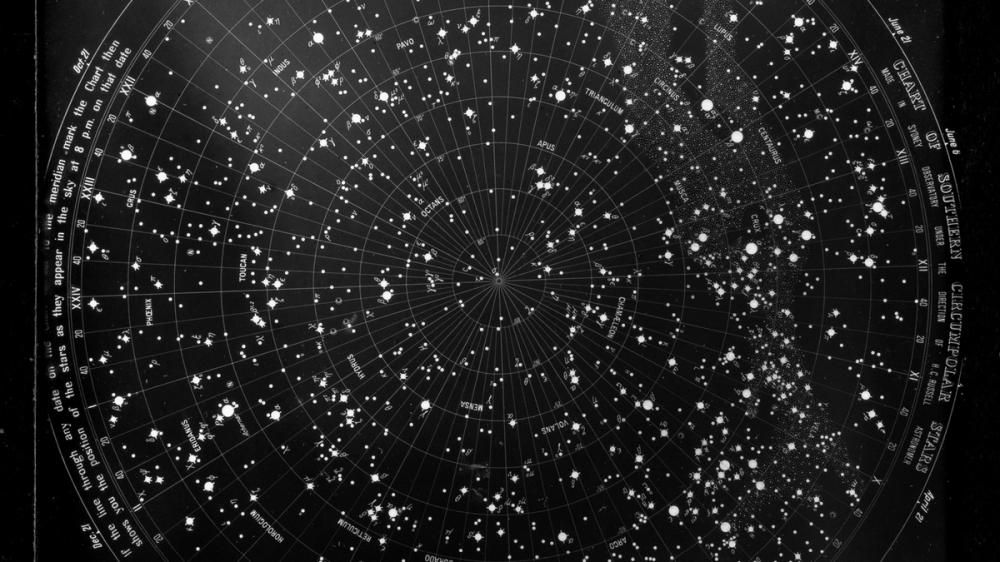
Stephanie Parello: This is the guide to the night sky for July 2008. My name is Stephanie Parello. I’m Senior Astronomy Educator at Sydney Observatory. If you’d like to become familiar with the night sky, you’ll want to spend some time outside at night. But first, get ready with a few simple things. Print off the sky map at www.sydneyobservatory.com/blog and download this podcast. Prepare a torch fitted with a red filter. You can use red cellophane or tissue paper and secure it with tape or a rubber band. This is important because you want your eyes to adapt to the dark so you can see as much as possible in the night sky and the red light helps keep your dark adaption better than white light. Next, dress warmly and grab your gear. Go outside on a cloudless night, sit or lay yourself down comfortable, look up and listen to this guide.

Now what? Do you know where the sun set? I hope so, because that’s going to help you find your way around now. The sun sets in the western part of the sky. In July it sets a bit north of due west – but that’s not going to mess us up. Once you know where west is, the other directions fall into place. Facing west, north is to your right, south is to your left, and east is behind you. Of course you don’t have to face west the whole time. Just so long as you remember which direction is which.

July is a good month to look at the sky. We have the constellation of Scorpius, the Scorpion, very prominent. This is a very important feature of the Australian winter sky. Scorpius is high in the eastern sky. It’s lying on its side with its claws a little bit upwards on the left. And the curved tail is on the right hand side. It’s a very obvious constellation because it’s made up of a curved line of bright stars and it’s useful to become familiar with because once you’re familiar with it then you can look to either side and become familiar with other stars or constellations around it.

The heart of the Scorpion is the red star, Antares. This is a giant star, many hundreds of times wider than our own Sun. It’s a star near the end of its lifetime. Even though it’s a giant star, highly bloated, its surface is considerably cooler than our own Sun and so it has this red colour. In the eastern sky, there’s a group of stars known as the Teapot because if you look at it, they very much look like a teapot. In this position, it’s standing on its handle with the spout on top. The Teapot is an asterism or a picture in the stars that actually looks like what we call it. And this particular asterism of the Teapot is part of a larger constellation named Sagittarius, the Archer.

Going over to the southern sky where the Southern Cross is high up…. The constellation of Crux, as the Southern Cross is formally known, Crux is the smallest of the 88 internationally recognised constellations in the whole, entire sky. Size is no measure for this important collection of stars. The Southern Cross should be very familiar to everyone as, of course, it’s on the Australian flag. It can be confused with a number of other stars nearby that are often known as false crosses. But the Southern Cross itself is a very small, very tight, bright group of stars and it has two bright stars pointing towards it known as the Pointer stars. The closest Pointer star to Crux is known as Beta Centauri and the brighter one, a little farther away from Crux is Alpha Centauri. Named because they are the two brightest stars in the constellation of the Centaur. Alpha Centauri is the closest star system to our Solar System. If you look at Alpha Centauri through a small telescope, then we can see two stars very close together. There is a third star in the system, rather distant from these two, and it’s not probably in the field of view of your small telescope. It is a little bit closer to the Earth than the other two, so you may hear that the closest star to our Solar System is Proxima Centauri. And it’s this third star in the Alpha Centauri triple star system. The light that has left the Alpha Centauri star system left about four years ago, and that’s what you’re seeing tonight.

In the northern sky, quite prominently, you’ll see a slightly reddish star, almost due north, high up. That’s Arcturus, the brightest star in the constellation, Boötes, the Herdsman. The name Arcturus comes from Greek, and means ‘bear-watcher’ or ‘bear-guard’. It’s called this since it circles the north polar region which contains the constellations of Big Bear and Little Bear. Of course, here in Southern Hemisphere, we cannot see those bears. Arcturus is a giant star with a width 25 times that of the Sun and is relatively close to us at a distance of only 37 light years.

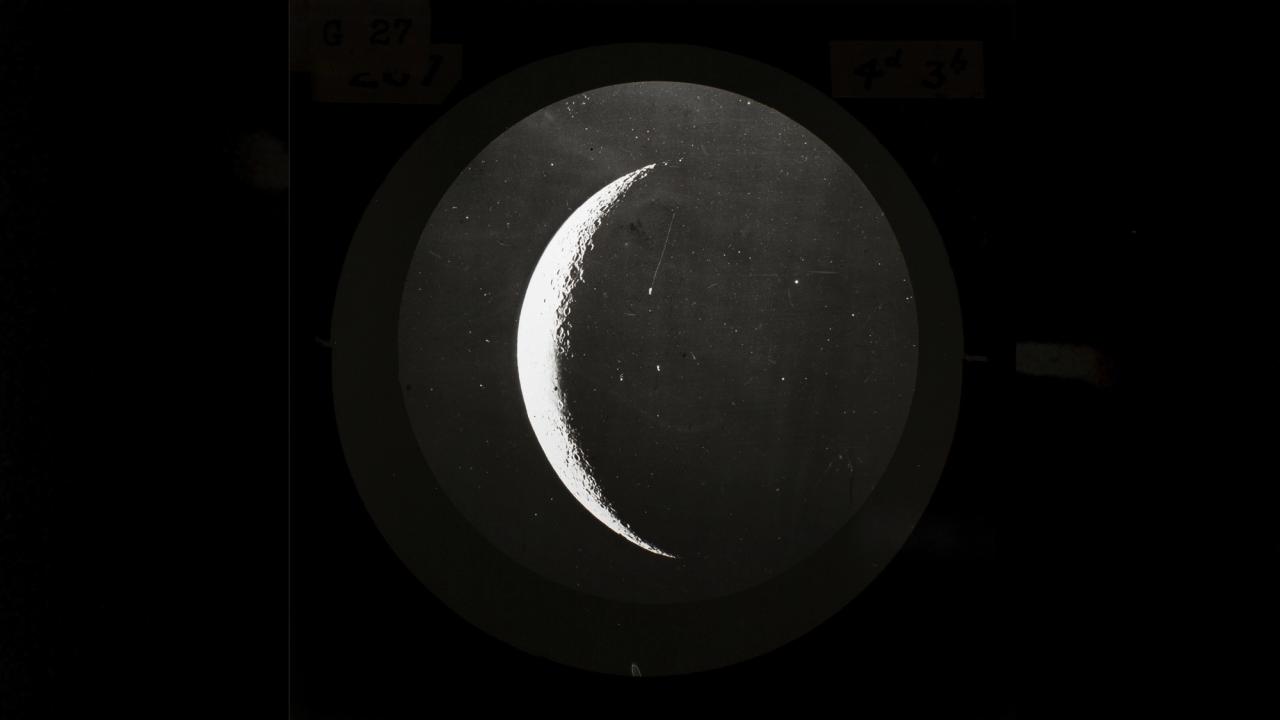
This month’s planets include: Venus, low in the north-west during the first week of July. It starts in Gemini, moves across Cancer, and reaches Leo by the end of the month. On 4 July, a very thin crescent Moon is above and to the right of Venus. Mars is also in the north-west in Leo, passing the bright star, Regulus, on the 1st and 2nd July, less than two Moon-widths apart. On 6th July, the crescent Moon is below and to the left of Mars. And on 10th and 11th July, Mars passes less than two Moon-widths from Saturn. Jupiter is low in the east in Sagittarius. On 17th July, a nearly full Moon is above and to the right of Jupiter. Saturn is also in the north-west in Leo. On 7th July, the crescent Moon is directly above Saturn.

Note that the Sun sets about 5pm in July, and it gets dark about 6pm. Also on the 4th, Earth is its farthest distance from the Sun at 6pm.

This completes the guide to the night sky for July 2008. You can find this guide to the night sky at the Sydney Observatory blog, which is – www.sydneyobservatory.com/blog.

18 Responses to “July 2008 night sky podcast transcript”

  1. Peter Madden  on July 1st, 2008

    Hi
    Thanks for the star map.
    My daughter was asking about the bright planet in the sky this evening. From our vantage point high up in West Ryde it was in a roughly north-east direction and seemed about 45 degrees (though how can I be sure).
    I was thinking maybe it’s Saturn, but I couldn’t find Mars nearby (which the map seemed to suggest would be the case).
    Have I got things the wrong way around?
    Cheers
    Pete

  2. Cynthia  on July 2nd, 2008

    Dear Sydney Observatory

    Any detailed info on the upcoming partial lunar eclipse in August, eg, local times?

    I think it’s going to be early morning on a Sunday so hopefully no need to take leave from work for it…

    Much appreciated!

    Cynthia

  3. Nick Lomb  on July 3rd, 2008

    Hello Peter. I suspect you were looking south-east, in which case the bright planet was Jupiter. In a day or so (from 4 July 2008) Venus will appear very low in the western sky and will be even brighter than Jupiter.

  4. Nick Lomb  on July 3rd, 2008

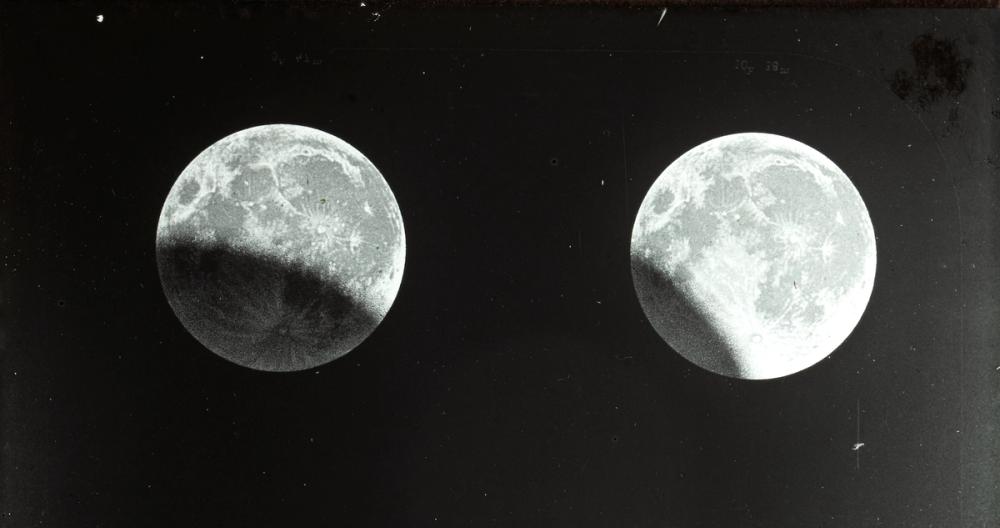
    Hello again Cynthia. The August eclipse of the Moon is partial and starts on the morning of Sunday 17 August at 5:36 am Eastern Standard Time. From most places in Australia the Moon will set before the end of the eclipse. As seen from Sydney, for example, the Moon will set at 6:32 am.

  5. Nina  on July 6th, 2008

    Could somebody please tell me what the three stars are that are diagonally lined up to the right of the moon (Sunday 6 July 2008). Thanks

  6. Sohail Raza  on July 7th, 2008

    Hi,

    I need to know about the Lunar and Solar Eclipses in between Jul 2008 – Mar 2009.

    Can someone please help me?

    Thanks.

  7. Nick Lomb  on July 10th, 2008

    Hello Nina. They were the star Regulus and the planets Mars and Saturn.

    Hello Sohail. Eclipses are as follows:

    Total eclipse of the Sun – 1 August 2008 – not visible from Australia
    Partial eclipse of the Moon – 17 August 2008 – beginning of eclipse visible from Sydney
    Annular eclipse of the Sun – 26 January 2009 – beginning briefly visible from Sydney

  8. Sohail Raza  on July 14th, 2008

    Thanks Nick Lomb
    I will really appreciate the start and end time of the the above described lunar and solar eclipses.

  9. Nick Lomb  on July 15th, 2008

    Hello Sohail.

    Details from Sydney:

    Total eclipse of the Sun – 1 August 2008 – not visible from Australia

    Partial eclipse of the Moon – 17 August 2008
    The Moon enters the Earth’s shadow 5:36 am
    Moonset 6:32 am

    Annular eclipse of the Sun – 26 January 2009
    Eclipse begins 7:42 pm
    Maximum eclipse at 7:59 pm – 1% of Sun covered
    Sunset 8:04 pm

  10. Sohail Raza  on July 16th, 2008

    Thanks Nick Lomb

  11. tabassum  on August 12th, 2008

    hi ,

    Could you please give the starting and finish time of the lunar eclipse on 17 August 2008 in Sydney please give the time I search many sides but I couldn’t find the exact timings of the lunar eclipse.

    thanks

  12. Nick Lomb  on August 12th, 2008

    Hello Tabassum. For the details of the 2008 August 17 lunar eclipse see the latest post on this blog.

  13. tabassum  on August 16th, 2008

    hi Nick Lomb,

    Thank you very very much.

  14. tabassum  on January 16th, 2009

    hi
    could you please tell me lunar esclipe of the sun is on 26 jan 2009 or not ? and is that true so which time it start and which time it ends? please tell me Nick Lomb please.

  15. Nick Lomb  on January 18th, 2009

    Hello Tabassum. Yes there is a partial eclipse of the Sun visible from Australia on 26 January 2009. It begins just before sunset with only a few percent of the Sun covered by the Moon as seen from the eastern states. More details in the January 2009 night sky podcast and transcript on this blog.

  16. tabassum  on January 22nd, 2009

    thanks Nick Lomb.

  17. Tabassum  on February 9th, 2009

    Hi Nick,

    just want to know ….. is there any moon eclipse on 9/02/2009 visible from Australia?

    thanx,

    tabassum

  18. Nick Lomb  on February 10th, 2009

    Hello Tabassum. Yes, there was a penumbral eclipse of the Moon starting at 11:37 pm Australian Eastern summer time on the evening of Monday 9 February 2009 and finishing at 3:40 am on the next morning. A penumbral eclipse is when only the outer edges of the Earth’s shadow – the penumbra – falls on the Moon. I don’t normally mention a penumbral eclipse as the Moon’s slight darkening is barely, if at all, noticeable.


Leave a Reply