








January 2008 night sky podcast transcript

This is a transcript of a podcast of the January 2008 night sky guide. Download and listen to the podcast as you gaze up at the night sky.

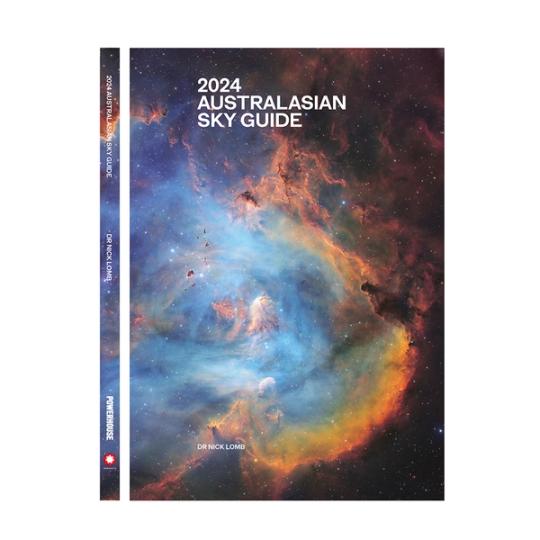
Dr Nick Lomb: This is the guide to the night sky in January 2008. It’s based on the ’2008 Australian sky guide’ which is available from the Powerhouse Museum, available online from the Powerhouse Museum, available from Sydney Observatory and available from good book stores.

If you want to become familiar with the night sky in January, go outside after dark, settle down, makes sure you are familiar with the cardinal directions: north, east which is the direction in which the Sun rises, west which is the direction in which the Sun sets, and south.

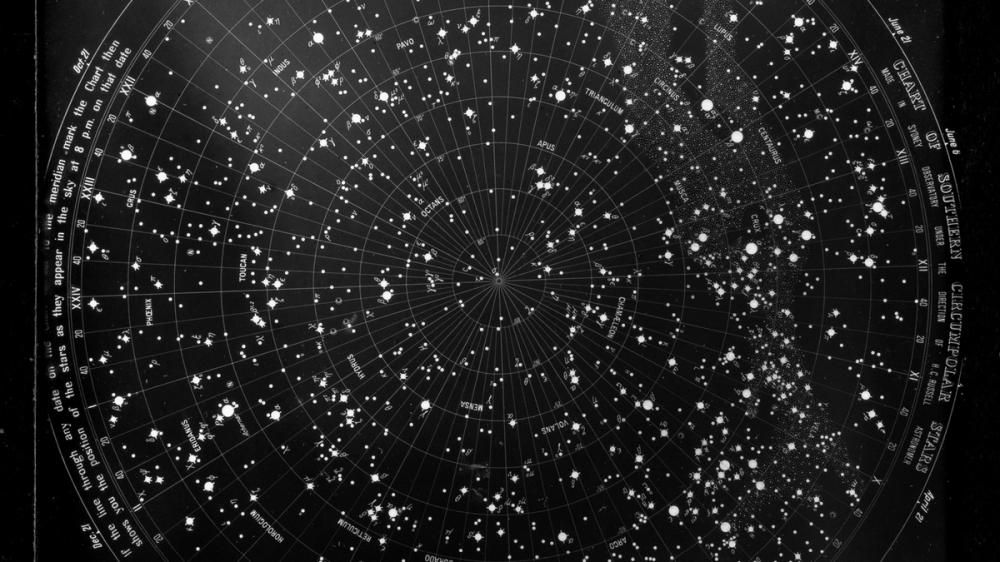
Also it would be helpful to have a star map and that is available from the Sydney Observatory blog at www.sydneyobservatory.com/blog. And if you print out the star map, it is best to look at it using a red torch or with a torch with a little bit of cellophane put in front of it and secured with a rubber band, and that will make it far easier for you to compare what’s on the map and what’s up in the sky.

There are some special events during the month which I will mention at the end of this podcast.

Dominating the northern sky is the planet Mars – this is in the early evening – which is of course famous for its red colour. It is just below the constellation of Orion which is the best known signpost of the Australian summer sky. Orion is a very easy constellation to recognise. It’s composed of roughly a rectangle of four bright stars and in the middle there are three stars in a row. They represent the belt of the giant Orion after whom the constellation is named.

The brightest star – that is at the highest point of Orion – is a star called Rigel. This is one of the brightest stars in the sky. It is 773 light years from us so even though it’s at a large distance, it is still very bright in the sky and that is because it is intrinsically very bright. It actually puts out a huge amount of light – far more than our own Sun. It puts out 66,000 times as much energy than our own Sun. It’s also much hotter than our own Sun.

It has a temperature of 11,000 degrees which compares to a temperature of 5,500 degrees kelvin which is almost the same as Celsius. So it’s 11,000 compared to 5,500 for our own Sun. It’s also a huge star; it’s a star 70 times the diameter of our own Sun.

The other really bright star in the constellation is the very well-known star called Betelgeuse, and that’s closer to the horizon, towards the northern horizon. That’s a reddish star; it’s one of the few stars in the sky in which the colour is very obvious. It’s a red giant star; a star that’s very very large. If it would be placed at the position of our own Sun then it would not only encompass the planet Mercury which is the planet closest to our own Sun but Venus, Earth and even the planet Mars which is the fourth planet from our own Sun.

So it’s a giant star. It’s a star at the latest stage of its life cycle. Eventually it will blow part of its outer atmosphere, and eventually it will explode as a supernova star.

Orion is, as I said, a signpost to the summer sky as seen from Australia. One of the ways of using it is to extend the three stars of the belt in either direction. If we extend the three stars upwards towards the right, towards the east, we reach the brightest star in the sky, Sirius. And it’s worthwhile looking at Sirius because it is the brightest star, so any object that you see in the sky that is brighter than Sirius is likely to be one of the planets – especially Venus or Jupiter or, on some occasions, the planet Mars. So it is an exceptionally bright object.

Sirius is not intrinsically bright. It appears bright in the sky because it is relatively close. It’s about 9 light years from us so it is one of the closest stars to us. It’s a little bit brighter than our own Sun. It’s about 26 times brighter than our own Sun or it puts out about 26 times as much light as our own Sun. It has a mass a couple of times greater than our own Sun.

It has a very famous companion, a little dwarf star known as Sirius B. This was first noticed back in 1844. An astronomer called Friedrich Bessel noticed that Sirius didn’t quite stay in the one place. But if its position was measured very accurately, it was moving slightly back and forth and that suggested that it was actually circling around another object. But in those days nobody could see what that object was. Finally that object was seen about 20 years later by an American optician, Alvan Clark. He was testing a new telescope and he noticed a very very faint little star next to the very bright Sirius. And that star turned out to be a white dwarf star, a star that is very much at the end of its life cycle; a star that has completely collapsed inwards. It’s a star that has about the diameter or the width of the Earth yet it has the mass of the Sun. So it’s an extremely compact and dense object. So even though it’s small and faint, it is sufficiently massive to make Sirius wobble just enough so it could be noticed as far back as in 1844.

Looking a little bit further to the right or towards the east of Orion and looking below Orion, so towards the horizon, there are two bright stars close together. They are the twin stars of the constellation of Gemini, The Twins – the stars Pollux and Castor. These two are fairly bright stars, or appear fairly bright in our sky. But in fact they are relatively close. Pollux which is the one a little bit higher up from the horizon is 34 light years away and puts out about 50 times more light than our own Sun. While Castor the one below is closer to the horizon is about 50 light years away. Now this is a very interesting star because if you look at Castor through a telescope you can see that it is actually made up of two stars. So it’s not one star, but two stars.

But what’s even more interesting is that each of those stars that we can see visually through a telescope has turned out to be a double-star – two stars circling around each other. This is only noticed by astronomers through a device called a spectroscope which breaks up light into its component colours. And by looking at the light from Castor with a spectroscope we can actually see the spectra of two stars – and these two stars are circling around each other.

So if you look at Castor through a small telescope, it’s a double-star, but in fact each of those two stars has turned out to be a double-star. And there is another pair of faint stars in the system. And again that pair of faint stars can only be resolved or detected as a double-star by looking at the spectrum of that faint star.

So Castor is made up of six stars altogether. If we look at it with the unaided eye, it just appears like a single star – but in fact it’s six stars altogether.

If we go back to Orion and extend the belt of Orion towards the left, towards the west, we reach a star called Aldebaran; it’s part of the constellation of Taurus. It’s fairly easy to recognise Aldebaran in the constellation of Taurus because there is a V-shaped group of stars of which Aldebaran is the brightest. It’s a slightly orange-coloured star. It’s a little bit cooler than our own Sun. But we can see it even though it’s at a distance of 65 light years – that is light has taken 65 years to reach us from that star – because it’s a giant star. It has a diameter or width 40 times that of our own Sun and puts out something like 350 times as much light as our own Sun.

Another thing that’s interesting about Aldebaran is that it’s the brightest star among the V-shaped group of stars that we can see in Taurus. But those stars have no connection with Aldebaran physically in space. They are at a greater distance. So the rest of the stars in the V-shape are composed of a cluster of stars called the Hyades and they are all in the one area of the sky and they are all moving together except for Aldebaran even though it appears in the same direction in the sky but it has no connection with the other stars of the cluster of Hyades which appear to be right next to it in the sky.

If we go over to the southern part of the sky we have the Southern Cross fairly low down in the southeast, lying on its side. The Southern Cross is of course very well known in Australia. It’s on the Australian flag, it’s used on very many company logos, so it’s very much an Australian icon.

Many people though have trouble recognising it in the sky. And there are other groups of stars which do resemble a cross nearby. But the way to recognise the Southern Cross is that it’s much more compact than the other nearby star groups that could be confused with it. But also it has two stars that are below – or at least in January they are below – the Southern Cross which point up to the Southern Cross. And these are the two Pointer stars, Alpha and Beta Centauri. And Alpha Centauri, the lowest one of the Pointers is of course the closest star system to Earth. It has a distance from Earth of four and a third light years – that is, light from Alpha Centauri left the star back in 2004, four years ago, or more accurately back in late 2003.

And of course Alpha Centauri is a double-star system which is one of the nicest objects to look at through a small telescope. If you look at Alpha Centauri through a small telescope it looks like a pair of distant car headlights with two stars close together. And they circle around each other taking around 80 years to do so. There is another star in the system which is known as Proxima Centauri which appears to be moving around the two stars that we can see through a telescope. That is a very faint dwarf star not easily visible through a telescope and it is quite a way away from the other two stars so it’s not in the field of view of a normal telescope when we look at Alpha Centauri.

If we extend the Cross, the Southern Cross along to the right, we reach a star called Achernar. This is a star that is known as the end of the river because it is at the end of a long winding constellation called Eridanus. Most of those stars in Eridanus tend to be very faint stars so they’re not that obvious, apart from Achernar itself. Achernar is an interesting star. It’s the ninth brightest star in the sky at a distance of 144 light years away from us. It’s a fairly hot star, much hotter than our own Sun, with a temperature of somewhere around 15,000 degrees or even hotter. And, as I said, our own Sun has a temperature of 5,500 degrees Kelvin so Achernar is a very hot star.

But what’s unusual about it is that it’s spinning very fast and it’s spinning so fast that it has become elongated. Around its equator the star has a width of around 12 times that of our own Sun but around the poles it’s something like 8 times the width of our own Sun so it has a very much elongated shape due to its fast spin.

With that let us conclude our tour of the night sky in January, but let me add that on the third of January, Thursday the third of January at 11am, the Earth is closest to the Sun for the year and that is an event referred to as perihelion. Now because we happen to be close to the Sun in our summer it does not actually mean that is why we have summer. Summer is due to the tilt of the Earth’s axis and not to the small changes in distance. However it does mean that our summers are just a little bit hotter than they would be otherwise, but they are also a little bit shorter. And correspondingly, for people in the northern hemisphere, their winters are a little bit shorter than their summers because at that time of the year the Earth is closer to the Sun and moving faster than it is normally at other times during the year.

Also it’s worth looking out for the 19th of January when the gibbous Moon will appear near the planet Mars and that should be a spectacular sight. That concludes our tour of the night sky in January. This podcast is from the Sydney Observatory blog www.sydneyobservatory.com/blog . The information in the podcast is also available in the ’2008 Australian sky guide’ which would give you information not just for this month but for every month of 2008, together with star maps. Thankyou.

13 Responses to “January 2008 night sky podcast transcript”

  1. John Shield  on January 2nd, 2008

    Dear Sir,

    I live in Bathurst NSW have been having a look at the night sky over recent nights and have seen what appears to be a “flashing light” in the northern sky.

    This was first seen on the evening of 29 December at about 9.45PM and observed for approx. 30 minutes.
    A friend in Woodford (NSW Blue Mountains) had phoned me so I went outside and we both observed the flashing light.

    We then looked on succeeding nights, but did not see it again until last night (1 January) at about 10.00PM when it was flashing again.

    The flashing could be seen with the naked eye and also with binoculars

  2. Geoff Wyatt  on January 2nd, 2008

    Hello John

    Thanks for the question. Flashing lights can be very difficult to explain without having seen them myself. Did it look like a star? Was it brighter than a star, the same or dimmer? Were there any colours? Did it move and if so how fast and in which direction? Was there any sound?

    Even with all these questions answered it still is very difficult but here are a few possible explanations. Satellites can flash as they spin while orbiting the Earth. Spinning keeps them stable but as the Sun shines on different panels it can reflect just like a mirror and appear to flash. Iridium flares are the best example of this and you can predict their appearance at the website http://www.heavens-above.com

    It could he a hovering helicopter in the distance? If far enough away the fainter red and green navigation lights may not be seen? I am sorry but I can’t offer much more than this at the moment.

    If possible try and take a photo using a long exposure on a digital camera mounted on a firm tripod and send a copy to me at geoffw@phm.gov.au

    Good luck!

  3. John Shield  on January 8th, 2008

    Good Morning Geoff,

    I thought that the above enquiry had gone astray so I posted another on the “report your sightings” site which I will copy below.
    As to your questions the light was small, white and quite bright at times (brighter than Aldebaran but lesser so on other flashes); no apparent movement, but hard to say; no sound as it was a very long distance away.
    The same light was also seen on 29 Dec by Darren M who was in Penrith NSW – so the same light was seen from 3 different towns (Penrith, Bathurst and Woodford).
    Can the height be calculated from this??

    We also made some follow up observations on “report your sightings” which I will also copy below.

    Darren M
    Jan 2nd, 2008 at 3:05 pm

    Very accurate description John. I tried several nights later too on the 30th and 31st (observing from Hill End nr Bathurst this time) but no result. I will try again tonight. Something is floating around up there. Quite obviously not an aircraft if we can both see it at the same spot and we are so far apart!! Thanks for your contribution too.

    4 John Shield
    Jan 2nd, 2008 at 11:01 am

    Dear Nick,

    it appears that I have seen the same flashing object as Darren M.
    On Saturday night 29 Dec, about 10.00PM I received a phone call from a friend at Woodford in the Blue Mountains who was watching a “flashing” light in the northern skies.
    We (I was at Bathurst)both then continued to observe the light for some 15 minutes, after which the flashing appeared to have ceased.

    We looked again (from Bathurst) on 30th (not visible), 31st (not visible, but we were in well lit surrounds), and last night 1st Jan when the flashing light was again observed and clearly visible from about 10.00 PM until 10.15PM.

    The location of the light was about a palm width (fully extended arm) above Aldebaran (and a bit to the right) in the Taurus constellation – say at about 50 deg elevation.

    On the 29th it did not appear to change location, but may have moved about in the same area on the 1st.
    The flash varied in intensity on both evenings from a clear flash as though a shutter had opened and closed to a lesser visible flash.

    Best regards,
    John Shield

    5 Darren M
    Dec 29th, 2007 at 8:54 pm

    This object was observed between 21.00-22.00 on Saturday 29th Dec 2007 from Colyton in Western Sydney. It was in the NW sky at approx 50 degrees altitude and was observed to flash periodically. It was roughly one flash every 5-10 sec. Not an aircraft as I looked through my binoculars, more the same height as a passing satellite, magnitude about 3 and like a camera flash. Object appeared to be geo-stationary. First time observed and not an iridium flare. Clear conditions. I am thinking some low-mass space junk. Any other ideas?

    John Shield
    Jan 8th, 2008 at 8:40 am

    Following up on our sightings of 29 December and 1 January, we observed (from Bathurst) nothing on 2,3 and 4 January, however on 5 January we observed a similar flashing light now about 3 hand widths above Aldebaran (approx 75 to 80 deg).
    Time was 10PM and the light flashed (varying degerees of brightness)about 10 times over several minutes then stopped.

    On 6 January there was no flashing from Taurus area, but at about 10.15PM, we did see 2 very bright flashes about 20 seconds apart from the SE sky at about 45 deg – then no more.

    Reading about Adam Mills’ sighting of 3 satellites together, reminded me of a recent siting.
    On the night of either the 30th Dec or 1st Jan between 9.30 and 10PM, we observed (from Bathurst) a grouping of 3 with the front two close together (2nd the lower) with a 3rd following about 2 fingers behind.
    They travelled from south to north at about 25deg in the eastern sky.

    Nick, can you comment on the flashing light above Aldebaran (seen 29 Dec, and 1 and 5 Jan, and, what might the 2 flashes of 6 Jan in the SE sky be ??

    Thank you
    John

  4. Scott B.  on January 11th, 2008

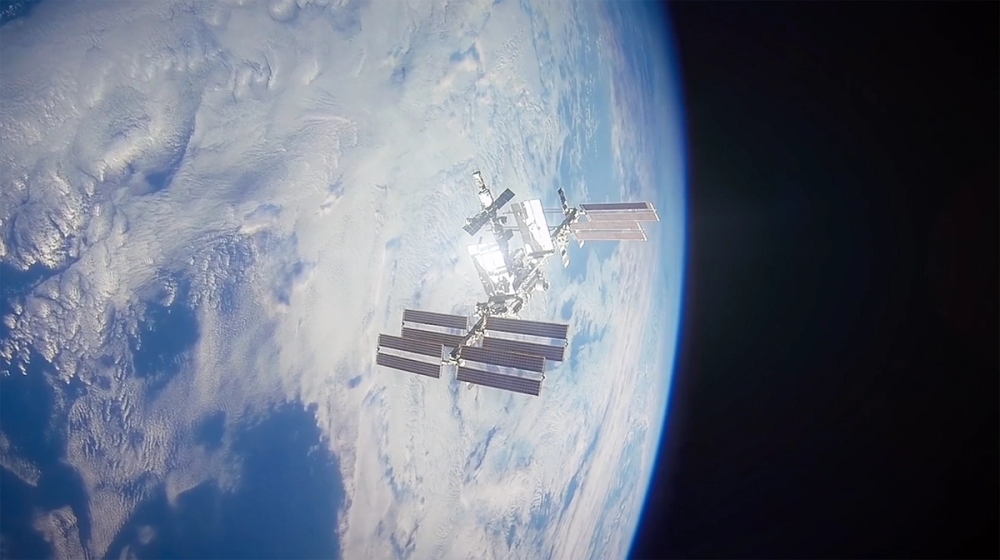
    After reading of John`s sighting I went out last night (10th January -in Bathurst, NSW) and viewed the area around Aldebaran. I had a list of satellite overflights’ from Heaven`s Above. After observing the spectacular sight of the International Space Station in the southern sky at 9:55pm I observed the mysterious light John mentioned. From 10pm to 10:40pm the light was visible – The light was simply a quick – bright flash which occurred every nine seconds (I timed it). During the 40 minute observation the object roughly held its position in the sky. This object is at an extreme distance and I believe it is in an geostationary orbit. My theory for the nine second flash is that the object is rotating on its axis every nine seconds and hence part of it is catching the suns light. The object flash got dimmer as the night progressed – much like a satellite`s does as it approaches the horizon. Hence I believe the disappearance of the flash was due to it passing into the Earth`s shadow.

    What puzzles me though is from my understanding of geostationary satellites they orbit at 35,000km directly above the equator of the Earth – as apposed to other objects like the International Space Station which orbit at 350-400km at varying flight paths above the Earth. My question is – Would a geostationary satellite be visible from a 35,000km orbit? I think it is very doubtful. That being the case – what is it that we are seeing on a regular basis.

    The location of the object was slightly above and to the right of Aldebaran. My advice for viewing the flash is to watch the area between Orion and Taurus (draw a line between the lower (north-eastern) part of Orion and Aldebaran and monitor that area – say at around 10pm or so).

  5. Chris López  on January 15th, 2008

    Greetings,
    I want let everyone know I’m a regular naked-eye observer which happened to see a strange light in the evening of January 13, 08 at 5:15 am (time for Juncos, Puerto Rico,U.S. territory in the Caribbean). I’ll try to describe it as good as possible, it wasn’t any kind of airplane or helicopter since I’would have noticed movement, it was static in the sky, I was looking to the east in a 35-45 angle of view, I can recall it was as big as seeing 8-10 bright stars alltogether, yellow to be exact and it was glowing quite different than any other star i could barely see close to it. It would start fainting off and on in intervals of 5-8 seconds( they varied a lot)and would also fade totally till nothing could be seen,I experienced it for some 20 minutes before tiredness got me, it was very early and I was arriving from a nightout with some friends, two of them saw it, but didn’t get much of the details as I did, I think it was something serious and after searching the web for some info I crashed in this site finally reaching some relief, I just hope this info is of some benefit for the guys writing on the top, I’ll keep reading their technical language that I understand but can’t talk myself.

    Best wishes, Chris

  6. Chris López  on January 15th, 2008

    Hi

    Forgot to mention that the object had an almost perfect round form, no doubt whatsoever.

  7. Nick Lomb  on January 16th, 2008

    Dear people. Thank you for your reports. I do not know what the flashing light was that Scott B and others saw, but I agree with Scott that a geostationary satellite is far too far away to be seen with the unaided eye. Chris Lopez, you were looking at the planet Venus – that is always surprisingly bright.

    PLEASE NOTE THAT THE BEST PLACE FOR REPORTS OF INTERESTING SIGHTINGS IS THE “REPORT YOUR SIGHTINGS” PAGE OF THIS BLOG – ACCESS BY CLICKING ON THE BANNER AT THE TOP RIGHT OF THIS PAGE. THANKS

  8. Mary Kunnirickal  on January 31st, 2008

    Reading Chris Lopez’s post I could not help laughing knowledgeably ( though I too am only an amateur observer ), because I thought that I knew what he was talking about – the planet Venus. So I was happy to have that confirmed by Nick Lomb. But now I have started to wonder – does Venus start fainting off and fade away to nothing intermittently? I haven’t seen that – yet.

  9. christina  on April 23rd, 2008

    Dear people, Thank you for your reports. I do not know what the flashing light was that Scott B and others saw, but I agree with Scott that a geostationary satellite is very far away to be seen with the unaided eye. Chris Lopez, you were looking at the planet Venus – that is always surprisingly bright.

    PLEASE NOTE THAT THE BEST PLACE FOR REPORTS OF INTERESTING SIGHTINGS IS THE “REPORT YOUR SIGHTINGS” PAGE OF THIS BLOG – ACCESS BY CLICKING ON THE BANNER AT THE TOP RIGHT OF THIS PAGE. THANK YOU VERY MUCH!!!!! :) :)

  10. Phil  on April 26th, 2008

    Being a very very amateurish astronomy myself,I love to spend time stargazing at night.
    I’m always amazed at it all,and can assure everyone that I too have seen weird things up there as well….trust me ,what you saw was a saterlite of some sort..
    there is a web sight that shows the location of satilites as they go over australia..I’v checked them up and sure enough it turns out to be a satilite.
    One day I’d love to get a telescope…..and have a better look….so if there are any available sqillionairs Id like a 16ince meade with dome….surely thats not to much to ask……then someone with time on there hands can show me how it works…
    Should be under $20,000……um…..no it might be $20,000…….
    Then if they have still to much money to spare I’d also like $150,000 to pay off the house….
    well….becouse working for a living just gets in the way of it all……
    OH LOOK …..THERE TO THE WEST>>>>>>is that a flying pig I see…

    god bless
    cya..

  11. Darkon  on July 1st, 2008

    All i can say is that this perticular object first appeared around mid 06 obviously no one was told about it..as was said prior to my post theres a possibility although slim that its a geostationary satellite…i call bogus on this for many reasons 1. light does not reflect every 8 seconds off a rotating metallic surface rofl 2. ive maped it since about mid 07 and it hasnt moved 1cm from its projectory..im no expert in this field but it doesnt take knowledge to know that a light that continually gets brighter is not a ordinary object..as it has gotten brighter over the period of my observations..this conclusion may seem somewhat far fetched but on december 30th 1983 the american iras sattelite announced the finding of another planet belonging to our solor system in the new york times…the next day they announced the findings wrong..

  12. Tanya & David Beverley  on September 3rd, 2008

    My husband woke me this morning( sept. 3rd 08. ) at 4.50am to show me a pulsing light in the northern sky. It was near a V shaped group of stars to the left of Orions belt (saucepan?). It appeared to be stationary, but over the 20 minute period that we obseved it, it appeared to move from out in front of the V, into the centre of the V, which seemed to corespond with the rotation of the earth.? The pulses varied in brightness from a faint star to a medium bright star and came in 5 to 10 second intervals with occasional longer intervals (20 to 40 seconds).
    We live in Goonengerry NSW, which is in the mountain range above Byron Bay and regularly see satelites, meteors, planes and helicoptpers in the night sky. This light was nothing like any of these.
    This morning I got up and googled ” flashing lights in night sky” which led me to this web site.
    My husband witnessed this same light in the middle of the night in a simillar position in the sky about 12 months ago.

    Any fresh ideas???

    Tanya.

  13. Jdavidmcafee  on December 14th, 2009

    Tonight I, and 4 other people, saw the same flashing object, every 8 seconds. We watched for about 15 minutes with binoculars and the object clearly moved – first, from east to west, about 10 degrees, then in a circular motion, then remained stationary, then again moved west, then back East almost to its starting point. It was bizarre. It appeared at around 10:00 (Belize time) southwest of Orion’s belt. We observed until clouds obscured our view.


Leave a Reply