





June 2010 night sky podcast transcript

This is a transcript of a podcast of the June 2010 night sky guide presented by Geoffrey Wyatt. Download and listen to the podcast as you gaze up at the night sky.

Geoffrey Wyatt: Hello. My name is Geoffrey Wyatt and I am the Senior Astronomy Educator at Sydney Observatory. I’m going to talk to you about what’s visible in the sky for the month of June. Of course, the Sky Guide and Audio Guide are available at our website, www.sydneyobservatory.com.au/blog. For more information about the night sky, we recommend that you purchase your copy of the ‘2010 Australian sky guide’ by Dr Nick Lomb.

As we head in toward June, the nights are, of course, getting rather cool. So we need some basic equipment before we go outside to enjoy the view. You’ll need a blanket to sit on so it doesn’t get wet, and perhaps a ground sheet underneath that. To keep you warm, perhaps you should have a glass of Milo, and also a pillow.

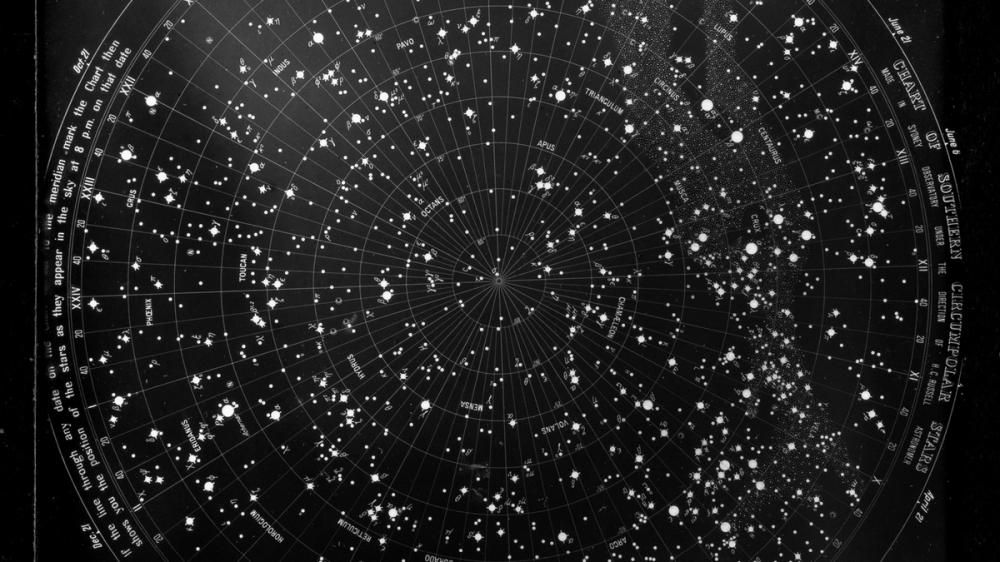
You will also need the star map that you can print from our website, and perhaps a torch that you can use as well.

You’ll need to be able to find your way around the night sky and there are two measurements that we need to be able to do. One of them will be in a clockwise direction from north.

That is, we say we’ll start we look north, and then we move around to our right, in a constant sweeping motion. So 90 degrees east of north, well, due east; 180 degrees will be south; 270 degrees will be west. This is what we call azimuth. That’s the easiest way to find your way around.

You will also need to be able to measure angles above the horizon. The easiest thing to do here is to measure in degrees. Obviously, directly overhead is 90 degrees elevation, halfway up would be 45 degrees.

Now that can be a little complicated, so there is, in fact, an easier way to do it. If you hold out a clenched fist at arm’s length, for an average-sized person, that’s about 10 degrees in size. Something that is one clenched fist above the horizon is 10 degrees up. Three clenched fists; about 30 degrees up.

Of course, it varies from person to person. If you stretch your pinkie out to one side and your thumb out to the other side, you typically get about 15 degrees.

Again, just remember that halfway up is 45 degrees elevation; all the way up is 90 degrees elevation. So, you may like to calibrate your fist and your outstretched hand. Oh, one other one if you hold your pinkie at arm’s length, that’s about one degree or twice the size of the full Moon.

I’ve also mentioned now, the cardinal directions, north, east, south, and west. We’re actually going to start off our tour of the night sky, not by looking north, as I suggested earlier, but we’re going to go to the west, which means our azimuth will be roughly 270 degrees east of north. If you’ve got a clear view of the horizon and you’ve been able to see the fading glow of sunset, well, no problem, turn towards your west.

If you have a compass, then point that north, then turn three-quarters of a turn around to your right, then the same again you’ll be looking west. It might sound complicated, but it’s an easy way for people to keep, if you like, a universal standard to measure the degrees around the horizon, as measured from north.

Not only do we need our supplies to keep us warm and perhaps some Milo; if you’re old enough, a glass of red wine. You’ll also need to use your imagination. You see, we look at old star maps. You can see them at Sydney Observatory in the exhibition, and certainly in museums around the world. The old star maps are very elaborate and complex; diagrams of really quite amazing detail.

If you tried to look into the sky and make up these pictures, you’re doomed for failure. You just can’t do it. What you need to do is practice dot-to-dot drawing and using your imagination to fill in the detail.

So get your niece or nephew to draw a dot-to-dot picture of a cat or a dog; drawing them up as a stick figure. Then, I want you to imagine all the other detail. If you can do that, you are well on your way to be able to identify different patterns in the night sky.

For June, shortly after sunset and looking to the west, look about two fists above the horizon and you’ll be able to see the brightest star in the night sky. It’s not as bright as it would be if it was overhead, because you’re looking through a lot more atmosphere when it’s down close to the horizon, as we see it.

The brightest star in the night sky will not be as bright as it can be, but still, relatively bright. This is, of course, Sirius, the Dog Star. A star that shares its name with a ship of the First Fleet, HMS Sirius, and of course, the character from one of the Harry Potter novels, Sirius Black.

Sirius is indeed an interesting star. Thousands of years ago, ancient Egyptians used the position of Sirius rising in the east and measuring it against the Sun. They would measure the angle between the two until they got so small, Sirius was lost in the glare of the rising Sun.

This is something called heliacal rise. Thousands of years ago, the Egyptians were able to work out the length of the year to be 365 and a quarter days.

Do you know what? It’s taken several thousand years since then to work out the final degree of accuracy. It really is quite an amazing star. As we look to the west, the brightest star in Canis Major, the Big Dog.

Once you’ve found Sirius, move a little towards your right, so we’re heading back towards the north-west at this stage, and you’ll be able to see the eighth brightest star in the night sky. That’s the star Procyon. Procyon is the brightest star in the constellation of the Small Dog.

Now I mentioned imagination a few minutes ago, but sometimes it can only be stretched so far. If you look at Procyon and look at its nearby brightest star, join the two together, and what do you get? Well, a stick. It’s just two stars joined by a straight line.

But supposedly that is the smaller of the two hunting dogs of Orion, Canis Minor. Little bit hard, that one.

Once you’ve found Procyon in the constellation of the Small Dog, what I want you to do is continue towards the north-west, scanning to your right and you’ll pass the very dim constellations of Gemini, the Twins, and the almost invisible, Cancer, the Crab.

You’ll then start to be able to see a group of stars that looks, with a little imagination, like an upside-down question mark. Now, an upside-down question mark is certainly not the most exciting thing to look at, but when you consider what it is, it is indeed an exciting thing.

For what you are looking at is the constellation of Leo the Lion. One of the oldest and most famous of all constellations. I’ll talk more about Leo in just a moment, but I’ve now mentioned constellations a few times. I suppose I should explain what they are.

Just as we break a city up into suburbs to make is easier to navigate, we also break the sky into suburbs, or constellations, as well. Originally there were just 48 of them and they were, if you like, simple stick figures, and they included the famous ones of the zodiac.

Now, however, the entire sky as we see it has been broken up by an imaginary border between constellations or suburbs and any star within that border, falls within a constellation.

Although the Small Dog only had two bright stars, there are, in fact a lot of stars there, but they don’t necessarily contribute to the stick figure drawing of the Small Dog. As we’ll see in a moment, towards the upside-down line that makes up Leo.

The thing is, there are about 2,000 to 3,000 stars that you can see from a fairly dark location, if you’ve got good eyesight and you haven’t been smoking a cigarette, of course, because that affects your night vision.

From the city, with the very bright pollution from buildings, cars, trucks, roads, factories, everything like that, the number of stars that we see is greatly reduced. For some bright cities around the world, the number of stars is, in fact, reduced to zero which is really quite sad.

As you move away from the large cities, you see more and more out into the countryside as I’ve mentioned, between 2,000 and 3,000 stars. It’s not possible for anyone really to be able to remember the positions of 2,000 to 3,000 stars, so these constellations are also used as a bit of a memory aid.

We now officially have 88 of them. There are 12, if you like, of the traditional zodiac. Although astronomers now recognize 13, with Ophiuchus being the 13th. So we have the 13 zodiacs, and then we have the others, totaling 88 all together.

By the way, zodiac simply means ‘Path of the animals’. So all of the zodiacs are indeed animals bar one. I will leave you to think about that, because I will come back to that shortly, as we move over to the eastern sky.

But let’s get back to Leo; an upside-down question mark? Well, you see, it was named from the Northern Hemisphere. So for us in the Southern Hemisphere, it looks, well, more like a question mark than a majestic cat sitting there with its legs out the front, its fiery mane, and tail dangling behind.

So try and look for something with a bit of imagination that looks like a regal cat and there you have Leo.

Leo was thought to represent the lions that left the desert looking for water, around the time that the Nile River used to flood. Which, by the way, was roughly the same time that the Sun was in that constellation as well.

From other communities such as the ancient Greeks, Leo was killed by Hercules as part of his Twelve Labors and then passed into the sky.

It really is quite a pretty constellation to look at, but, in the north-west at this stage.

Continue around toward the north high overhead, and about two hand spans away from the tail of Leo the Lion, we’ll be able to see a group of stars that, well, it looks like a shopping trolley. It is of course, Corvus, the Crow.

According to legend, or one of the legends, Corvus was a fairly lazy bird, and was eventually cast into the sky by the god Apollo, along with Crater the Cup, and Hydra the Snake.

So what is it? A shopping trolley? Or a bird? Well, I can see both. The thing is, which one is easier for you to see? So, look at this group of stars, and you decide a bird or a shopping trolley.

Perhaps as society evolves over hundreds or perhaps thousands of years, we will abandon the stories given to us by the ancients via Greece. We may adopt things like the shopping trolley, or the laptop, or the cordless phone. I don’t know. I certainly hope not, but you never can tell.

Slightly below the Crow and toward the north-east, we are heading around toward one of the most magnificent constellations of them all, the symbol of Justice and Fertility. That’s right. It is the constellation of Virgo.

Now I am sure that most people recognise Virgos are indeed the nicest people on the planet. Well, I might get a few emails about that. You see that’s astrology. Astrology and astronomy don’t always see eye to eye. But we do, when we consider the positions of the stars in the sky.

Unfortunately Virgo does not have any bright stars, apart from one, which is of course, the brightest star in it, Spica, and it represents an ear of wheat, the symbol of fertility.

By the way, my birthday on the 12th of September, according to the zodiac that many of us use, makes me a Virgo. But in the true sense in relation to the position of the Sun, in September, I am indeed, a Leo.

So although Virgo is not particularly bright, it does look like a large Y-shaped group of stars, with just one bright star, as I’ve mentioned, that is Spica.

As we head around towards the East at this stage, we come across the only of the non-living zodiacs. Have you figured it out yet? It is indeed the constellation of Libra.

Libra, the Scales, according to many ancient cultures, was actually part of the larger constellation of Scorpius. However, around the time of Julius Caesar, the claws were broken off and turned into the Scales of Justice.

Libra highlights something which I really love about the stars, and that is the multicultural aspect of looking at them. We have constellations with Greek names. We have planets with Roman names. We have so many stars that have spectacular Arabic names. And indeed Libra is one of the best.

The brightest star in the constellation of Libra, Zubenelgenubi. Which means, the Southern Claw of the Scorpion. The second brightest star in Libra, Zubeneschamali. The Northern Claw of the Scorpion. And Gamma Libra, the third brightest star, in the constellation, Zubenelakrab. Meaning, the Scorpion’s Claw.

Now, really, if you look at these three bright stars, they simply look like, well, an equilateral triangle. But, your choice. Do you look up into the sky and use your imagination to see an equilateral triangle? Or the Scales of Justice? I know I prefer the latter.

Rising in the east, just below Libra, is the only zodiac constellation that really looks like its namesake and that is Scorpius. Oh, by the way, not Scorpio, Scorpius. You are looking at the giant scorpion of the sky. You should be able to see its red heart. The star Antares. Which comes from its ancient name ‘Anti-Ares’ or ‘Rival to Mars’.

You see, every now and then, Mars comes quite close by, and they are about the same brightness and the same colour. So it makes good sense. Anti-Ares, Rival of Mars. Or Antares, the Heart of the Scorpion.

What you’ve got to do is look for three relatively bright stars just under Libra. Join them together to make a straight line, of course. And from the middle of those three, at right angles, draw a line back through the red star Antares.

Follow a bright line if stars around, and you will end up with a bit of a hook. Now the middle star at the top, represents the head. The claws go out to either side. We pass down through the red heart, Antares, which curls around and ends in the sting of the scorpion.

According to one ancient legend, the Scorpion came about after Apollo sent it to attack the hunter Orion, who had boasted that he could kill any animal on the planet, obviously including giant scorpions.

Oh by the way, he was also having an affair with his sister Artemis, the Goddess of the Hunt. And perhaps this was the real motivation behind Apollo creating the Scorpion. Well, later in contrition for killing her friend, Apollo helped Artemis to hang Orion’s body into the night sky as the constellation.

However, the Scorpion was also placed up there on the opposite side of the sky. So as Scorpius is rising in the east, Orion is setting in the west.

Lying near the centre of the beautiful Milky Way Galaxy, Scorpius is a fabulous part of the sky to scan with binoculars. Many people think that need really big binoculars to be able to get any astronomical use for them, and that’s not the case.

The humble home binoculars, which are typically 7X50, will work perfectly well. The trick is, you will have to be able to hold them still. To do this, you can buy an adapter for a camera tripod mount. You can buy a specific binocular mount.

Or, what I have sometimes done, is use a nearby fence with a pillow sitting on top of it, and hold my binoculars into that. That will help you maintain a lot more stability over a longer period.

Use your binoculars to scan the Milky Way, the heart of the Milky Way, around the tail of Scorpius, and near the constellation of Sagittarius. It really is quite a beautiful area of the night sky.

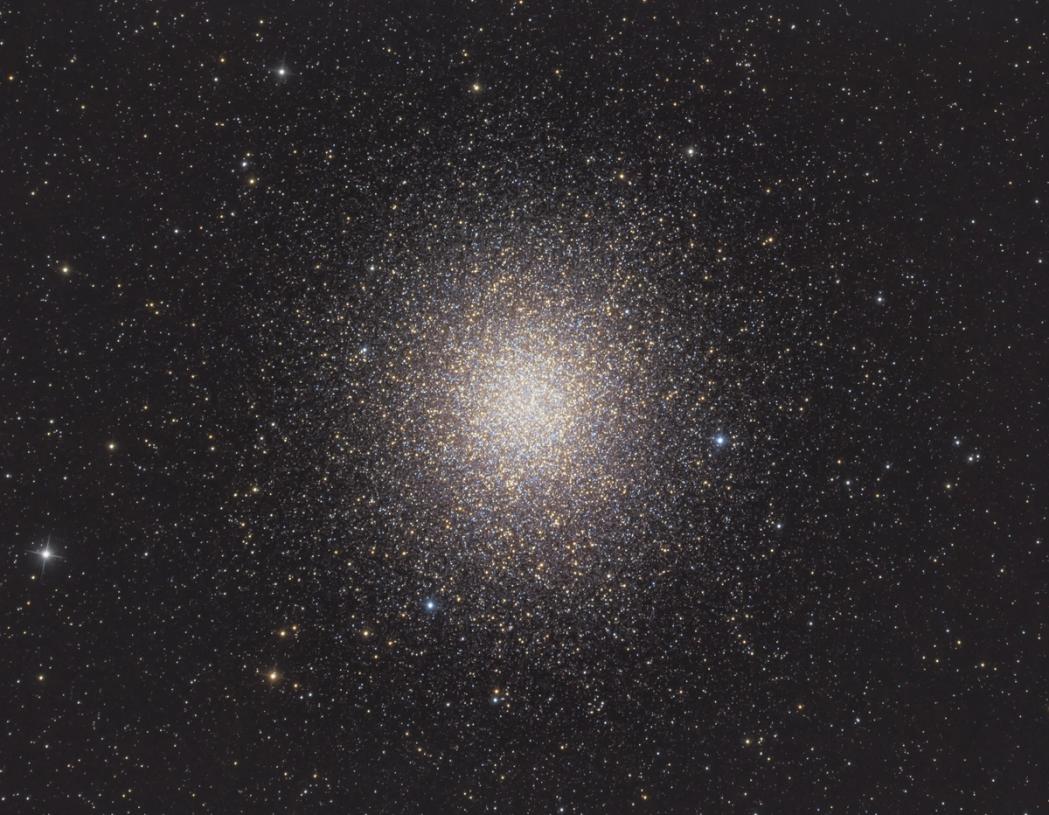
If you look along the constellation of Scorpius, you will be able to see a couple of rather spectacular objects. There is a globular cluster there, called M4. Yes, not a terribly imaginative name, but M4 is simply the fourth object in a catalogue developed by a man whose name began with M.

You will also be able to see M6, and M7, which are young clusters of stars. And intriguingly, they are quite famous in some indigenous mythology from central Australia.

Did you know that the Earth is leaning to one side by 23 and a half degrees? And that 23 and a half degree tilt, tips the Southern Hemisphere toward the centre of the Milky Way.

So we are very lucky. As the centre of the Milky Way passes overhead, those of us at latitudes from 23 to 43 or so, get a spectacular view of the Milky Way high overhead. So that means we look towards the least amount of atmosphere and we can see the glow made up of billions upon billions of stars, as we look towards the centre of the galaxy 27,000 light years away.

By the way, the name of our galaxy Milky Way where does it come from? Well, again it comes from another story that we track back to the ancient Greeks, and they probably took it from ancient Arabic cultures, but ‘Via Lactea’, ‘by milk’.

The story goes that the goddess Hera was breastfeeding a young, discarded baby until she found out it was the illegitimate son of her god-husband Zeus. When she found this out, she ripped him away and milk squirted across the sky to form ‘Via Lactia’, ‘by milk’.

Continue from Scorpius around toward the south, and high in the sky you’ll be able to see the smallest of all the 88 constellations. It is the one that is perhaps most symbolic of the Southern Hemisphere and, indeed, Australia and that is the Southern Cross.

It has only officially been a constellation since 1930. However, sailors coming from the Northern Hemisphere have been aware of it since the mid-1500s and to them it was something quite special to see this symbol of Christianity high in the southern sky. But indeed, the indigenous cultures of the Southern Hemisphere have been looking at it for a very, very, long period of time.

The Southern Cross is not just small, it’s actually quite useful. It’s easy to find at this time of year because well, it’s small, it’s bright, and three of the stars in the Southern Cross are in the top 30 of all bright stars at night.

Right next to it, and depending on where you are, and depending at what time of year and what time of night, there are two bright Pointer stars nearby that point directly at it. And one of those two Pointers is the third brightest star in the night sky. And I’ll come back to that a little later.

But the Southern Cross: small, very bright unlike the nearby trick or fake constellations, asterisms like the False Cross and the Diamond Cross. The Southern Cross points south.

Now, a lot of Australians think it actually sits at the South Pole, like Polaris does for those in the North, but that’s not the case. The Southern Cross is 30 degrees from the South Celestial Pole, and as the Earth turns, it appears to describe a circle around the South Pole in the sky.

It doesn’t matter what time of night. It doesn’t matter what time of year. To find south, simply do the following. Look at the Southern Cross and imagine it as a traditional Christian cross.

Go from the top of the cross through to the bottom and extend that line by four and a half times its length. You’ll come to a fairly empty part of the sky. There is a really dim star there in the constellation of Octans, the Octant but really, I’ve never met anyone that can see it.

So when you come to this apparently empty part of the sky, that’s the centre of rotation in the south. That is the South Pole in the sky. Simply drop straight down to the ground and there you have it south.

So if you’re facing south, now you have east to your left, west to your right, and north directly behind you. Again, it doesn’t matter what time of night, what time of year. As long as you can see the real Southern Cross, you can navigate. We really think that has been one of the most important uses of the stars for many thousands of years.

The other wonderful thing about the Southern Cross is the diversity of stories about it. Of course, in modern European interpretation, I suppose you’d simply call it the Cross of the South. Crux is its correct name. But really, it’s the Indigenous people of the Southern Hemisphere that have some spectacular stories about it.

To the Maori of New Zealand, the Southern Cross represents Te Punga, the Anchor. But come here to the Australian Indigenous communities and there are so many wonderful different stories.

To the Anangu of Central Australia, the Cross represents the footprint of the wedge-tailed eagle. Now, my pronunciation of the name is not so good, but it’s something along the lines of ‘War-loo-war-roo’, the footprint of the eagle.

If you look carefully and you look at the bottom of the Cross, that’s the heel, and then you draw one toe out to the side, one toe out to the other side, and the long axis represents the toe in the middle. So again, with a little imagination you may be able to see the footprint of the eagle.

To other indigenous communities, for example those of Groote Eylandt, also in the Northern Territory, it represents a stingray swimming along merrily, and the two bright Pointer Stars nearby are coming in as a shark from the side about to attack it. To the Kanda of the south-west of New South Wales, it represents the four unmarried daughters of a group elder who watches nearby from his vantage point of Alpha Centauri; the third brightest start in the night sky, the brighter of the two Pointers.

The Southern Cross is also a fairly nice hunting ground for a pair of binoculars. Again, you’ll need to make sure that they’re nice and sturdily mounted, but aim your binoculars, which will just not quite fit in the whole Southern Cross because typically their field of view is six degrees and the Southern Cross is about six and a half degrees, if I remember correctly, top to bottom but almost all of it in.

If you look at the bottom star, A Crux, and then go around the constellation in a clockwise direction, the next brightest star, Beta Crucis, second brightest start, look at that with your binoculars.

Ever so slightly to the side of that, you’ll see the birth of stars. What you’re looking at is a cluster of stars called the Jewel Box, which is a rather nice name because its official name is simply NGC4755 which is a very clinical name, of course, but it’s simply a catalog description. I think the Jewel Box gives you a hint as to what you might be able to see through a pair of binoculars, but ideally for this you do need a small telescope.

If you use a small telescope, this small cluster of stars will be seen as a well, to me it looks like the capital letter A, and the crossbar in the A, if you look carefully, one star is slightly red. So you have a red star, you have bluish stars, you have white stars.

When one very famous astronomer in South Africa looked at this, he went, ‘Wow’, and he wrote in his journal that it looked like a fine piece of jewellery laid out on black velvet, hence the name, the Jewel Box.

The Jewel Box is quite a distance from us, at about 7,800 light-years. That’s the first time I’ve mentioned light years for our podcast for this month, so I’d better briefly go over that.

A light year is simply the distance that light travels in one year in the vacuum of space. Light can travel enormously quickly. In fact, it’s the fastest thing there is at 300,000 km per second in a vacuum.

If you’re really keen and you want to work it out, multiply 300,000 km per second by the number of seconds in a year by 7,900 years, and that will give you the distance to this object. And that is well, I suppose, astronomically, relatively close.

If you’ve found the Jewel Box, and you’re away from the city, and there’s no moon, get ready for an absolute treat. As you look towards the left of the Southern Cross in the area of the Jewel Box, you should be able to see a small, dark patch against the brighter Milky Way.

What you’re looking at there is in fact the nest of the eagle. So not only do we have the eagle’s footprint, we have its nest, and the two bright Pointer stars, according to some Aboriginal mythology, represent a throwing stick that was used by hunters, well, to smack the eagle in the head.

So there are a couple of different things there to see, but to other Aboriginal communities, that nest represents something quite different. Typically when you look at constellations or pictures in the sky, you play dot-to-dot we’ve already discussed that and you go from one bright star to another.

Now what we’re going to do is, in fact, exactly the opposite. I believe only the Incas of South America and Indigenous people of Australia are the only cultures that do this; we’re going to make a picture by looking at the lack of stars.

The dark patch that I mentioned, the nest of the eagle; this time we’re going to consider it to be to the head of a rather large and beautiful bird. If you look along the Milky Way, you’ll see there are some dark patches, dark dust lanes; in effect, it’s what they are.

If you follow the dark dust lanes from that coal sack that head of the bird you’ll see that as it progresses back towards the constellation of Scorpius, you’ll be able to see the head, neck and body of an emu.

So to some Indigenous communities, you are seeing the emu in the sky not by the stars, but by the lack of stars against the Milky Way. This is really quite a beautiful thing to see, but only if there’s no moon, and you’re away from the city.

Intriguingly, if you can make it to Ku-ring-gai Chase National Park, you’ll be able to see a carving of the emu on the Elvina Track, but please check with National Parks and Wildlife before you go into the park.

If you head back from the emu, back towards the Southern Cross, and I’ve already mentioned the two Pointers, the stars off to the south that point up to the top of the Southern Cross.

The brighter of the two is the third brightest star in the night sky, and that is of course Alpha Centauri, and the star next to it is the second brightest star in the constellation. Those two stars actually represent the front feet of a mighty constellation and that is Centaurus, the Centaur; half-man/half-horse.

According to legend, this particular centaur, Chiron, was a magnificent fellow. He was a tutor or teacher to fabulous characters such as Achilles, Heracles, and Jason from Jason and the Argonauts.

To be able to see this half-horse/half-man is really quite difficult. But if you picture the Southern Cross and the stars to the side, the bright ones which represent the front legs, we can make out the horse part of the centaur, relatively easily.

Finding the human part on the top, where you’ll need to have the star map with you and look at the dot-to-dot drawing there. Again, it’s very simple, but once you see it, I’m sure you’ll go ‘A-ha! Half-man/half-horse.’

As we continue around to the west from the Southern Cross and from the Centaur, you come to the second brightest star in the night sky and that is the star, Canopus. Canopus is an intriguing star.

It used to be the brightest star in the biggest of all constellations, and that was Argo, the ship that carried Jason and the Argonauts. But unfortunately, it was so big it was broken up into four smaller constellations.

Those constellations are Vela the Sails, Puppis the Deck; Pyxis the Compass, and Carina the Keel. The region of the Milky Way from the Southern Cross to Canopus is an absolute minefield of beauty.

Again, use your binoculars or the small telescope and scan through that part of the sky to see open clusters. Of course, there is one very famous dying star in this region called Eta Carinae, which is really quite spectacular, but you do need to go to an observatory to get the best view of that.

As we scan towards our right, we’re moving around toward the west where we first started. Now, because we’ve taken our time, Sirius, the brightest star in the night sky may have actually set by now, so you won’t be able to see it.

You should have noticed how it’s changed position in the period that we’ve been moving around from our original starting point.

Special events for June 2010. Saturday the 5th of June will be the last quarter Moon at 8.13 am. Saturday the 12th of June will be the new Moon at 9.15 pm, Saturday the 19th first quarter at 2.29 pm. And this is, of course, the best time of the lunar month to view the Moon.

Many people think that it’s full Moon, but that is not the case. At the time of first quarter, you get lots of shadows and lots of detail. A pair of binoculars or a small telescope I’m sure you’ll be impressed.

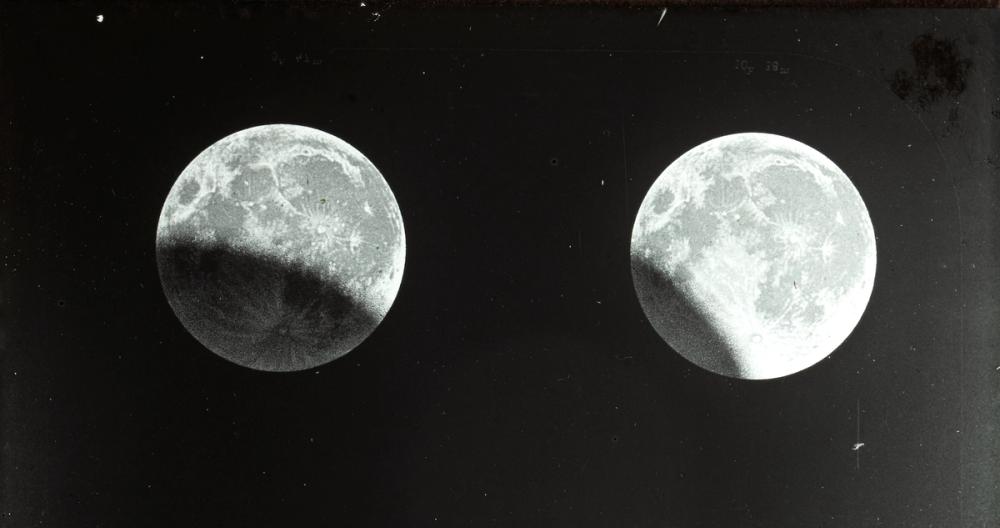
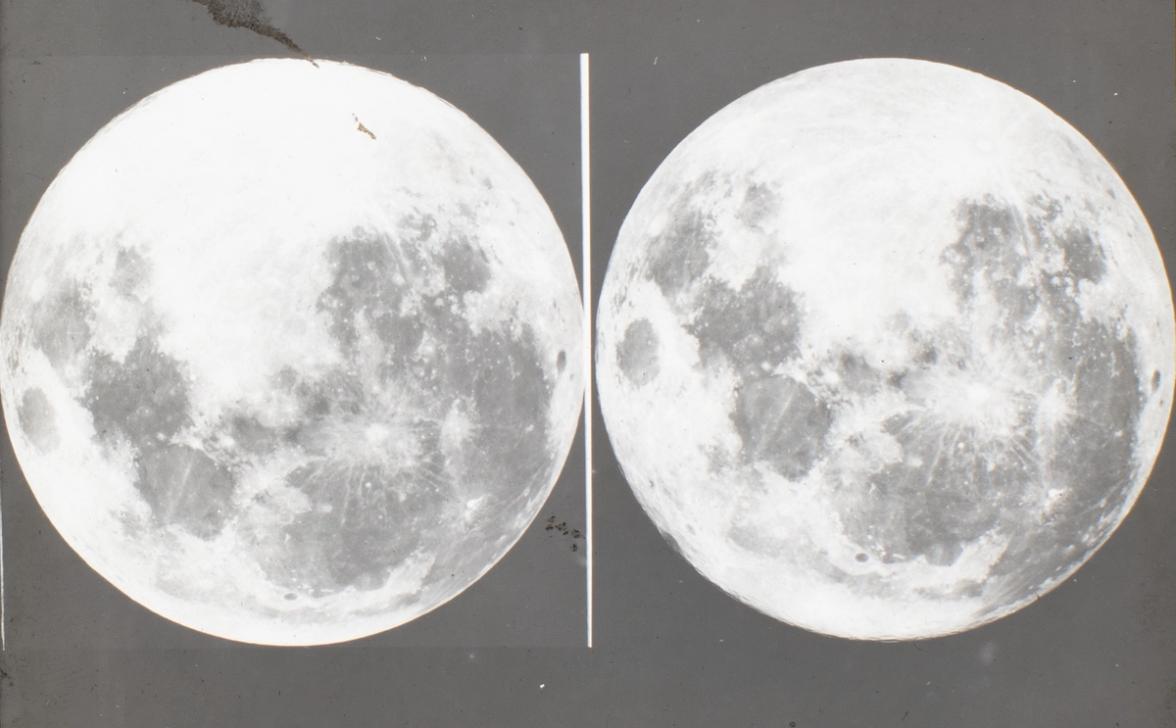
The full Moon occurs on the 26th, which of course, again is a Saturday, at 9.30 pm. Interestingly, this year there will be an eclipse. It’s only a partial eclipse.

The Moon will enter the Earth’s shadow at 8.16 pm and the bite, if you like, taken out of it by the Earth’s shadow will get bigger and bigger until it reaches 54 percent, and then will move out of the Earth’s shadow by 11.00 pm.

It’s really quite an intriguing event to watch because the shape that you’ll see is quite often the shape that children draw when they’re drawing a moon. They don’t usually just draw a crescent, they tend to draw a circle with a bite out of it.

That’s what we’re going to see this month on the 26th. It won’t turn the ruddy, red colour that you get during a total lunar eclipse, but it will be a rather spectacular view.

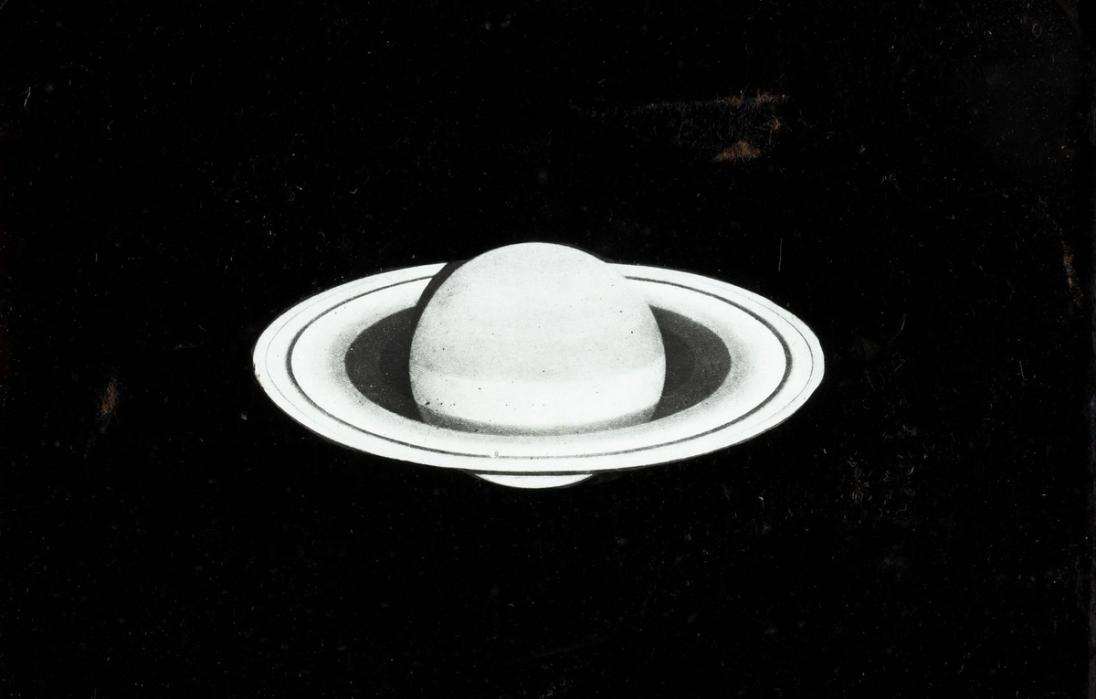
Throughout the month of June, we’ll have three planets coming close together low in the western sky, shortly after sunset. The planets are Venus, goddess of love and beauty; Mars, god of war; and Saturn, god of agriculture.

Venus starts off the month in the northwest and moves into the constellation of Gemini, and then into Cancer the Crab by the middle of the month, at which time it will join Mars in Leo.

On the 15th of June, the crescent Moon will be slightly above and to the left of the planet Venus. Mars will be quite high in the constellation of Leo, and on the 7th, Mars passes very, very close to the brightest star in Leo the Lion, and that is Regulus.

On the 17th, the crescent Moon will be to the left of Mars, while the next evening, it will be above and to the right. Saturn is also high on the sky in the constellation of Virgo. On the 19th of June, the first quarter Moon will be just above the planet.

In the morning sky, there are two planets for us to look at; that is Mercury, low in the east, initially in the constellation of Aries the Ram, which is the Ram that produced the Golden Fleece, again chased by Jason and the Argonauts. That will move into the constellation of Taurus the Bull.

We also have Jupiter, the King of the Gods, biggest of all the planets and the planet whose view changed our perception of the universe in 1610 when Galileo first looked at it through his telescope.

On the 6th of June, the crescent Moon will be to the left of the planet Jupiter, and from the 7th to the 10th, Jupiter is less than one moon width is apart from the first planet to be discovered in modern times. Which one is it? The planet Uranus.

You’ll need a pair of binoculars at very least to be able to see Uranus; it’s very difficult to see even through a small telescope. It will simply look like a small bluish green dot. But it’s well worth using Jupiter as a place marker or a pointer from the 7th to the 10th of June.

There is of course one other event that we should talk about for the month of June, and that will be the Winter Solstice on Monday the 21st at 9.28 pm. The solstice simply means the point at which the Sun appears to stand still in the sky, and for us, that means that it has reached its most northerly point. It is of course there for mid-winter, and from the 21st onwards, the Sun will start to make its way back towards the southern sky.

I hope you’ve enjoyed this podcast of the sky for June. If you’d like to get more information, please don’t forget to look at our website www.sydneyobservatory.com.au, where you can get the star map and listen to our podcasts and read our blog. But we would also recommend that you get the ‘2010 Australian sky guide’ by Dr Nick Lomb.

5 Responses to “June 2010 night sky podcast transcript”

  1. janet  on June 1st, 2010

    Really enjoying your blog a great deal! Thank you!

  2. Karen  on June 2nd, 2010

    I really enjoy the night sky podcasts; in fact by the third week of the month I can’t wait for the next one. As a new comer to sky watching I find the information easy to understand and follow.It is very helpful. Keep up the great work, it is appreciated.

  3. Aaron  on June 11th, 2010

    I’m with Karen, being new I am really enjoying it.

    I hope the skies are clear tonight for some observing at uni.

  4. David  on June 17th, 2010

    yeah! Sydney observatory this is good stuff, your podcasts and charts. ive just started getting into the telescope scene, and finding your info on the skys unreal.

    keep it up.

    thanks

    David.

  5. Rubey  on June 22nd, 2010

    Thankyou from country Tasmania! Your maps and podcast have just helped me answer the questions and share the sky with my curious 8 year old. I can’t wait for next months


Leave a Reply