








May 2010 night sky podcast transcript
This is a transcript of a podcast of the May 2010 night sky guide presented by Melissa Hulbert. Download and listen to the podcast as you gaze up at the night sky.
Hello and welcome to the night sky guide for May. My name is Melissa Hulbert and I’m an Astronomy Educator at Sydney Observatory.
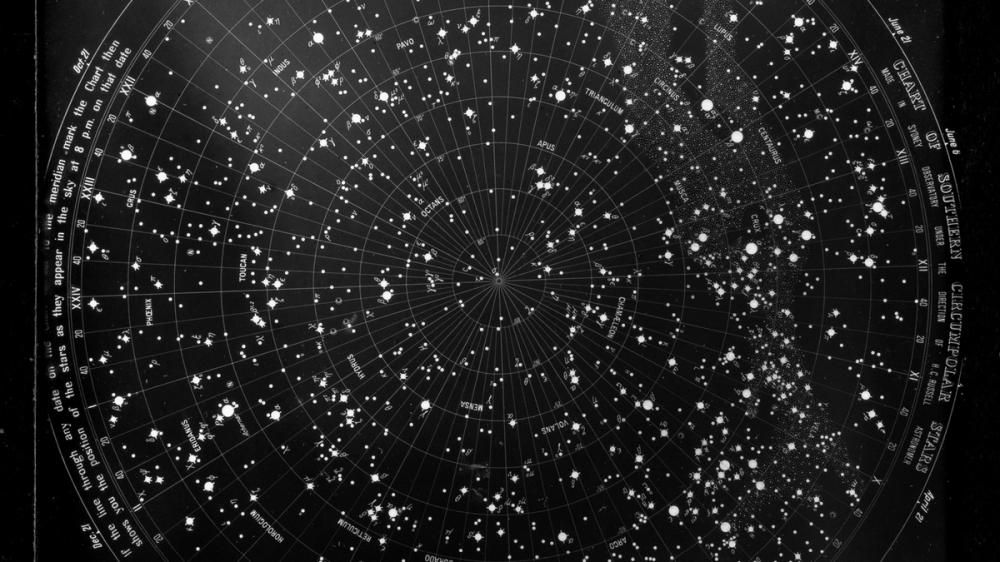
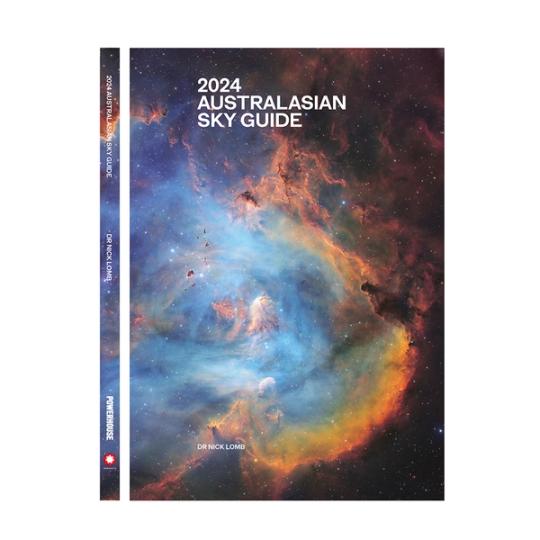
Before we start our night sky tour, make sure you download the May sky map from our website at www.sydneyobservatory.com.au/blog. Or grab your copy of the ‘2010 Australian sky guide’ book which can be ordered from the website or bought at our Sydney Observatory or Powerhouse Museum shops. There is a lot of astronomical information in this book as well as the monthly star maps.
Armed with your sky map and a small torch with some red cellophane covering it, find a nice dark place away from the glare of the street lights and make sure you know your cardinal directions – north, south, east and west. Remember that the Sun rises in the east, moves through the northern sky during the day and sets in the west; or a small compass will also point you in the right direction. Pick a comfortable spot either on a rug or a deck chair that you can lay back in. Wait about 5-10 minutes and allow your eyes to adapt to the darkness.
Now turn towards the west. Low in the western sky is the familiar constellation of Orion, the Hunter. In Greek mythology, Orion was a hunter of great skill and boasted that he could kill all living animals. Gaea, the Earth goddess, was alarmed by his statement and fearing for all the animals on Earth she sent a scorpion to kill him. Orion was stung on the shoulder but was revived and placed in the stars along with the scorpion. This entire myth is played out in the stars each year. As Scorpius the Scorpion rises in the east, Orion sets in the west, defeated. When Scorpius sets in the west the healer Ophiuchus crushes the Scorpion into the Earth and revives Orion so he can rise in the east again. Orion appears in many cultures, even the ancient Egyptians saw Orion as Osiris, god of the underworld and of regeneration.
If you’re having difficultly picking out the Hunter then look for the Saucepan. This is a familiar group of stars for those of us in the Southern Hemisphere and is Orion’s belt and sword. Orion is now on his side as he sets below the western horizon.
Now turn to face the east and there is Scorpius the Scorpion rising in triumph as Orion sets defeated for another season.
The Scorpion is one of the easiest constellations to pick out as it is one of the few that does look like what it’s supposed to represent. It covers about 30 degrees in the sky. Working out degrees in the sky is quite easy. Hold your arm out towards the sky and make a fist. From one side of your fist to the other, this is 10 degrees. Hold your other arm out and spread your hand out as wide as you comfortably can (so the opposite of a fist), from your little finger to your thumb is 20 degrees. Put your hands side-by-side and you now have 30 degrees, the size the Scorpion covers in the sky. This does work for everyone, as your arm length is proportional to your hand size.
Now, look for the Scorpion’s heart, Antares, a red supergiant that is 400 times the diameter of our Sun. Antares means ‘rival of Mars’, and when they are close together in the sky they certainly do look very similar.
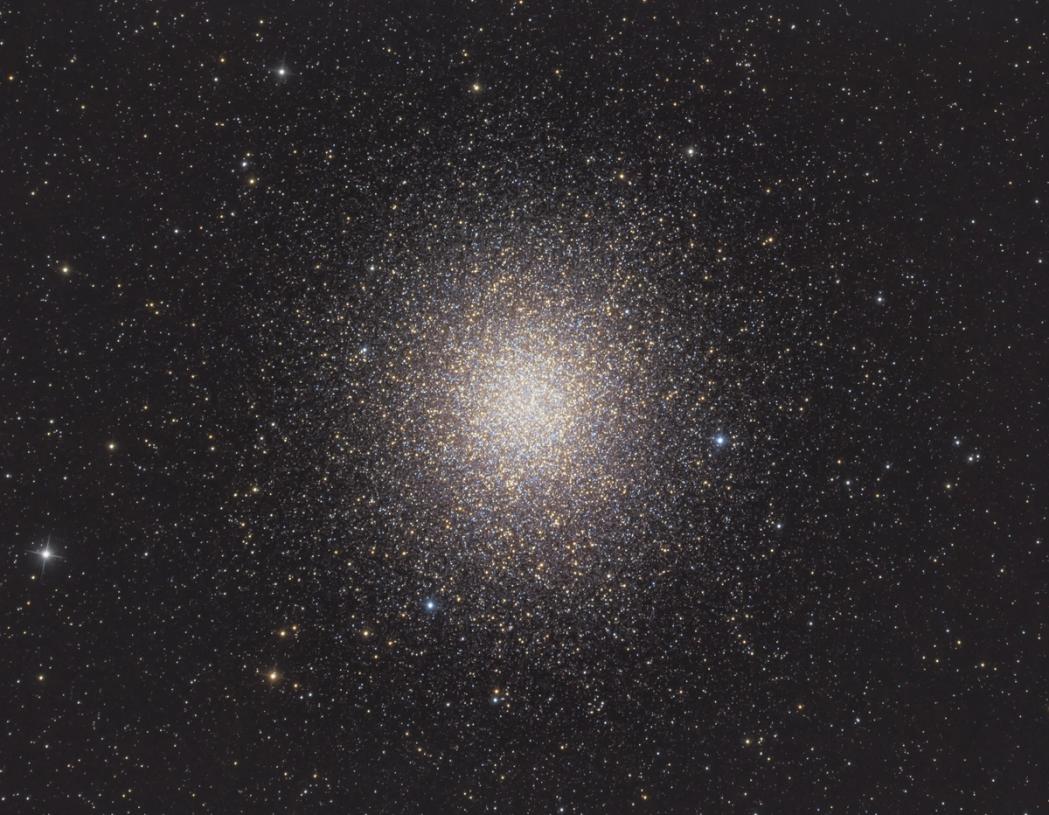
If you have a pair of binoculars, then near Antares is a small globular star cluster, M4, which is a group of old stars that lies about 7,000 light years away, making it one of the closest globular clusters to us. Below the sting of the Scorpion are two open star clusters, M7 and M6, which are also worth a look. See if you can see the butterfly in M6. These names I’m giving the clusters are catalog names. M stands for Messier and is named after Charles Messier, an 18th century French comet chaser. He made a catalog of 103 fuzzy objects that were not comets so that he didn’t waste his time looking at them. Other astronomers later added a few more objects to the catalog bringing the total to 110.
Time to turn and look towards the south. High in the southern sky is the constellation Crux, better known to us as the Southern Cross. Crux is Latin for cross. The Southern Cross, like the Scorpion, is another constellation that does look like what it’s supposed to represent. It is surrounded on three sides by the constellation Centaurus, and the two brightest stars in Centaurus make up the Pointers which point to the Southern Cross and this is one way to check you have the right cross as there are many stars in the southern sky that look like crosses. During May the Pointers are to the east and slightly south of the Southern Cross.
The second brightest star in Crux is a marker for a wonderful binocular and telescope object. To find the 2nd brightest star, whose name is Mimosa, look for the star in Crux closest to the Pointers. Now just nearby – at about 7 o’clock if you imagine a clock face over Mimosa, is a wonderful open star cluster called the Jewel Box. It looks like a sideways ‘A’. In a telescope, wonderful colours can be seen with white stars and a red supergiant. Sometimes even green appears but of course there are no green stars – this is just an illusion. The famous 18th century astronomer John Herschel gave the cluster its name as he likened it to a piece of multi-coloured jewellery.
Crux sits within one of the arms of our Milky Way and if you are away from the city lights you will see this arm and notice a dark patch between the brightest and second brightest stars of this constellation. This dark patch is called the Coalsack and is a dark nebula – lots of gas and dust that are blocking out the background stars.
In Aboriginal mythology, the Coalsack formed the head of the Emu and if you follow the dark dust lanes of the Milky Way east towards the Scorpion, you will see the Emu’s body and legs. There are lots of stories about Crux and the Pointers. Some say that Crux is the Eagle’s foot and the Pointers are the throwing stick they use to hunt with. Others see the Milky Way as a river with Crux as a fish or stingray and the Pointers as two white cockatoos sitting in a tree.
Centaurus is a mythical half-man, half-horse and in Greek mythology represented the scholarly centaur Chiron, who tutored many of the Greek gods and heroes. He was put among the stars after he was accidentally struck by a poisoned arrow fired by Hercules.
The brightest star in Centaurus is Alpha Centauri which is one of the Pointers. It is the Pointer which is more distant from the Southern Cross or the brighter of the two stars.
In telescopes, Alpha Centauri appears as two stars, and both these stars orbit around each other once every 80 years and are starting to move closer together; by 2037-2038 only medium aperture telescopes will be able to distinguish the two stars. There is also a third member of this group called Proxima Centauri and it is the closest star to us after our own Sun at about 4.2 light years away or 42 million million kilometres. It takes Proxima about one million years to orbit its two companions and it is a red dwarf star, making it a challenge to see – it is not even in the same field of view as its companions.
So what else can we look forward to seeing in the sky in May 2010? This month at the end of twilight, look due north and there shines a reddish coloured star like object – the planet Mars. Mid-month, Mars starts to move into the constellation Leo and by the end of the month, Mars and Regulus (the brightest star in Leo) will be very close together – a mere 4 degrees apart in the sky. Though in early June the pair will be even closer! On the 20th, the first quarter Moon will be just above and to the west of the red planet. Mars is also at quadrature this month. Quadrature is the direction in which a celestial object, in this case Mars, as seen from the Earth, makes a right angle with the direction of the Sun. During this time, 90% of Mars’ disk is illuminated by the Sun, giving the planet a distinctly egg-shaped appearance in a telescope.
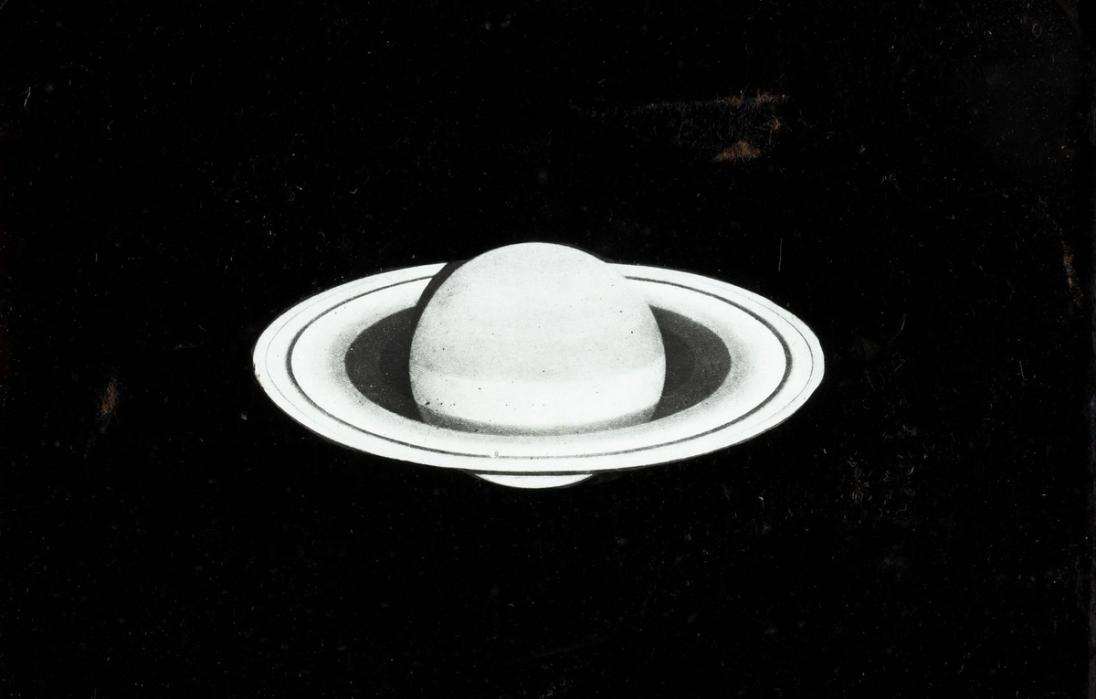
After sunset look towards the north-east. Saturn starts the month in the north-east but by mid-month it is due north at about 8:30pm.Saturn is a wonderful object in a telescope as the rings can be seen even in a small aperture telescope. On the 22nd and 23rd, the waxing gibbous Moon will be either side of Saturn.
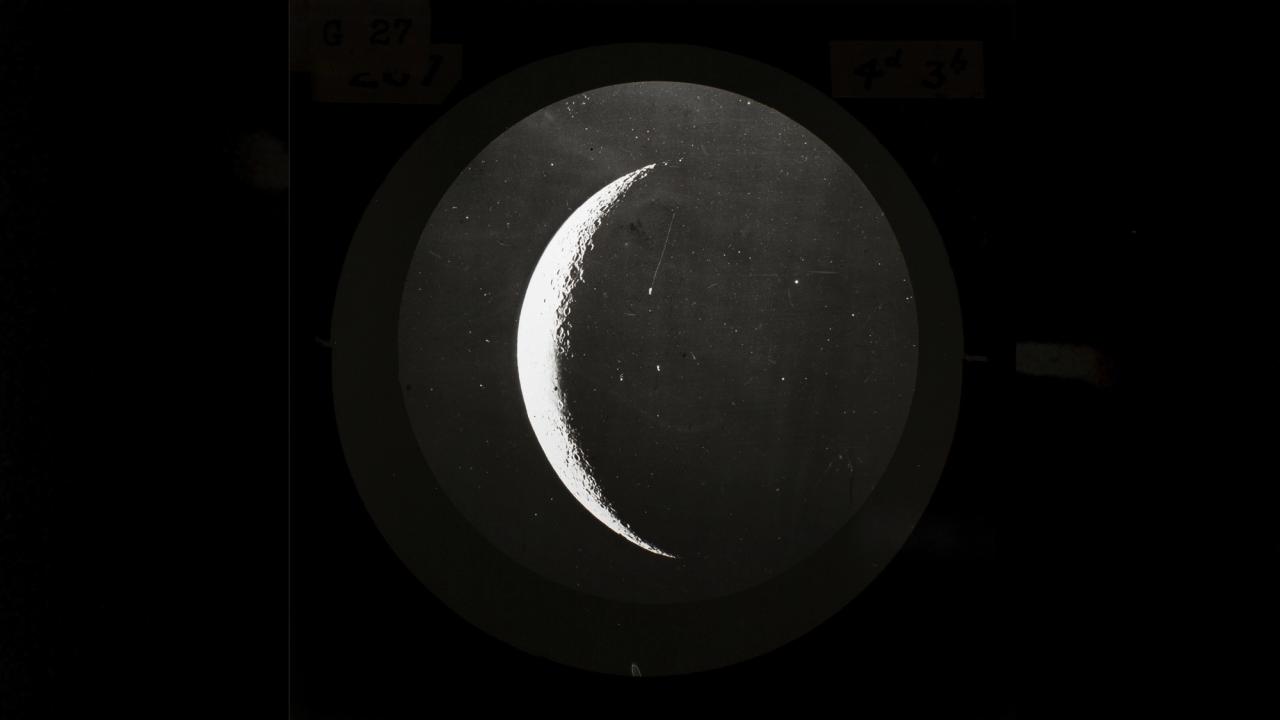
In the western twilight sky after sunset, Venus is visible in the constellation Taurus. On the 16th the 2-day oold crescent Moon is just 2 degrees below Venus. The dark-part of the Moon will be softly illuminated by earthshine and combined with Venus, will make a wonderful sight in the evening sky.
May is also a great month for all you early-birds! In the eastern pre-dawn sky Jupiter will have a close encounter with the planet Uranus and by the 31st, they will be 1 degree apart in the sky and even closer next month! This provides the perfect opportunity for anyone with a telescope to easily locate the 7th planet in our Solar System. Uranus appears as a turquoise-coloured, tiny disk in telescopes and can be challenging to locate, so this month it is well worth the effort of getting out of a warm bed and braving a chilly morning! On the 9th and 10th, the waning crescent Moon joins the pair in the early morning sky.
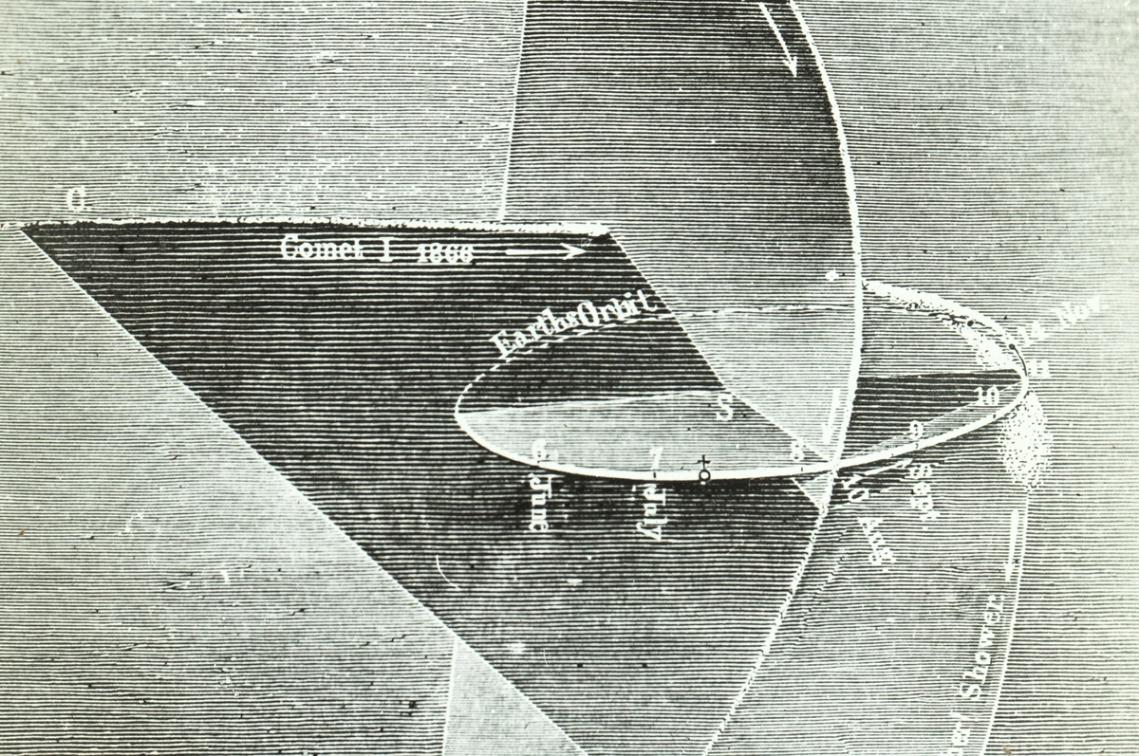
I do have one wildcard for all you daredevils this month which is the Eta-Aquarid meteor shower. This shower is linked to Halley’s Comet and is one of the most popular Southern Hemisphere showers.
When comets pass close to the Sun they leave a trail of small particles and dust behind. When the Earth passes through this trail we see lots of meteors appearing to come from the one area of the sky. This is called the radiant and each shower is named after the constellation or bright star near which the radiant appears. In this case the constellation is Aquarius and the star is Eta Aquarii. The shower runs between the 19th April and the 28th May, with the peak on 6th May. But the rate of meteors per hour is generally above 30 from the 3rd to the 10th of this month.
At its peak, the rate will often be 60 meteors per hour. The Eta Aquarids are usually very swift and are a striking yellow colour. They are also known for their trains with about 25% of meteors leaving behind a train in the sky afterwards. The best time to observe any meteor shower is after midnight, usually for a few hours before dawn.
The Eta-Aquarids have a history of good performance. In 1975 there was an hourly rate of 95 and in 1980 an hourly rate of 110! It is usually best to observe meteor showers when there is no Moon in the sky. However, this month there is a last quarter Moon around the 6th. Despite this, the International Meteor Organisation is suggesting that this year could be a great year, with rates near their highest in the shower’s theoretical 12-year cycle. This equates to about 85 meteors per hour, so make sure you don’t miss it!!
As Dr Carl Sagan said, “Somewhere, something incredible is waiting to be known.”
As you gaze up into the sky this May, discover your own “something incredible” and see you next month under the stars!
5 Responses to “May 2010 night sky podcast transcript”
Leave a Reply


Karen Moroney on May 21st, 2010
Do you have photos of many of the galaxies please?
Karen Moroney on May 21st, 2010
This information is helpful, thank you. I wasn’t able to download the sky map.
Nick Lomb on May 21st, 2010
Hello Karen. There is no obvious problem with downloading the map. Ty again by clicking on the link. You can see plenty of galaxy images taken by the Hubble Space Telescope here.
Lorie on May 27th, 2010
Quick question … looking to the west in (Cairns) far north Qld (27th May @ 8:30pm), there appeared to be 5 ‘planets’ well, twinkling stars, not quite in a line from the south to the north… this is all with the naked eye … can you explain to me which constellations they’re linked with please? I have downloaded the Starmap for May and am having difficulty working it out! sorry if it sounds daft, however it’s hard to determine in suburbia! Thank you in advance. (avid star gazer!)
Nick Lomb on June 2nd, 2010
Hello Lorie. You would have seen a nice display at that time. Looking west and starting from the left or south you saw Canopus, Sirius, Procyon, Pollux and Castor. Looking up from Pollux you would also have seen Mars, then Regulus and above them Saturn. You can see the same grouping tonight with addition of bright Venus, but at an earlier time, say, just after 8 pm.