










April 2010 night sky podcast transcript
This is a transcript of a podcast of the April 2010 night sky guide presented by Dr Nick Lomb. Download and listen to the podcast as you gaze up at the night sky.
Dr Nick Lomb: This is the guide to night sky in April. My name is Nick Lomb. I was the Curator of Astronomy at Sydney Observatory until the end of 2009. This podcast is available through the Sydney Observatory blog, www.sydneyobservatory.com/blog, and it’s always available at the beginning of each month. We’ll start off the podcast by talking about the stars in the night sky, and we’ll consider what planets are visible at the end.
To start off, it’s a good idea to download the star map that’s available through this website, the monthly sky map, and print it out. Also, equip yourself with a torch that should have a red light.
The advantage of the red light is that it does not wreck your adaptation to the night sky, so you can look at a map and a piece of paper as well as looking up into the sky without having to wait for your eyes to adapt to the darkness once again.
Also, make yourself familiar with the cardinal directions: north, south, east, and west. East is, of course, where the Sun rises. West is where the Sun sets. And of course, by April, it can start becoming a little cool, so dress suitably. Go outside, sit yourself down, and listen to this podcast.
We’ll start off our tour of the April stars by facing north. We’ll see, of course, the familiar sight of the Australian night sky, the constellation of Orion, to our left and to the north-west. Orion is always visible during Australia’s summer evenings.
Orion is easily recognisable, as it is made up of four stars in a rectangle, with three stars in a row in the middle. The three stars in the middle represent Orion’s belt. Just above the belt, there is a line of three faint stars, and the middle one is the Great Nebula of Orion.
Those three stars represent the dagger of Orion, or sometimes they’re referred to as the sword of Orion.Now, you may find it a little odd that Orion, the giant Orion of Greek mythology, wears his sword above his belt. The reason is, of course, that Orion was named in the northern hemisphere, so when we look at Orion, we actually see Orion upside down. So Orion’s dagger, or sword, is above the belt.
The middle, slightly fuzzy star that we can see in Orion’s dagger is the Great Nebula in Orion. It is the nearest large star forming region to Earth, at a distance of about 1,500 light years from us. That is, light has taken 1,500 years to reach us from the Great Nebula in Orion.
The Great Nebula is one of the more interesting objects to look at through a small telescope because, through the telescope, we can see a little bit of fuzziness. And inside the fuzzy area, we can see four stars, in a slightly distorted rectangle in the middle.
These four stars are very young stars, referred to as the Trapezium stars, and the fuzziness around them is the gas and dust out of which new stars are forming.
When astronomers look at the Nebula with large telescopes and with special telescopes sensitive to infra red radiation, they can see hundreds of new stars in formation inside the huge cloud of gas and dust that forms the Great Nebula in Orion.
We can use Orion as a signpost to find other objects in the night sky. So let’s move to the right of Orion, that is towards the east, and a little bit lower down, and we see two bright stars close together.
These are almost due north in the early evening. The two stars are the two brightest stars in the constellation of Gemini the Twins. The top one is a star called Pollux, and the lower one is a star called Castor.
Pollux is fairly close to us, at a distance of 34 light years. It’s a giant star, slightly reddish, with a surface temperature about 4, 500 degrees, which makes it a little bit cooler than our own Sun. Our own Sun has a surface temperature around 5,500 degrees. Pollux has a width about 10 or 11 times as much as that of our own Sun.
Castor, the second of the two twin stars of Gemini, is a very interesting object. It is the lower of the two. At a distance of 51 light years from us, it’s a little bit further than Pollux. That means the two stars are not actually related to each other; they just happen to lie in the same direction.
To the unaided eye, Castor appears like a single star. But if you look at Castor through a telescope, you can see that it’s made up of two stars and the two stars circling around each other taking about 460 years to do so.
Of course, you would need a lot of patience to actually see any motion with such a long period. There is, as well, a third faint, reddish star in the system, but that one is much fainter and not quite as obvious as the other two.
So, we have mentioned three stars in Castor: the two stars we can see through a telescope and the fainter, reddish star, all circling around each other. However, when astronomers examine each of the three stars in detail, they find that each of them is a double star.
These cannot be seen separately. We cannot look at them through a telescope and see their companion stars.
But when the velocities of the stars are measured by astronomers, using a device called a spectroscope, they find that the objects are sometimes moving towards us and sometimes they’re moving away from us. That can only happen if they’re circling, so if there are two stars circling around each other.
Each of these three stars in Castor is a double star in its own right. So, although looking at Castor with our own eyes we just see one object, in fact, it is six stars.
So we can look at this one pinpoint of light in the sky with our eyes and we’re actually seeing six stars in that direction, which is quite an amazing fact to note.
These two stars, Pollux and Castor, are very prominent stars, and there are legends associated with them. According to a legend from the ancient Greeks, the two stars protected sailors, especially the ship Argo, which traveled to retrieve the Golden Fleece, and the sailors on the Argo were always protected by these two stars, Pollux and Castor.
Let’s go first towards the right, towards the east, and reach the star Regulus. Regulus is a star that lies on the ecliptic, which is the path taken by all the planets and the Sun and the moon as they move across the sky during the year.
So, as it lies on the path taken by the moon, Regulus is regularly covered by the moon. When the moon covers a star, that is called an occultation and Regulus is often occulted by the moon.
Regulus is the brightest star in the constellation of Leo the Lion. It’s relatively close to us at a distance of 77 light years. The name ‘Regulus’ means ‘the little king’.
The rest of the stars of Leo the Lion are quite faint, and it can be quite difficult to make out the constellation. But Regulus itself is easy to find, so Regulus provides an easy way of finding the whole constellation of Leo the Lion.
Regulus is fairly bright, puts out somewhere around 140 times as much light as our own Sun. Intrinsically it is bright, but it does not appear that bright in our sky. It has a mass three and a half times that of our own Sun.
It has a companion star, so Regulus is a double star. But that companion is quite a long way away from the main star Regulus, something like 100 times as far away from Regulus as the dwarf planet Pluto is from the Sun.
As it is so far away, the companion takes a long time to circle Regulus. It takes 130,000 years. Nobody has actually seen the companion star to Regulus complete one circuit. We’ve a long wait to actually see the companion star make a complete circuit.
Now if you go further towards the east, towards the right and almost due east, we find the star Spica. Spica again lies in the ecliptic, just like Regulus, so Spica is often occulted or covered by the moon.
Spica is intrinsically a very bright star at a distance of 260 light years from us. As it is fairly far from us, it appears bright in our sky, but not as bright as it actually is. In fact, it puts out over 2,000 times as much energy as our own Sun.
Spica, as I said, it’s in the eastern sky. One way of finding it is to look for a group of four stars which form a twisted rectangle in the sky. These are the stars of the constellation Corvus the Crow. If you extend two of the stars of Corvus directly downwards, we reach Spica. That is the easiest way to be sure we’re looking at the star Spica.
The Sun tends to pass Spica in the Northern Hemisphere’s autumn, or in the South Hemisphere’s spring. Because it passes in the Northern Hemisphere’s autumn at harvest time, the name ‘Spica’ means ‘ear of wheat’. So it is a star that is always associated with harvesting.
If you look at Spica it appears like one star, a single star. Even through a telescope it appears like one star. But through a spectroscope, a device used by astronomers to break light up into its components and which allows astronomers to measure the velocity of the stars, astronomers can determine that Spica is made up of two stars circling around each other very quickly.
They move very quickly; they circle around each other very quickly because they’re fairly close together. They take just four days to complete one circuit of each other.
As the two stars are so close to each other, they’re actually distorted. The shape of the stars is not a nice, round globe that we always imagine stars to be. But their shape is something like that of a football.
As they circle around each other during the four days that they take to do so, we see those footballs from different aspects. We actually see a slight variation of brightness of the star Spica during the four days due to this change of aspect.
The football shapes that you can see during the four day period that circle around each other, are seen at either end on or side on. And this obviously changes the brightness that we can see from a distance.
Let us move further in our tour of the April night sky, and let us move to the southern part of the sky. High up in the southeast we can see the constellation the Southern Cross. The Southern Cross is of course a very obvious constellation in the night sky, and of great significance to Australians.
It is on the Australian flag, it’s in the livery of several airlines, and numerous other firms use the Southern Cross as part of their logo. It is a constellation very much recognisable in Australia.
To be sure when we look at the real Southern Cross up in the night sky, to be sure that we’re looking at it and not the False Cross, which is somewhat higher up in the southern sky, it’s important to look for the two stars directly below – the two pointer stars.
And these really indicate that we’re looking at the right Southern Cross. Also, the stars of the real cross are brighter than the stars of the ‘false cross’, and they’re closer together, much more compact than the stars of the ‘false cross’.
The two pointer stars are Alpha and Beta Centauri. The lower one of the two pointers is called Alpha Centauri, and it is the star or star system that’s closest to us. Light left Alpha Centauri four and one third years ago, and it’s reaching us today.
If we look at Alpha Centauri through a small telescope, it’s a very spectacular double star, two stars close together in the field of view of the telescope. To me, through a telescope, Alpha Centauri appears like a pair of car headlights in the distance with the two lights close together.
There is actually a third star in the system, but one that is out of the field of view of a small telescope, and also far too faint to be seen with a small telescope. It’s only visible, only recognisable by careful study of actual images of that part of the night sky.
This third star is believed to be circling around the other two, and the current state of its path around the two main stars of Alpha Centauri means that it’s slightly closer to us.
And that’s why astronomers have given it the name Proxima Centauri, meaning it’s the close by star of Centauri. The Proxima Centauri is the closest star to us, but the closest star system is Alpha Centauri, because Proxima is part of the same system.Above them, as we have discussed, we find the bright stars of the Southern Cross. If we take the topmost star of the Southern Cross and the one on the right, we extend the line through them towards the right, we move towards the west and we reach the bright star called Canopus that is almost overhead, very high up in the southern sky.
Canopus is the second brightest star in the sky after Sirius. It is a star that’s 312 light years from us, and because it appears so bright, even at that large distance, we can tell that it is intrinsically very bright.
Astronomers have established that it gives off around 10,000 times as much energy as our own Sun. It’s a very large star, 100 times the width of our own Sun.
The name Canopus comes from the name of a pilot of a fleet in ancient Greek times which were sailing back from Troy after the Battle of Troy.
According to ancient Greek legends, the name of the pilot was Canopus, and it seems that the fleet pulled into the port of Alexandria in Egypt, and Canopus died at that port. At this place, Canopus was just visible over the horizon, so the star was named after Canopus, pilot of the Greek fleet.
Canopus is the brightest star in the constellation of Carina the Keel. And the keel refers to that of Argo Navis, the Ship. Argo Navis was once a large constellation in that part of the sky, but it has been broken up into three: Carina, Vela the Sails, and Puppis, which is the stern of the ship.
The Milky Way passes through the northeastern part of these three constellations and contains many interesting clusters of stars and nebulae, sort of fuzzy objects in the night sky.
The most famous of these fuzzy objects is called Eta Carinae, or the Eta Carinae nebula. This nebula is a large cloud of gas and dust surrounding a star, also called Eta Carinae. This is one of the largest stars we know about in the night sky. It is at least 350 times the mass of our own Sun.
It is famous because, in the 1830s and ’40s, it experienced an outburst and suddenly became very much brighter than it had been previously. It became the second brightest star in the night sky after Sirius, which was then and still is the brightest star in the sky.
We should note that Sirius is nine light years away. Eta Carinae is 7,500 light years away. So, intrinsically, Eta Carinae is a far, far brighter star than Sirius. So it had to become extremely bright in the 1840s to appear almost as bright as Sirius in the night sky.During the outburst in the 1830s and ’40s, Eta Carinae threw out a lot of dust, and that dust has formed a cocoon of dust around the star and hides it from our view. That is why the star has become very much fainter than it was in the 1830s and ’40s.
Intrinsically, the star is still bright, but it’s the dust cloud, the dust cocoon surrounding it, that hides it from our view. Infra red radiation is still transmitted through the dust, or through heat. The dust creates its own infra red radiation, and Eta Carinae is the brightest source of infra red heat radiation in the night sky.
There’s a very famous and spectacular image by the Hubble Space Telescope of this cocoon of dust surrounding the star, and it looks like a brain, like two halves of a brain. That’s the two hemispheres of the dust cocoon surrounding the star.
In recent times, astronomers have determined that it’s not one star, but it’s two massive stars circling around each other. So Eta Carinae is not just one very massive star but two massive stars circling around each other.
One of them is somewhere just over 100 times as massive as our own Sun, and the other one is probably a little bit less than 100 times as massive as our own Sun, these two stars circling around each other roughly every five years.
Since these stars are so massive, they’re believed to be near the end of their life cycles. So Eta Carinae is the best candidate we have for a star about to go supernova, for it to explode at the end of its lifetime.
As light takes 7,500 years to reach us from Eta Carinae, it’s quite possible that the star or one of its two stars have exploded at the end of their lifetime and created a supernova, but that is something we do not know until the light actually reaches us.
But it is certainly a prime candidate to be a supernova sometime between now and in the next 10 or 20,000 years. If it does become a supernova, it will become very, very spectacular and not only become the brightest object in the night sky, rivaling, probably even brighter than the Moon, but it will be visible during daylight for months on end.
On that note, let us end discussion of the stars of the April night sky, and let us move to the planets and other events happening this month.In April 2010, summertime ends on Sunday, 4th April. So remember to set your clocks backwards on the morning of Sunday, 4th April, back by one hour.
We are fortunate with regard to planets this month, for we have three evening planets. Venus, the brightest object in the night sky, apart from the Moon, is low in the west and shining brightly. On 17th April, a thin crescent Moon is above and to the right or north of the planet.
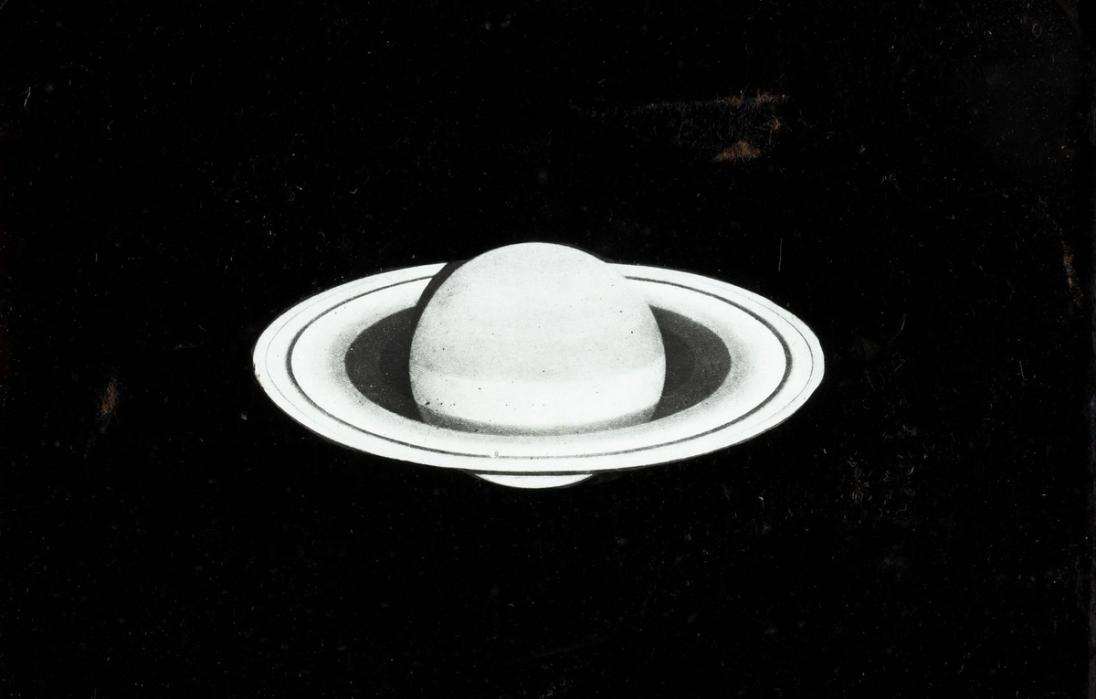
The planet Mars is also visible. It’s in the north. On 22nd April, the first quarter Moon is directly above the planet. Saturn is in the northeastern sky, making a trio of planets visible in the evening sky in April 2010.
It’s in the northeast sky, and on 25th April, on Anzac Day, the gibbous Moon is above and to the left or north. On the next evening, it’s above and to the right or east of the planet.
Those of you who are early risers, you can look at Jupiter in the eastern sky in the early morning, before dawn, while Saturn is low in the west but disappears very early in the month.This ends the guide to the night sky in April 2010. It’s available from the Sydney Observatory blog, www.sydneyobservatory.com/blog.
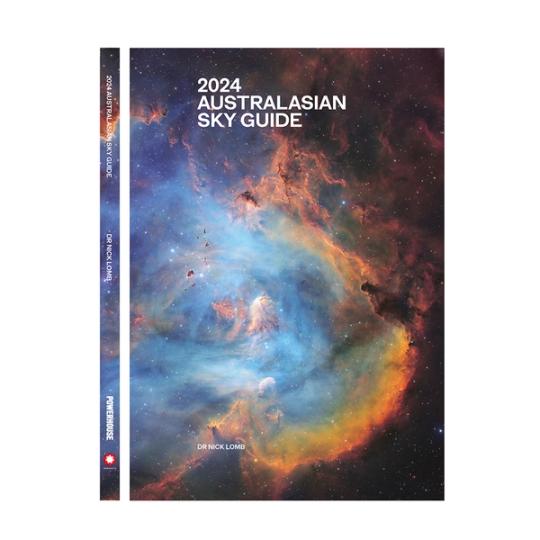
Of course, you can get more detailed information and monthly star maps from our publication, ‘The Australian sky guide’, which are produced each year for Sydney Observatory.This is published by Powerhouse Publishing at a bargain price of only $16.95. You can buy it personally from the Powerhouse Museum or Sydney Observatory and from good bookstores. You can order it online, at an additional postage fee, from www.powerhousemuseum.com/publishing, or directly from the blog, www.sydneyobservatory.com/blog, where there’s a banner at the top right which takes you directly to the order form for ‘The Australian sky guide’.