








December 2009 night sky podcast transcript
This is a transcript of a podcast of the December 2009 night sky guide. Download and listen to the podcast as you gaze up at the night sky.
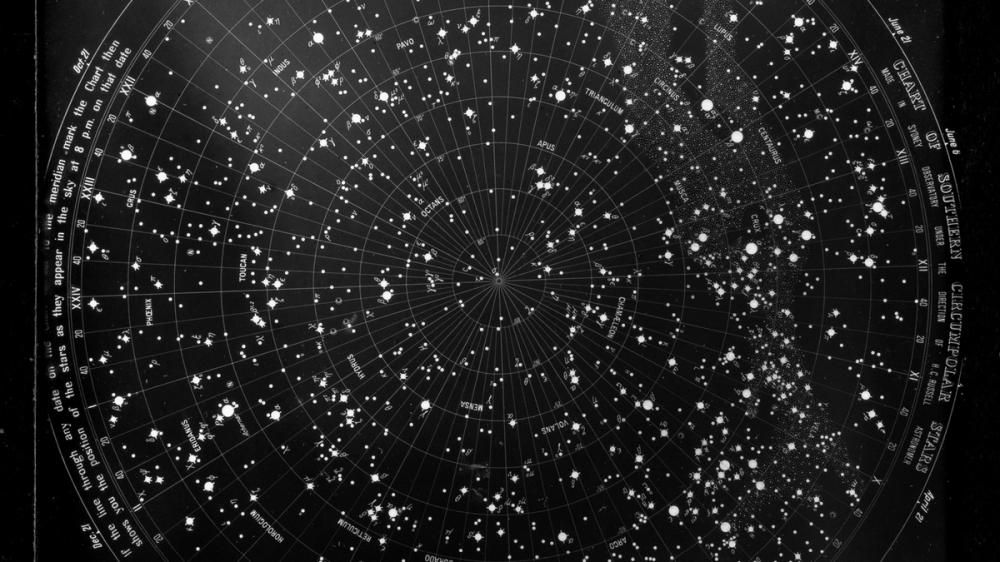
Geoffrey Wyatt: Hello, I’m Geoffrey Wyatt, Senior Astronomy Educator here at Sydney Observatory, and I’ll be talking to you about the sky this month in December. And remember that December is the 10th month of the old Roman calendar but it is the 12th month of the Gregorian calendar we use these days. You’ll need a few bits and pieces to help you with the sky guide and that is a printed copy o four star map available from www.sydneyobservatory.com or if you have your ‘Australian sky guide’ available, that is always a bonus.
“We are all stars that have learned to think.” Wow! I don’t know who said it. It’s been attributed to Paul Dirac but I have yet to confirm that – a very famous physicist early last century; one of the founders of quantum mechanics. And it’s an amazing statement: “We are all stars that have learned to think.” And perhaps this is why we like to sit down, look up at the stars in the night sky, and wonder…. Our Sun, which is, of course, the nearest star to us…. we can stretch out our hand and feel the warmth coming from it and it is a fantastic sensation (as long as, of course, you don’t get sunburnt). But the Sun is just an ordinary star like so many that we see in the night sky – except that it’s nice and close.
Well, what we’re going to do is to wait until our nearest star neighbour, the Sun, has gone down in the western horizon; we’re going to wait until it’s a little bit dark, and we’re going to start off and cast our view towards the west.
I need you to find somewhere where it’s relatively high, so you don’t have trees or buildings directly in your view. And you need to be able to find your cardinal directions of north, east, south and west. Of course it’s always handy to have a blanket to sit on – though hopefully it’s a lovely warm summer evening…. so something to sit on, perhaps a glass of wine to accompany the sky show, and a pair of binoculars always helps.
I’ll come back to that statement a little bit later – “We are all stars that have learned to think” – because when we look at stars, what we are in fact looking at are nuclear furnaces. Some of them close – only 150 million kilometres away, and others, billions of kilometres away.
In fact we don’t use ‘kilometres’ any more these days, when we talk about stellar distances we talk about light years and something even further away – the parsec and mega parsec. But obviously there’s a lot of things out there for us to look at.
What I want you to do to start off is to wait for the glow of the sun setting to fade off, and to look towards the west, and I want you to look at the star located at 23 hours right ascension and 30 degrees declination south.
Huh? Which star is that? And that highlights a bit of a problem that we have when we look around the night sky. There are many ways of identifying objects – whether we use the celestial equivalent of longitude and latitude, whether we use azimuth – which is degrees measured east of north and altitude degrees above the horizon, or whether we use something a little easier – and that would be constellations.
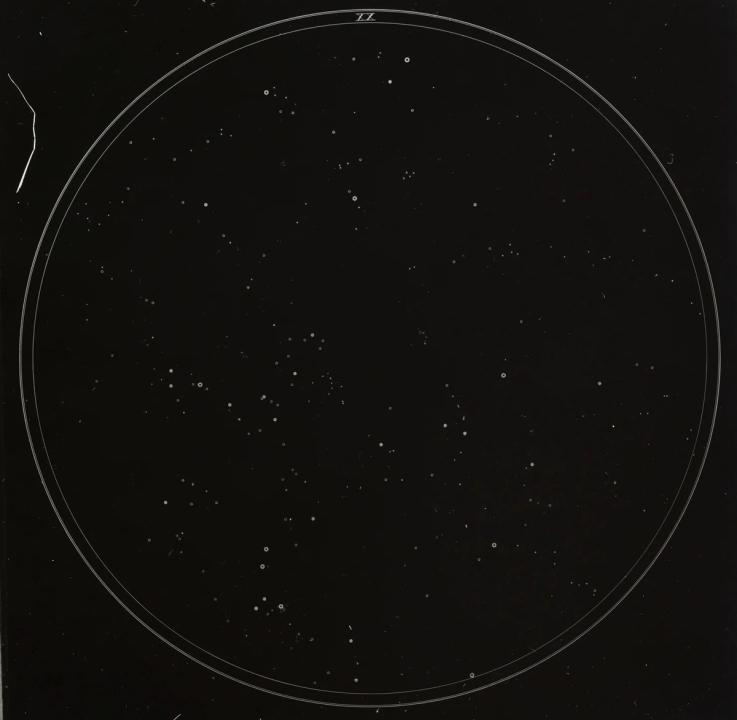
You see, depending on your age and on your eyesight, you should be able to see between 2,000 and 3,000 stars. It’s almost impossible, I would suggest, that most people can remember the positions of all those stars. But what astronomers have done dating back thousands of years and perhaps one of the first people to do that was Claudius Ptolemy was to make up a map of stars in the night sky, and break them up into easily recognisable areas or, if you like, suburbs in the sky.
We now have 88 of these constellations and some of them are very famous such as Virgo, Leo and a few of the others from the zodiac. And some of them not so famous, such as Fornax. Hmmmm.
What we’re going to do now is to start off and look towards the west, and about 30 degrees above the horizon we’ll see a fairly bright star. This is the brightest star in the constellation of Piscis Austrinus, the southern fish – and its name is Fomalhaut, which means ‘the mouth of the whale’ in Arabic.
Now Fomalhaut is the brightest star in this constellation but there’s not a whole lot else to it. And all I’d like you to be able to see is a 1960s style paisley swirl.
So if you can see anything in the western horizon about 30 degrees up that looks like a paisley swirl with one bright star, then you’re looking at the southern constellation of Piscis Austrinus.
How would you measure 30 degrees? It’s not easy for some people. If you’re used to the stars in the sky, you could look up and say, well directly overhead is 90 and half way up is 45, so 30 degrees is two thirds of half-way up. But, goodness, that gets confusing. So, as a rule of thumb, most people can use something like the following.
If you hold out your clenched fist at arm’s length, that’s roughly ten to 12 degrees. your smallest finger – your pinkie, held out at arm’s length is roughly one degree or twice the size of the full Moon. So you can use your clenched fist, indeed your outstretched fingers from thumb-tip to pinkie-tip, and that’s about 15 degrees or a little bit more depending on the size of your fist. So we can use something like this to make it slightly easier to navigate. Fomalhaut is less than 300 million years old. Now for stars that’s relatively young. And it’s only about 25 light years away. Remember that a light year is the distance that light travels in one year. And if you’re a pedant and you want to know that number, well, it’s roughly nine and a half thousand billion kilometres in one light year. So this star at 25 light years away for you and it is a huge distance. But astronomically, it’s relatively close. And what’s curious about this star being so young – the Hubble Space Telescope has recently been able to detect the birth of planets around this star. So when you look at this star with the naked eye, I want you to consider this is what the young solar system may have looked like 4 to 5 billion years ago. We may be watching the evolution and the birth of our younger sibling. So that’s Fomalhaut.
What I want you to do now is go every so slightly to your left – if we’re facing west ever so slightly left will take us to the south just a little bit – and we’re going to look for the long-necked bird, Grus the crane.
Continue to your left or, as I said, towards the south a little bit, but this time we’re going to go relatively high, to about 60 degrees above the horizon. Now 60 degrees, remember, that will be four handspans of outstretched thumb to pinkie, and that’ll be roughly in the same direction towards the south, and we’ll be able to see the eighth brightest star in the night sky – and that is Achernar, or ‘the river’s end’ in Arabic.
What we’re looking at here is a star that’s about 3,000 times more luminous than the Sun, and about 144 light years away. It’s also the 8th brightest star in the night sky as we look almost due south, so it’s a fairly easy star to see. Achernar is at the end of the river – the river of Eridanus, the constellation that winds its way from the deep south, zig-zagging across the sky back towards the heel of Orion that we’ll talk about a little bit later.
Ironically, at the end of the river, it’s a star to which some Indigenous communities of this country refer to as a star that you should never visit because it represents the place where the two Kungara brothers – represented by the Large and Small Magellanic Clouds take bad people at the end of their lives to meet a fairly nasty end pretty much over a roasting fire. So Achernar, the end of the river, is also the end of the line for some bad people.
Interestingly, Achernar, high up in the south is also the least spherical star that we’ve seen to date in the Milky Way. You see, it spins so quickly that its diameter is about 50 per cent wider in the equatorial plane than it is in the polar plane. So anything that spins tends to flatten out at the top and the bottom. The Sun does this. The Earth even does this. But Achernar spins so quickly there is a 50 per cent difference between the equatorial and the polar diameters. That is one seriously fast-moving star. And, by the way, it is directly opposite the south celestial pole from the constellation that many people wish to see at this time of year – but it just can’t be seen.
That constellation is, of course, the Southern Cross, or Crux. So if you’re looking for the Southern Cross in December, forget it – you’re not going to see it… unless you get up at about 3am onwards, and you’ll see it coming up into the view in the south-east. But at this time of year at a convenient time of night, there is no chance of seeing the Southern Cross.
Moving from south where we’ve just had a look at Achernar, we’re going to go around to the south-east and we’re going to look at the second-brightest star in the night sky which is called Canopus. Canopus is a very bright star. It’s about 15,000 times more luminous than the Sun, and we know it to be about 310 light years away.
It’s one of the more famous stars in the sky because it’s part of a now-defunct constellation of Argo the ship, which was a very famous ship from the stories dating back to the Trojan Wars in which Jason and the Argonauts used to have a ship called Argo.
But this constellation was too big an area in the sky so astronomers broke it up into four smaller constellations and Canopus is the brightest star in what we now call Carina the keel. But again that used to be part of a much larger constellation – a fairly famous one – dating back to the Trojan Wars.
While you’re looking at Canopus, the second brightest star in the night sky, just drop down a little bit and you may be able to see the ‘false cross’. Now I did mention that you can’t see the Southern Cross but at this time of year we do start to pick up the ‘false cross’ rising in the south-east and this does confuse a lot of people.
The ‘false cross’ is not really a constellation – it’s an asterism which means it’s made up from stars from different parts of the sky to make up a picture. And it does confuse people over the summer months.
It’s bigger and not as bright as the real Southern Cross. But more importantly, it doesn’t have two bright Pointer stars that point to the real Southern Cross. If we go from Canopus around to the east, we can see just about 20 degrees, so two clenched fists above the horizon, a star that is 25 times more luminous than the Sun at just 8.6 light years away. Eight point six light years is not very far away – so this is one of the closest stars that we can see. It is the brightest star in the night sky – it is Sirius, the dog star.
With a little imagination and with the map that you are looking at, you should be able to make out a fairly simple stick figure of a dog rising in the east. But there is just one very bright star, and that is Sirius, which shares its name with a ship from the First Fleet and one of the characters in the series of books about Harry Potter.
But Sirius is an important star. It was used thousands of years ago by Egyptians to work out the length of the year by something called heliacal rising.
They would measure the position of the star rising in the east, and they would look at the diminishing distance of difference between it and the Sun rising in the morning.
And when they got to the minimum difference between the two, they knew that that was their starting point. And that’s how they were able to work out that the length of the year was 365.25 days. Not bad considering they did this several thousand years ago.
The appearance of Sirius is also important to several Indigenous communities across Australia because most stars are used for two things: as some sort of calendar marker and secondly as a form of navigation.
Well the appearance of Sirius in the sky at this time of year was used by certain Indigenous communities as a symbol to start looking for dingo pups, which apparently made for good eating. So if you were a young dingo pup, the appearance of Sirius in the night sky was not necessarily a good thing.
Continue ever so slightly towards the east-north-east – so we’re continuing on our journey around the sky and we’re going to look fairly close to the horizon – so one outstretched finger span from pinkie to thumb above the horizon and you’ll see the ninth brightest star in the night sky – and it is, of course, the incredible Betelgeuse (pronounced ‘Betelyarze’) or ‘house of the central one’.
You’ll have to excuse my Arabic pronunciation of that which has evolved over the years – we now actually refer to this star as Betelgeuse (now pronounced ‘Beetlejuice’).
Betelgeuse is a star that is 135,000 times more luminous than the Sun. It is 1,000 times the diameter of the Sun. And yet it’s only, at most, about 10 million years old. For such a massive star to be so red, so bright and so big, it can only mean one thing: you are looking at the death of a star.
As I mentioned earlier, we are the stars that have learned to think. The most massive of stars that eventually blow up as a supernova produce all sorts of spectacular elements. Elements of the periodic table which somehow combine to make and form us and every other living creature in the universe. So we are, in fact, pieces of star that have learned to think.
And this dying star, Betelgeuse – who knows if it will become a supernova. Probably not, I don’t think it’s quite big enough. But when it dies it will shed its outer layers and the outer layers will move out through space eventually to be recycled – who knows into what?
If you’ve locate this red dying star of Betelgeuse, it represents, these days, the armpit of the hunter, Orion. Orion is one of the more famous constellations right around the world. It sits on the celestial equator so it is easily visible from the Northern Hemisphere and from the Southern Hemisphere. And if you look very carefully, you’ll see near the middle of the constellation a very nice straight line made up of three stars. These sit very close to the celestial equator.
Now Australians, New Zealanders and South Africans identify themselves readily by saying that these three stars look like the base of a traditional saucepan that we might use to cook some spaghetti. You see, in the Southern Hemisphere, we see everything the right way up. Well, of course, people in the Northern Hemisphere would say that we don’t, in fact, they’d say that we see things upside down. But – well, we’ll leave that argument for another day.
Since this constellation was named from the Northern Hemisphere, we do see it not so much as an upside down hunter but as a saucepan.
Now, what I want you to do is to look at the three stars that form the base of the saucepan and go up each side. If you look carefully, you’ll see another three star-like objects close together that form the handle. If you have a telescope on a tripod, or a pair of binoculars you can hold nice and still by wedging it up against a tree or something like that, and look at the middle star-like object of the handle of the saucepan (or the sword of Orion) – what you’re looking at there is an object called M42. Not a typically glorious name. But what you’re looking at is the birth of about 700 baby stars 1,300 light years away in a cloud of gas. The birth of stars. Betelgeuse is dying but nearby we’re seeing the birth. This is one of the most spectacular objects you can ever see through a telescope. It’s a huge cloud of collapsing hydrogen gas. It’s about 24 light years in diameter. It is a truly spectacular object to look at.
If we continue and follow Orion’s belt towards the north-east, we get to see another orange-reddish star. This star is at the base of an upside-down V which represents the head of Taurus the bull. The star: Aldebaran. It’s about 150 times more luminous than the Sun and 65 light years away, making it the 13th brightest star in the night sky. It’s Arabic name means it is the follower. But the follower of what? Well, very close by, if you look carefully, you’ll see a little cluster of stars. Now these aren’t baby stars but this cluster of stars that we’re about to look at are in fact stars that are in the stellar nursery perhaps. These are stars of the Pleiades or M45 – one of the most beautiful clusters in the night sky. And it is ever so slightly to the left of the bright star Aldebaran and about 25 degrees or one outstretched pinkie to thumb and then one clenched fist above the horizon.
Dominated by hot young blue stars less than, well, probably about 150 million years old, this cluster of stars 445 light years away is an absolute beautiful object to look at.
Astronomers love it. Astronomy students hate it because it’s in just about every astronomy exam you could ever imagine. Why? Well, because what you’re looking at is the nearest thing we have to a controlled situation. You have a group of stars that were formed at the same time. They’re at the same distance. They’re formed from the same big gas cloud so they have the same chemical composition, so the only difference here is their mass. So this is about as controlled a situation as we can get. And as a result this cluster of young stars is commonly looked at by astronomy teachers and suffering students.
But really it’s just a beautiful group of stars that represents Atlas who carried the world upon his shoulders, his wife Pleone and their seven daughters. And that gives you a bit of a hint as to their common name. For some strange reason, and we don’t know why, almost all around the world this constellation is referred to as the Seven Sisters. I don’t know why it’s not ‘the seven hills of Rome’, but it just seems to be that most cultures refer to this beautiful group of stars as the Seven Sisters.
And, even more curious, if you look carefully, you won’t see seven. Most people see six; and if you’ve got good eyesight you might see eight or nine. But universally referred to as the Seven Sisters. Even some Indigenous communities have a fantastic story about the Woode Gooth-Tha Rra and the Minma-Birnee. And this refers to seven sisters who descended from the heavens to form all the living creatures on the Earth. But one of the sisters left the group and fell in love with a Spirit Man. And they stayed on Earth to become the parents of the Earth. But time and time again we see this idea of Seven Sisters. It really is quite unusual.
As we continue almost due north at this stage, we can see just one relatively bright star in the zodiac constellation of Aries the ram. It’s not particularly noteworthy because, unfortunately, Aries is small. But Hamal is the brightest star – and basically you’ll see three stars together, and if you join the dots, it’s slightly bent. Now, Aries the ram, of course, represents the Golden Fleece that Jason and the Argonauts aboard the ship Argo Navis pursued in the story of Jason and the Argonauts. This is one of the most famous sky stories that we have. So many constellations keep referring back to the search for the Golden Fleece and Jason and the Argonauts. But sadly, as you look at Aries, you can only see about three stars.
If you move a little more to the north by north-west and look carefully, depending on how much light is around, you might be able to make out for stars that make up – a square. You might think – well, big deal, it’s a square. Yes – but not just any square. The great square of Pegasus the flying horse. There’s a very romantic constellation to look at. And if you do look carefully you will be able to see that it has a long neck, and then the head going down to the nose. And it has two tiny legs going out the front but, more importantly, for a flying horse – it does not appear to have any wings. Oh dear. I think that some of the people that made up some of these constellations thousands of years ago missed a little of the detail. Or perhaps enjoyed a little too much red wine. The main thing is, as long as you can see a square, you’re looking at the square of Pegasus.
Wrapped around Pegasus is another one of the zodiac constellations which is really difficult to see. It looks like little two circular groups of stars joined together by a large V shape. So you’ve got to join the dots and use your imagination and look for these two little circles joined by a V that wraps around that great square.
And what you’re looking at there are the gods Venus, and her son Cupid tied together by a piece of thread so that when they swim to safety as Pisces the fish, they won’t get lost or separated. So there you have the zodiac constellation, Pisces.
Now continue back around to the west where we started, and it’s very difficult to see, but going down in the west will be the zodiac constellation of Capricornus the sea goat. It looks a bit like a triangle but I think it’s a bit too low to worry about at this stage.
So, what we’ve done, we’ve started looking west, and we’ve moved around to our left – going from the west to the south to the east to the north and back again.
We haven’t looked so much overhead. Why not? Well, quite simple really. At this time of year there’s not a whole lot overhead. Yeah, sure, there are stars up there. But the constellations of Fornax the furnace, Phoenix the bird, Cetus the sea monster or whale, and Sculptor aren’t really high on the list of things to look at.
Sure, some of them are interesting. But they’re not terribly bright and unfortunately some of them such as Sculptor are one of these constellations that were, if you like, manufactured in the 18th century by Nicolas Louis de Lacaille. So they’re not terribly bright and there’s not much up there.
All the action for this month is within 40 to 60 degrees of the horizon all the way around. And that also explains why we can’t see any of the Milky Way. If you’re outside looking for that beautiful glow, that river in the sky – Via Lactea – it’s not visible now. You have to wait until much later in the evening or early morning, and you’ll see it coming up in the eastern sky. But at this time of night, you cannot see the bright band of the Milky Way.
But don’t forget, everything – absolutely everything – that you see in the night sky, apart from three objects is part of the Milky Way family. Those three objects are the great galaxy in Andromeda, which is just near the lower right corner of Pegasus that we talked about a minute ago, and the two clouds of Magellan which will be visible towards the south. But everything else – the dimmest of stars, the brightest of stars, is all part of the Milky Way.
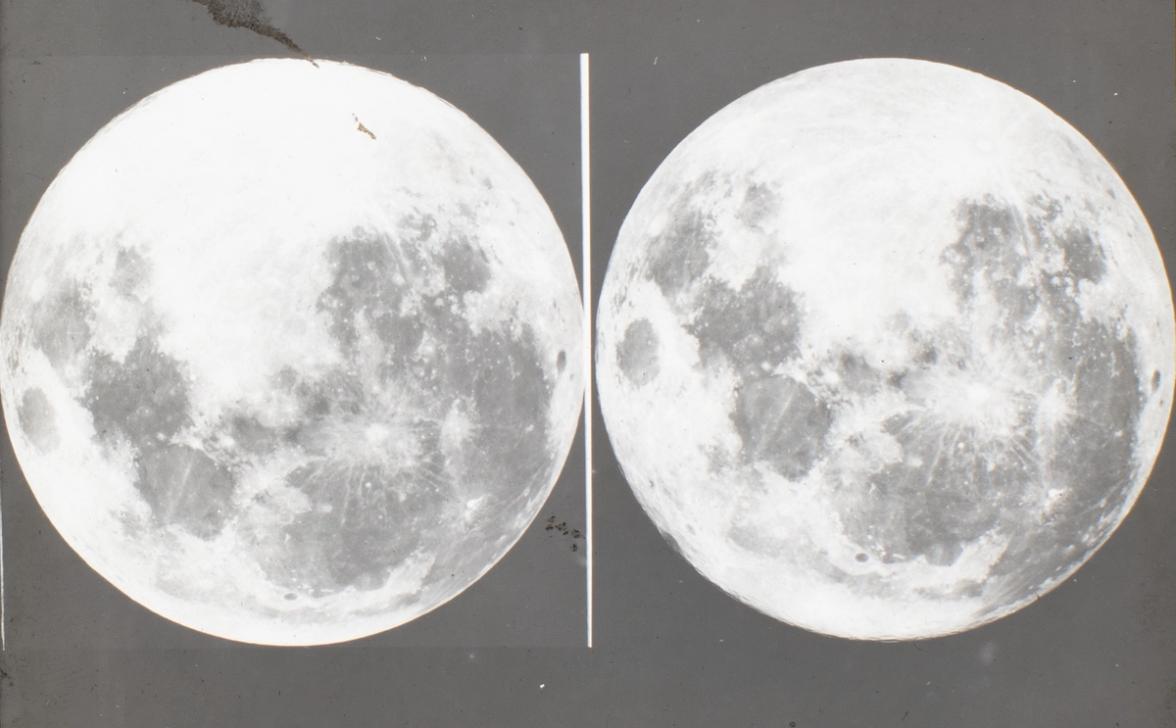
For the month of December 2009 there are several special events. The full Moon will occur on the 2nd at 6.30pm. Last quarter on the 9th December at 11.13am. The new Moon when the Moon is roughly between us and the Sun and you can’t see it will be on the 16th at 11.02pm and first quarter – which is the best time to look at the Moon through a pair of binoculars or a small telescope will be on Christmas Day, the 25th at 4.36am.
By the way, do you know the Latin name for the Sun? I think most of us do. It’s Sol. Do you know what it is to stand still in Latin? Sistere. If you combine ‘Sol’ and ‘sistere’, you end up with ‘solstice’. The summer solstice when the Sun appears to be still in declination, which means it’s reached its most southerly point as we look at it, will occur on the 22nd December, at 4.47am.
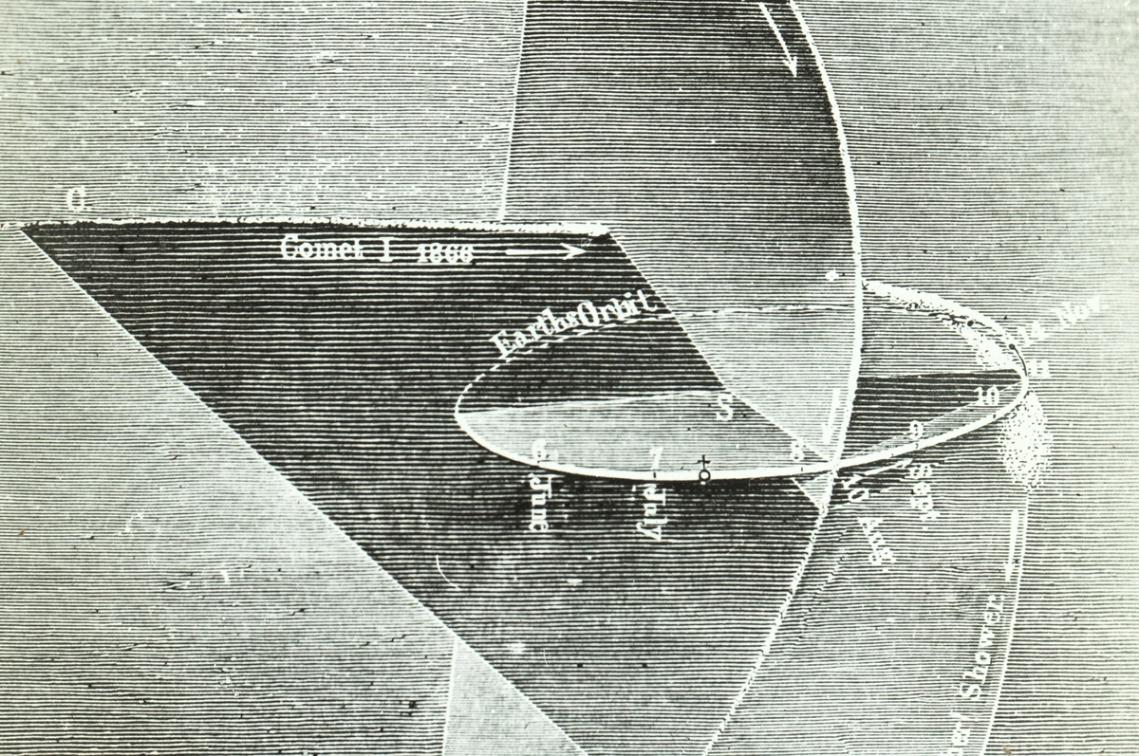
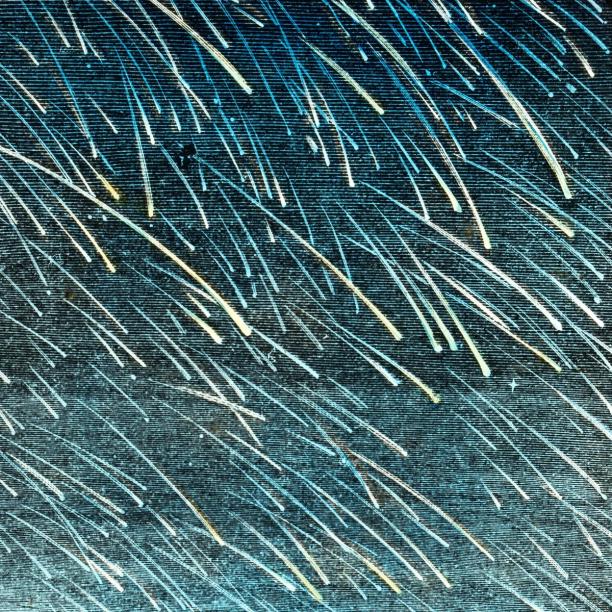
December this year – and in fact every year – is a good time to see the Geminid meteor shower. And for December 2009 it will peak on the mornings of the 14th and 15th. Now the Geminids are a meteor shower caused by an object known as 3200 Phaethon which is thought to be an extinct comet or an Apollo asteroid.
Usually the best time to see meteor showers is early in the morning. But these meteors, coming from the constellation of Gemini the twins will be best viewed from about 11pm onwards. So relatively early in the night as far as meteors are concerned. So, locate Gemini very late in the evening and watch it until about an hour or so before sunrise and you’re almost guaranteed to see what looks like a small shooting star moving at up to 35 kilometres per second. Please remember: ‘shooting stars’ are not stars. They are small pieces of dust or rock entering the Earth’s atmosphere, heating up and burning up.
As we look towards the west, in December 2009, there will be one astoundingly bright object, and that is in the constellation of Capricornus the sea goat, Jupiter, king of the gods, largest of all the planets. And the most significant of the planets given that this year is the International Year of Astronomy. For it was this planet that Galileo pointed his telescope at in 1610 and his view, his observations of the moons of Jupiter, changed our perception of the universe forever.
You see, people used to believe that the Earth was the centre of everything. But Galileo’s observations showed moons orbiting Jupiter. Now, even with a good pair of binoculars you may be able to pick out the four moons of Jupiter. So, please, don’t miss the opportunity to have a look at Jupiter low in the western sky throughout December.
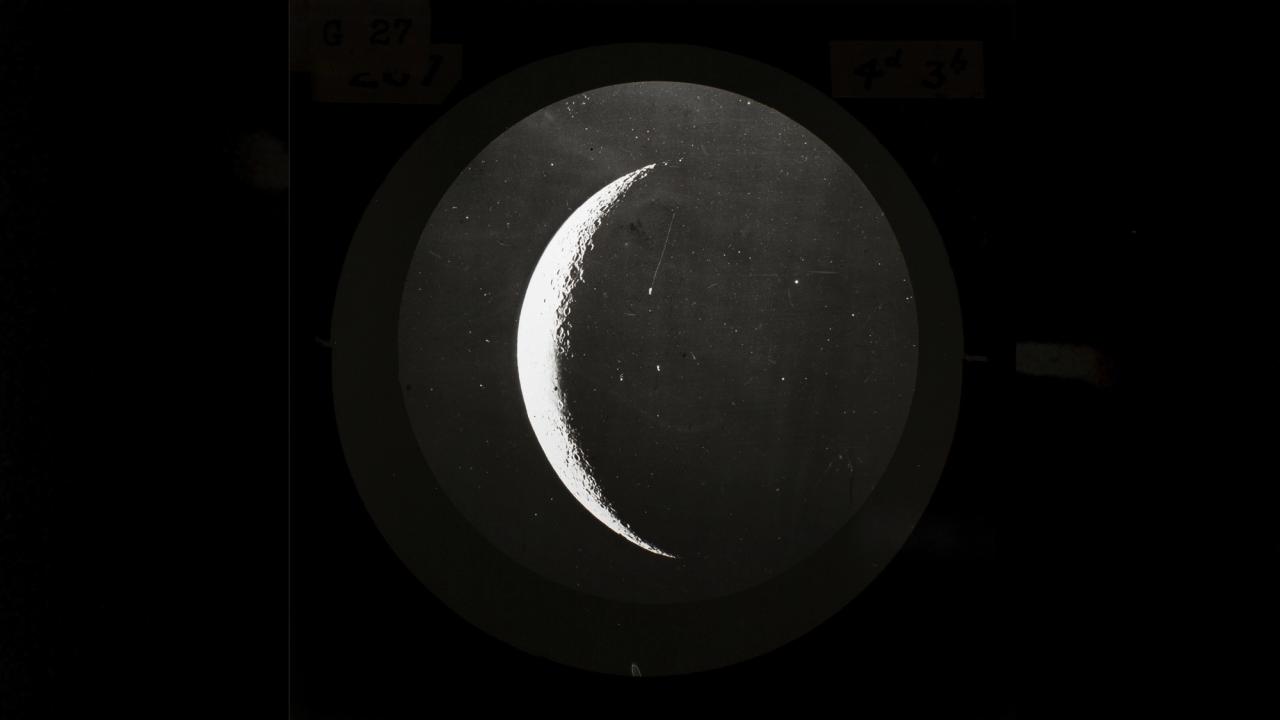
On 21s December, you’ll be able to see a very young crescent Moon. Only about 20 per cent of the Moon will be visible immediately below Jupiter. So, immediately after sunset, it should be a pretty nice view.
There’s not much of a chance to see the ever-elusive Mercury because it sticks so close to the Sun. But on the 18th, just after sunset, the very young crescent Moon will be just below it. So try and see Mercury just above the crescent Moon on the 18th.
In the morning sky, Mars continues to be completely underwhelming – so I wouldn’t even bother to look for it. But it’s a small reddish dot in the constellation of Leo the lion.
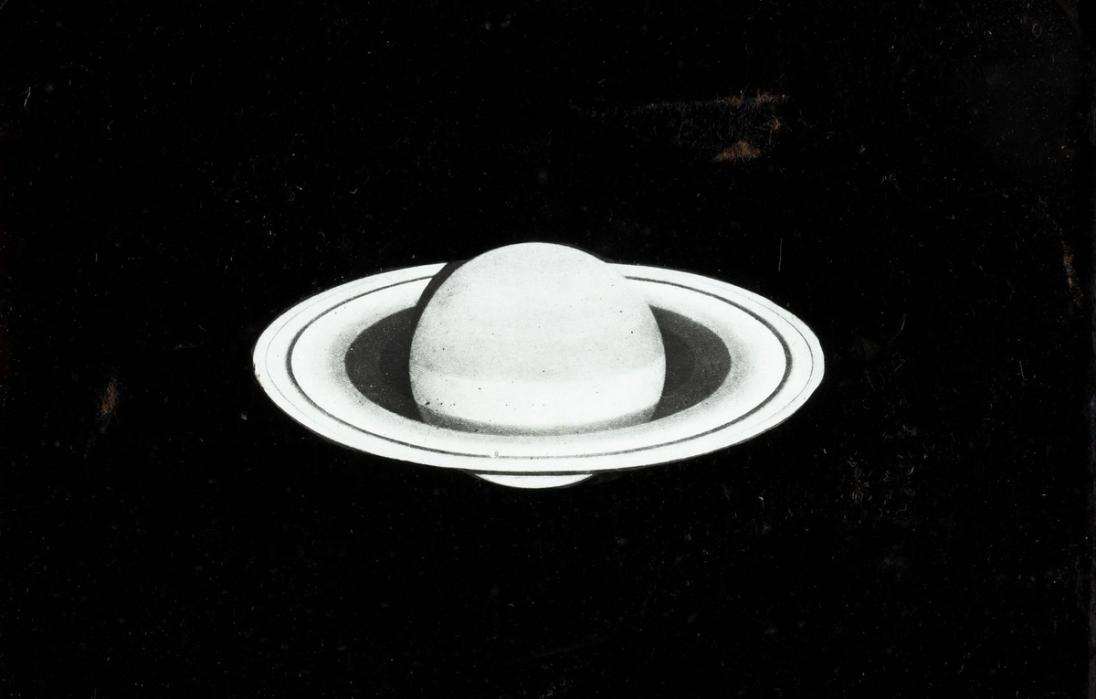
Whereas Saturn now continues to improve its view after its September ring plane crossing. So the rings over the next six to seven years will gradually open up, giving us a better view, day by day. At the moment Saturn is in the constellation of Virgo.
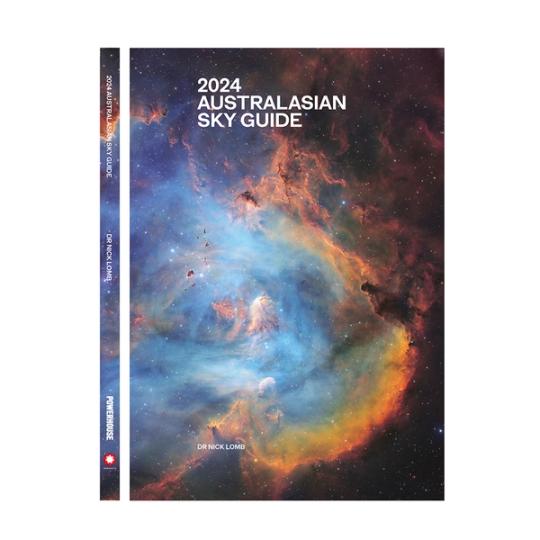
Don’t forget, if you’d like to get some more information about what’s visible in the night sky you can purchase your copy of the ‘2010 Australian sky guide’ by Dr Nick Lomb. Or visit our website for more details at www.sydneyobservatory.com.
This is Geoffrey Wyatt, and I’d just like to remind you again: we are indeed stars that have learned to think.