






November 2009 night sky podcast transcript

This is a transcript of a podcast of the November 2009 night sky guide. Download and listen to the podcast as you gaze up at the night sky.

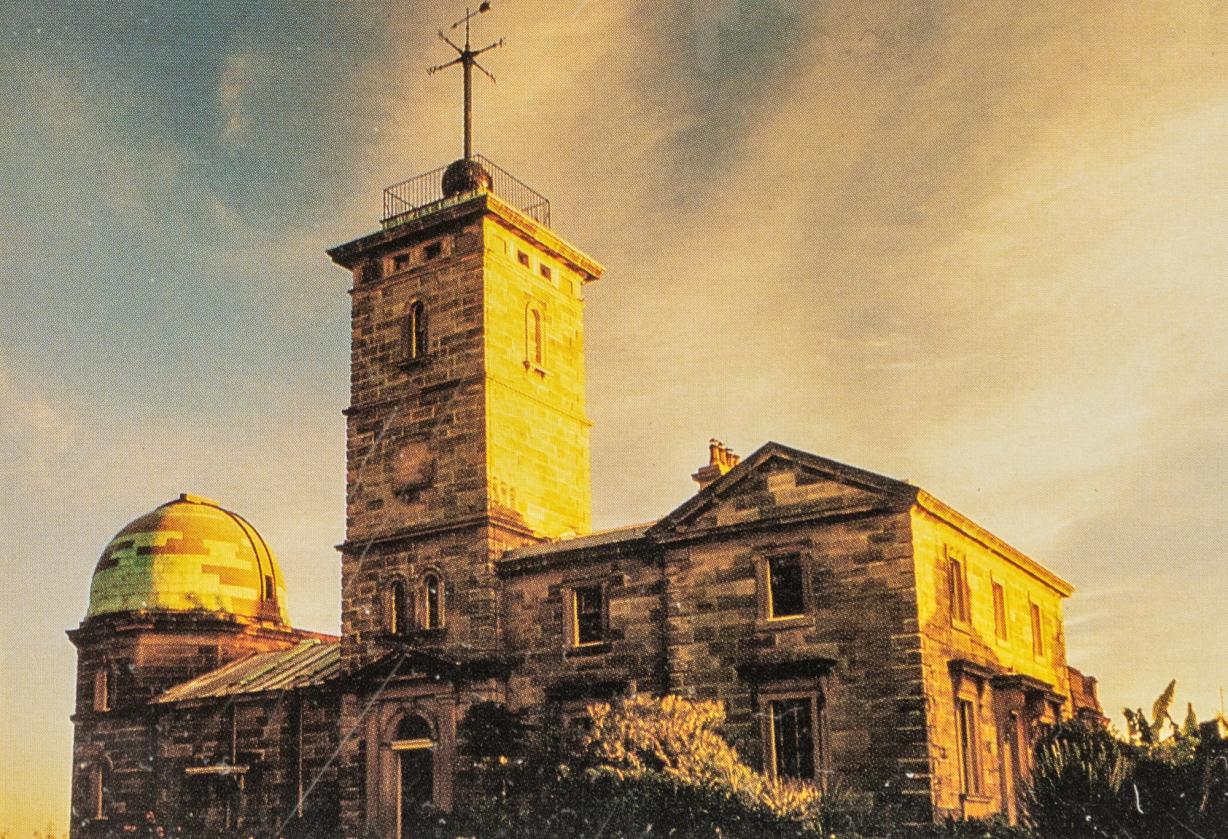
Melissa Hulbert: Hello and welcome to the night sky guide for November. My name is Melissa Hulbert and I’m an Astronomy Educator at Sydney Observatory.

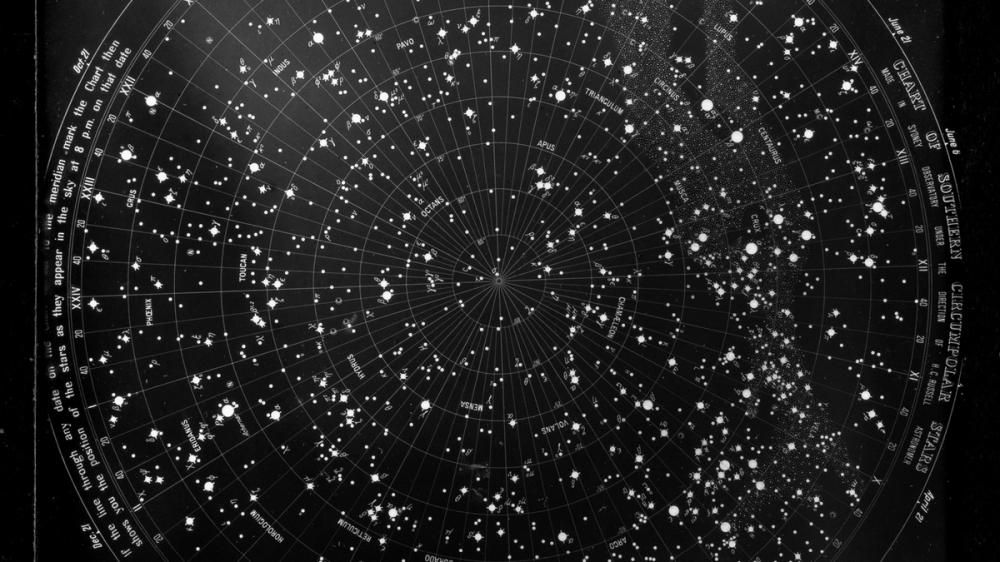
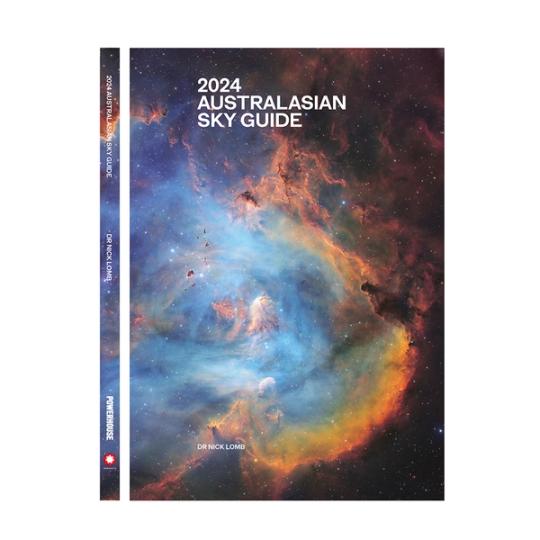
Before we start our night sky tour, make sure you download the November sky map from our website www.sydneyobservatory.com.au/blog or, if you have one, use your star map from our book, ‘The Australian Sky Guide’.

Armed with your sky map and a small torch with some red cellophane covering it, find a nice dark place away from the glare of the street lights and make sure you know your cardinal directions – north, south, east and west. Remember that the Sun rises in the east, moves through the northern sky during the day and sets in the west; or a small compass will also point you in the right direction. Pick a comfortable spot either on a rug or a deck chair that you can lay back in. Wait about 5-10 minutes and allow your eyes to adapt to the darkness.

Turn towards the north. High in the northern sky is Pegasus, the winged horse from mythology, probably with its origins in both Mesopotamian and Etruscan starlore. In Greek mythology, Pegasus was said to have been born from the blood of Medusa (the Gorgon) after she was slain by Perseus.

He is also associated with poetic inspiration with a fountain that was sacred to the Nine Muses which was created when he stamped his hoof on Mount Helicon. Pegasus was principally the steed of Bellerophon and in a dream Athene appeared to Bellerophon with a golden bridle and advised him to ride Pegasus, however some legends say that Perseus rode the winged horse when rescuing Andromeda.
Pegasus is easy to find, with the best-known feature of this constellation the aptly named – ‘Great Square of Pegasus’. It is rather large at over 15˚ in width and 13˚ in height, but despite its size there are relatively few bright naked-eye stars within the Square. Working out degrees in the sky is quite easy. Hold your arm out towards the sky and make a fist. From one side of your fist to the other, this is 10 degrees. Hold out your other arm with your three middle fingers held up, this is approximately 5 degrees. Put your hands side-by-side and you now have 15 degrees, the size the ‘Great Square’ covers in the sky. This does work for everyone, as your arm length is proportional to your hand size.

Four stars outline the Square and in the past all four were part of the constellation, however delta (δ) Pegasi is now known as alpha (α) Andromedae. This star was also known as Sirrah meaning ‘navel’ and marked the navel of the horse. Pegasus is the right way up for us , so we see the neck and head of the horse stretching towards the west and what appears to be his hind legs towards the north east. One interesting object is M15 or NGC 7078, a magnitude 6 globular cluster, easily visible in binoculars and small telescopes. Medium to large apertures will resolve some of the outer regions of this cluster and a dense core. M15 lies about 33,000 light years from us.

Remember I mentioned the horse’s hind legs earlier? Lets go back to those. The legs are part of the constellation Andromeda who was the daughter of Queen Cassiopeia in Greek mythology. If you are away from city lights then look carefully at this area of the sky. You might see an elongated fuzzy patch of light with your unaided eye. This is the Andromeda Galaxy and is the most distant object visible to the unaided eye, lying about 2.4 million light years from us, though recent data from the Hipparcos satellite has suggested that this distance might be closer to three million light years. While a fascinating sight with just your eyes, if you have binoculars or a small telescope then a most amazing sight awaits you – the dark dust lanes of the spiral arms, a bright core, and if you are lucky you might pick up one or both of its companion galaxies.

To the east and slightly south of Pegasus is Cetus, the fourth largest constellation in the sky. Cetus has been depicted as a variety of animals but is generally a sea-monster or dragon-fish but some refer to it as merely a great whale.
Cetus is one of the most ancient constellations in the sky as it was Ptolemy who originally assigned 22 stars to this constellation. It contains a jewel box of coloured stars for both telescope and binocular users alike.

South of Cetus you will see the brilliant star Achernar, which means ‘the river’s end’ as it marks the end of the river, Eridanus. Follow Eridanus towards the east and there rising in the sky is our familiar signpost of the summer skies – Orion, the Hunter. In Greek mythology Orion was a hunter of great skill and boasted that he could kill all living animals. Gaea the Earth goddess was alarmed by his statement and fearing for all the animals on Earth she sent a scorpion to kill him. Orion was stung on the shoulder but was revived and placed in the stars along with the scorpion. This entire myth is played out in the stars each year. As Scorpius the Scorpion rises in the east, Orion sets in the west, defeated. When Scorpius sets in the west the healer Ophiuchus crushes the Scorpion into the Earth and revives Orion so he can rise in the east again. Orion appears in many cultures, even the ancient Egyptians saw Orion as Osiris, god of the underworld and regeneration.
If you’re having difficultly picking out the Hunter then look for ‘the Saucepan’. This is a familiar group of stars for those of us in the southern hemisphere and is Orion’s belt and sword. Orion is on his side as he rises above the eastern horizon.

The middle point of light in the handle of the Saucepan (or the sword) is the famous Orion Nebula or M42. It is one of summer’s most magnificent sights and will keep observers using binoculars or a telescope enthralled as you follow the swirls and loops of gas and dust is this active stellar nursery. Stars are forming out of the gas is this nebula which stretches about 20 light years in diameter and is located 1,500 light years from us.

To the south of ‘the Saucepan’ you should see the red supergiant star Betelgeuse, which is 500 times larger than our own star the Sun. Or, if we were to place Beletgeuse where our Sun is, at the centre of our Solar System, then the edge of the star would be near Jupiter’s orbit. Betelgeuse is the shoulder or armpit of Orion and is about 427 light years away. To the north of ‘the Saucepan’ and diagonally opposite Betelgeuse is a brilliant white star – Rigel, one of Orion’s knee’s. Rigel is a blue-white supergiant star that shines 60,000 times brighter than our own Sun. Rigel also has a small companion star which is best seen through a telescope though if seeing conditions are not the best, small telescopes will struggle to see the companion through the glare of Rigel.

Let’s return to the belt of Orion and follow its line to the west where we come to the back of a sideways ‘V’. This ‘V’ is the head of Taurus the bull which appears to be charging at Orion. Like Cetus, Taurus is one of the most ancient constellations in our skies and like Orion is also steeped in Greek mythology. It is said to represent the bull Zeus changed into to carry Princess Europa off to Crete.
Back to the ‘V’ which is part of a large open star cluster visible in binoculars called the Hyades. One of Taurus’ eyes is an orange giant star called Aldebaran which means ‘the follower’. It follows the Pleiades, a wonderful open star cluster that can be seen with your eyes to the north west of the ’V’. The Pleiades are known as the seven sisters as seven stars are readily seen with your eyes, but away from city lights, up to 13 can be seen with the unaided eye. The whole cluster contains about 100 stars and binoculars are the best way to view this marvelous object.

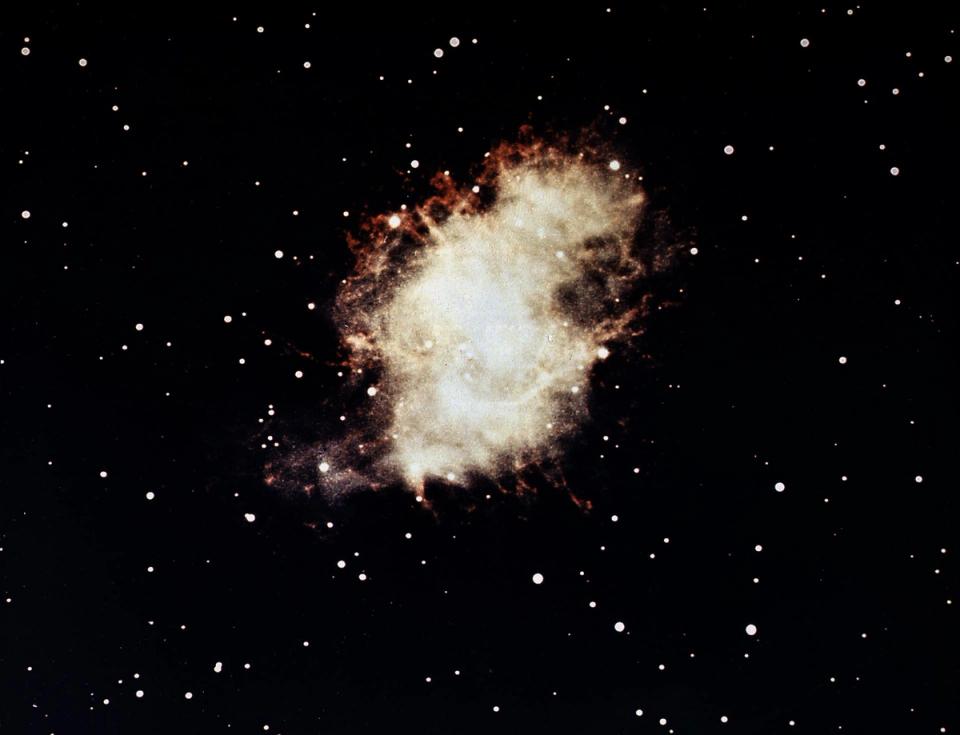
Another of Messier’s objects, M1 is also in Taurus. M1 is best seen in telescopes and is known as the Crab Nebula, but is in fact the remnant of a star that exploded as a supernova on July 4 1054AD. How can we be so precise with the date?

Chinese astronomers kept very accurate records of the night sky and recorded the position of a “new star” on their star maps on this date. Although the Crab Nebula is 7,000 light years away, the supernova was brighter than the planet Venus for weeks before it faded from view after almost two years. Even today, the nebula is still expanding at a rate of more than five million kilometers per hour. It emits radiation in all wavelengths from gamma rays to x-rays, UV, optical and infrared radiation and radio waves. It is exceptionally bright for an SNR. The reason for this is its central pulsar which energizes it.

Careful studies of the Crab Nebula have revealed a pulsar near the centre, which emits at a rate of 30 pulses per second. Additional observations have shown that the pulse rate is slowing down. During the next 1,000 years the pulse rate will fall to half its present value.

Time to turn and look towards the south. Can you see our familiar signpost of the Southern Cross and Pointers? Look low, close to the south horizon and there they are. In summer these constellations are low in our evening skies but by early morning, they are rising again to the positions we are familiar with.

However, in their place are two cloud-like objects, a large one and a small one (you will need to be away from the city lights to see them). These are the Magellanic Clouds, named after the explorer Ferdinand Magellan. They are the two satellite galaxies of our own Milky Way. The larger of the two is in the constellation Dorado, the goldfish. In 1987, the Large Magellanic Cloud (LMC) was the site of the first supernova, visible to the unaided eye since 1604. This supernova was named SN 1987A. The 1604 supernova was observed by the astronomer Johannes Kepler.

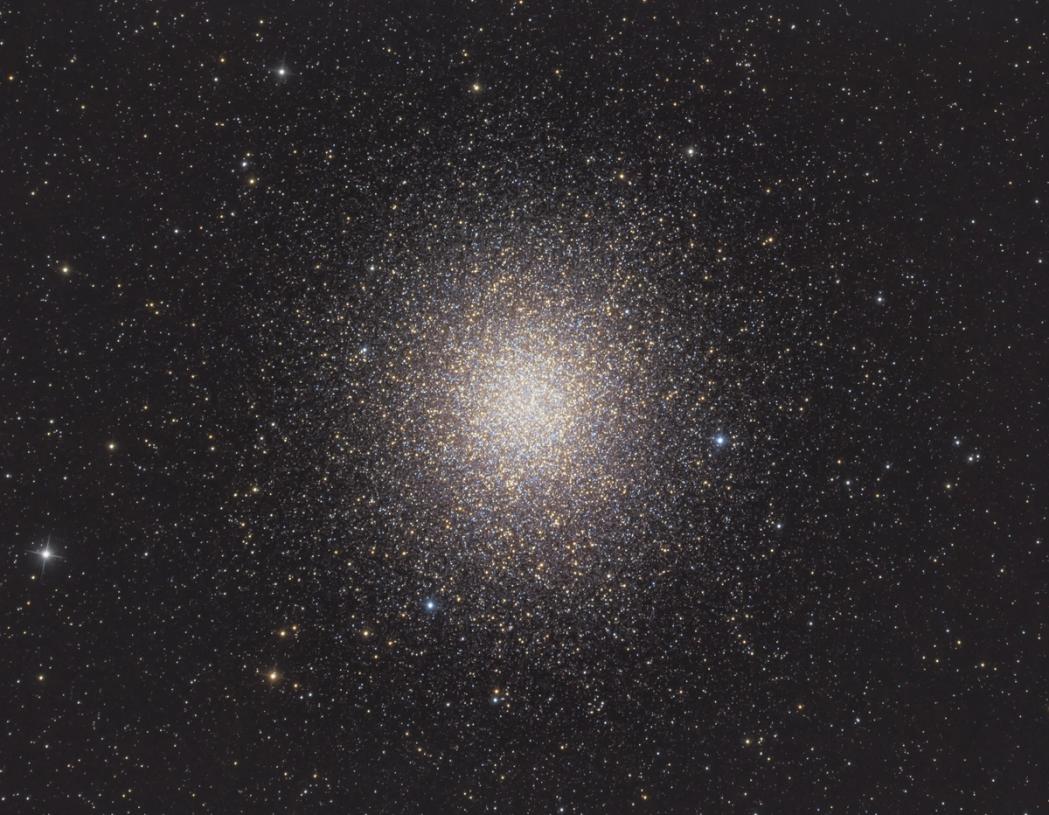
The Small Magellanic Cloud (SMC) is in the constellation Tucana the Toucan. Sitting just beside the SMC is 47 Tuc or NGC 104 a fine globular cluster, second only to Omega Centauri. It is a fuzzy object which at 4th magnitude can be easily seen with the unaided eye, away from city lights. In ancient times it was thought to be a star and given a stellar designation. 47 Tuc has the same apparent size as the Moon and a tightly packed core. Telescopes with apertures of 100mm or greater are required to even begin to resolve this globular. It is 16,000 light years away, making it one of the closest globulars to Earth.

So what else can we look forward to seeing in the sky in November 2009?
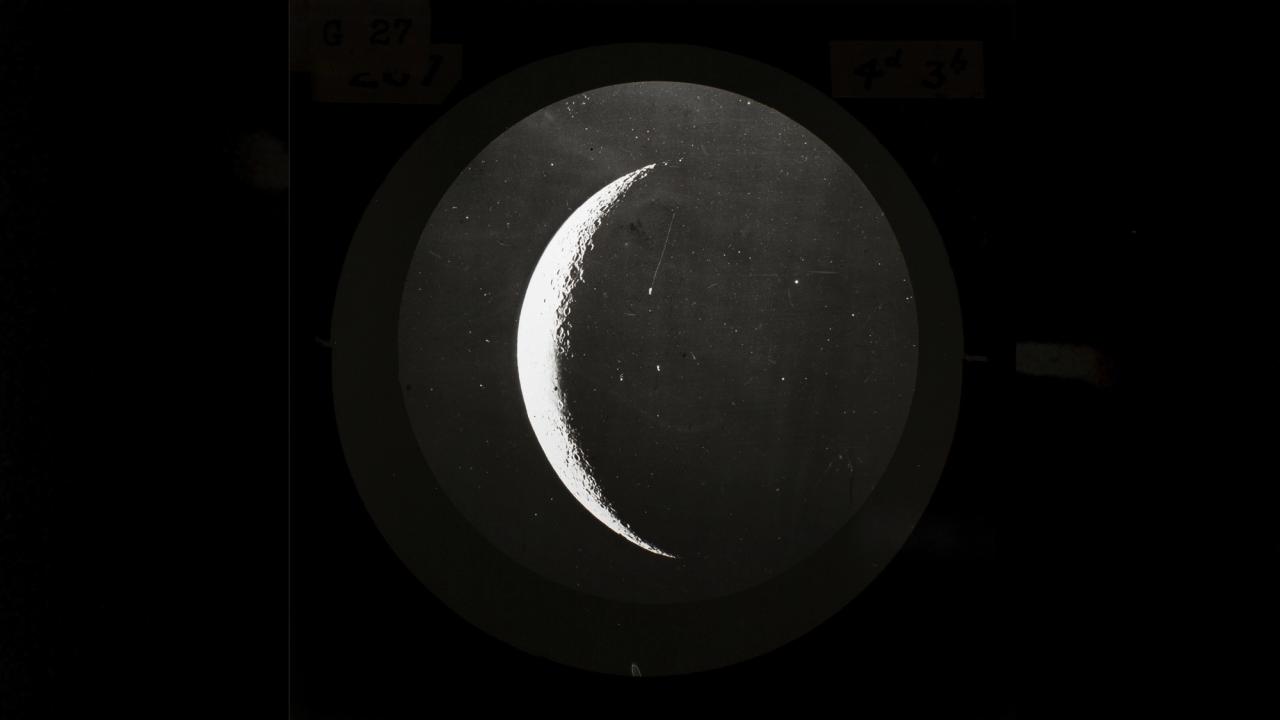
This month after sunset look high in the north-western sky for a very brilliant star-like object. This is the planet Jupiter, the largest planet in our Solar System. On the 23rd the 6-day old crescent Moon will be just to the south of Jupiter and on the 24th the 7-day old crescent Moon will be just to the north of the planet.

In the middle of the month, Mars starts to rise around midnight in the constellation of Cancer. However, on the 1st and 2nd Mars can be seen crossing the large open star cluster M44, commonly referred to as the Beehive Cluster. The cluster is easily visible to the unaided eye in dark skies, in fact as a whole, the cluster is brighter than all the stars that make up the entire constellation of Cancer!
This month Venus is lost in the glare of the rising Sun and cannot be observed. It will reappear in the evening twilight next February.
November also has something in store for all of you early-birds! In the eastern pre-dawn sky Saturn returns to the morning sky. On the 13th, the 25-day old waning crescent Moon will be above and to the south of Saturn.

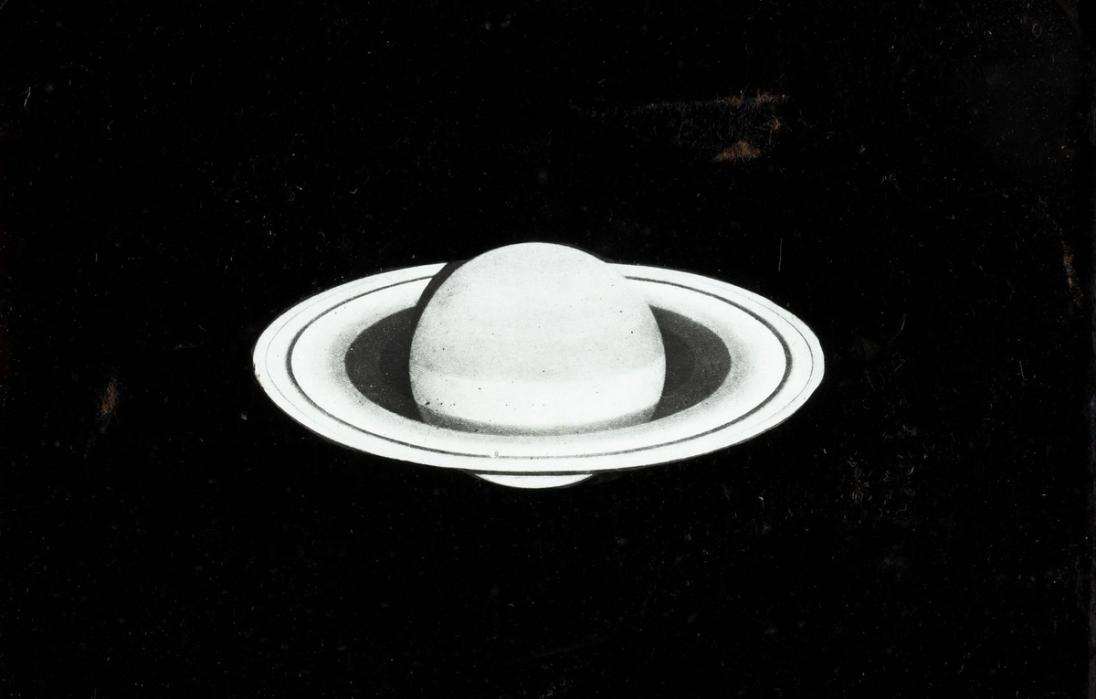
Saturn’s rings are slowly opening after the ring plane crossing in early September. Those with a telescope will view the north side of the rings for the first time since 1996. This northern view will continue until March 2025, when the Earth next passes through the ring plane.

With the weather warming up, Saturn is well worth getting out of bed for!
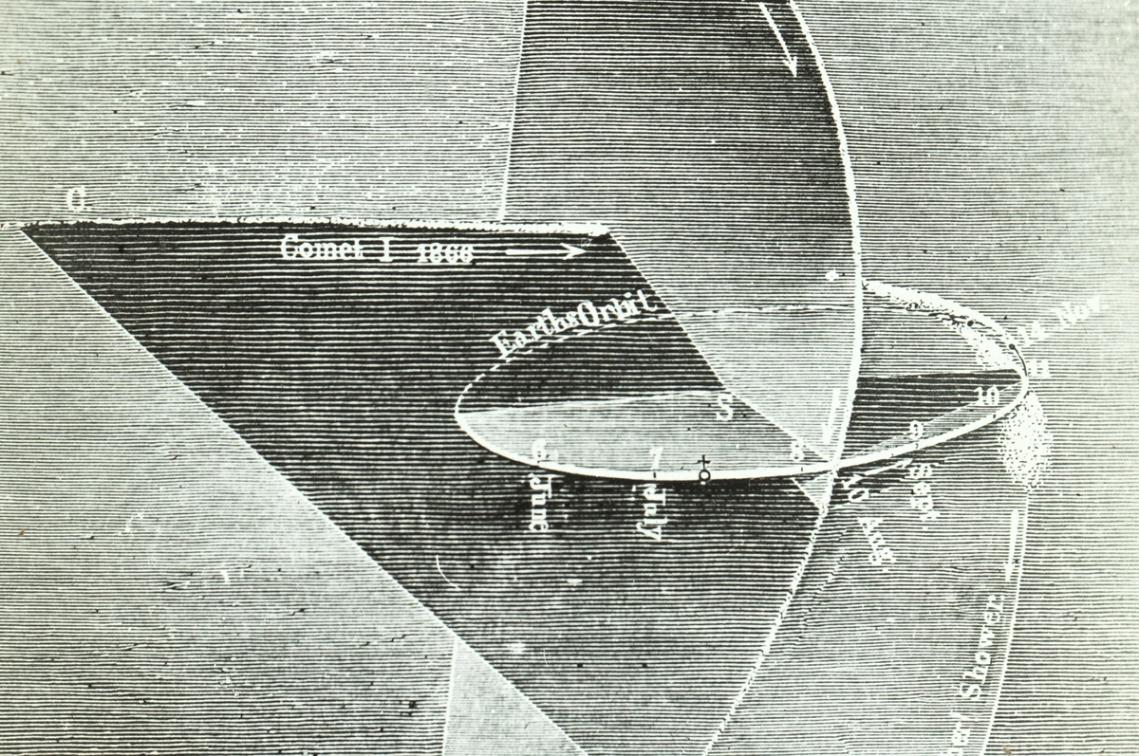
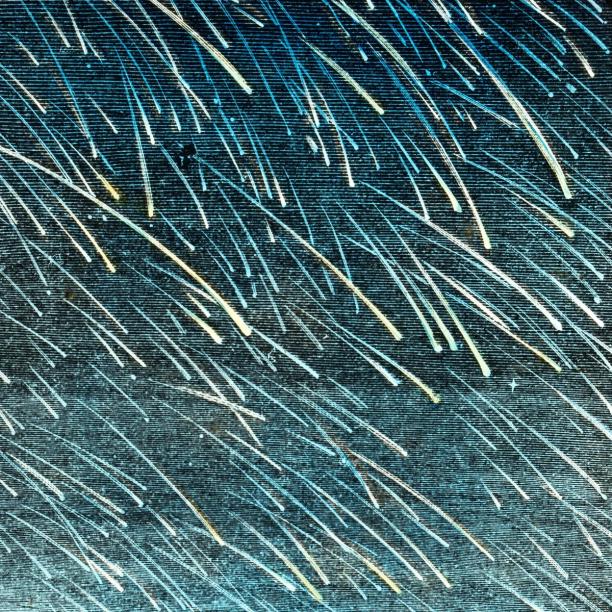
I do have one wildcard for all you daredevils this month which is the Leonids meteor shower. This shower is linked to the periodic comet 55P/Tempel-Tuttle and is usually at its best about every 33 years when the comet returns. When comets pass close to the Sun they leave a trail of small particles and dust behind. When the Earth passes through this trail we see lots of meteors appearing to come from the one area of the sky. This is called the radiant and each shower is named after the constellation or bright star near which the radiant appears. In this case it’s the constellation of Leo and the radiant is within the sickle or head of the lion. The best time to observe any meteor shower is after midnight, usually a few hours before dawn. The Leonids are active from the 10th to the 21st of November, with the peak on the morning of the 18th. Between 1998 and 2002, the Leonids put on spectacular displays however activity can vary from year to year. 2009 is looking good for the Leonids, with early predictions indicating the potential for peak rates of 100+ meteors per hour. With predictions like these, combined with a New Moon the day before, it is well worth the effort of an early morning, particularly away from city lights, the sight would be incredible!

Unfortunately it’s now time for me to bid you goodbye, clear skies and see you next month under the stars!

One Response to “November 2009 night sky podcast transcript”

  1. mberri  on November 9th, 2009

    I live on the Central Coast, north of Sydney and have a broad view of the north, east and south sky over Gosford.
    I have been observing luminous bodies in the sky that pulsate red, green/blue and orange/amber lights, as opposed to just the luminous ‘stars’ that are normally seen.
    They have been noticed in varying numbers since December 2008. Do you have an explanation?


Leave a Reply