





Harry watches solar cycle 24 gather pace

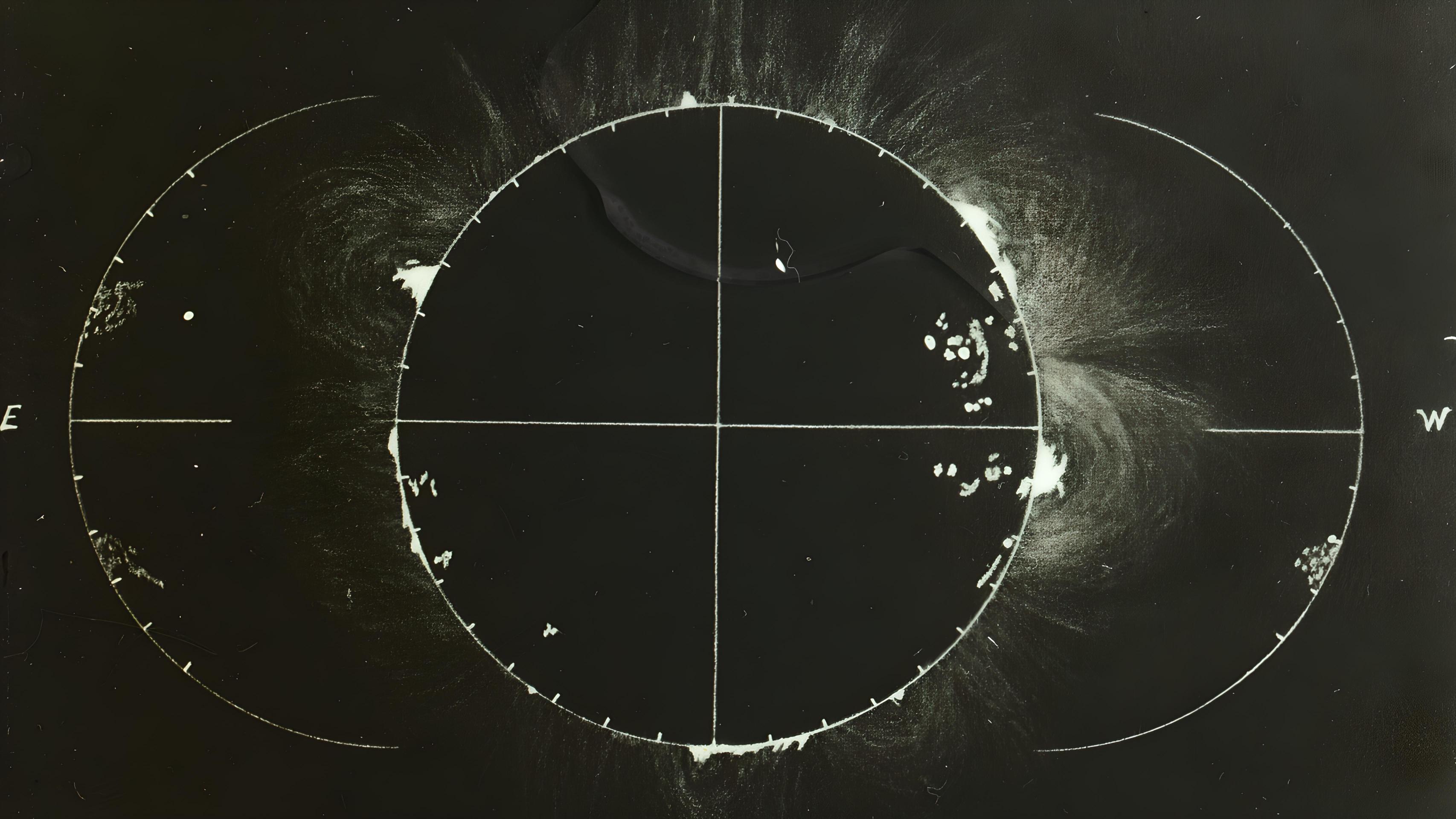
A labelled drawing of sunspot group 1006, drawing by Harry Roberts

September and October 2008 saw a burst of cycle 24 activity that after a year of very few sunspots was a welcome change. Throughout the past year however solar prominences put on an amazing display, mostly around 45 to 50º north and south latitudes; though some were associated with a strong coronal hole near the sun’s equator that also produced several short-lived sunspots.

Prior to the two months mentioned there had been about eight very small sunspots at high latitudes with the reversed polarity that marked them as cycle 24 spots. Many of these spots lasted less than 24 hours and some failed to gain NOAA active region numbers – and so disappeared from the official sunspot count. Also the new cycle spots appeared very infrequently, often months apart.

Starting in September however, things changed; prominences seemed to fade, and new cycle spots appeared much more often.

AR 11002 (aka1002 for short) was first viewed Sept. 23 as two tiny spots at 26ºN longitude 72º – in H-alpha bright plage and a faint active region filament were seen. By the 25th the plage and filament remained but the spots had gone.

AR (?): this group was viewed on Sept. 30 when alerted by solar observer and member of the Sydney City Skywatchers, Monty Leventhal, that a spot was visible. I had it at 23ºN longitude 295º – but it failed to gain an AR number, and like several others went in the official reject bin. Its magnetic polarity and high latitude marked it too as C24 group.

AR 1003: I first viewed this group Oct. 6 (alerted by Spaceweather this time) and found only bright plage at the site – the spots having faded. I sited it at 21ºS longitude 223, and it was definitely a C24 region. Two tiny flares from AR 1003 were recorded by the GOES satellite.

AR 1004. On Oct. 10, a cool spring morning, a single obvious spot was seen in the sun’s south in white light, and in H-alpha a filament was visible. But the spot’s position at 8ºS longitude 190 meant it was a cycle 23 straggler. In fact, southern hemisphere activity during C23 seemed to lag well behind northern activity, and this late spot was another example of the lag. The spot was gone next day – but the eleventh was to be memorable, as AR 1005 appeared the same day.

AR 1005: This group was seen at the sun’s east limb in early afternoon. It had not been reported earlier and was presumably only hours old. It was a bipolar group and would develop into the first major sunspot group of C24 (I have reported on AR1005 elsewhere.) This important active region was long-lived compared to the previous C24 groups, and when last seen on Oct. 16 still contained two spots – and its bright H-alpha plage and filaments persisted for several more days. While some might say “one swallow does not make a spring”, it does seem that C24 has now made a strong start.
AR 1006: On the next day (Oct. 17) a small bright patch of faculae with the distinctive C24 polarity that had been visible during previous days, and now lay near the west limb, suddenly sprouted five small sunspots. They were a pretty sight embedded in bright faculae (Fig 1) – and even nicer in H-alpha with very bright plage and several filaments.

Sadly, I started my H-alpha viewing at 01:29 UT, the exact moment when a GOES A3.4 flare ended. The A3.4 flare and an A9 on the 18th (local midnight) were attributed by NOAA to AR 1006. This group (AR 1006) was only briefly visible as it arose so close to the west limb – and at the site next day I saw only a sliver of bright faculae.

STEREO satellite images and various magnetograms of the sun around the 17th showed several distinct C24 patches of magnetism, and these are the first multiple patches of C24 activity to have appeared (Fig 2). The magnetogram is © The Governors of the University of California. Although at present only two of the patches have “hatched” sunspots they, together with the above list of new cycle sunspots, suggest that cycle 24 has decisively begun.

So, keep a close watch on the sun.

Harry Roberts

Leave a Reply