

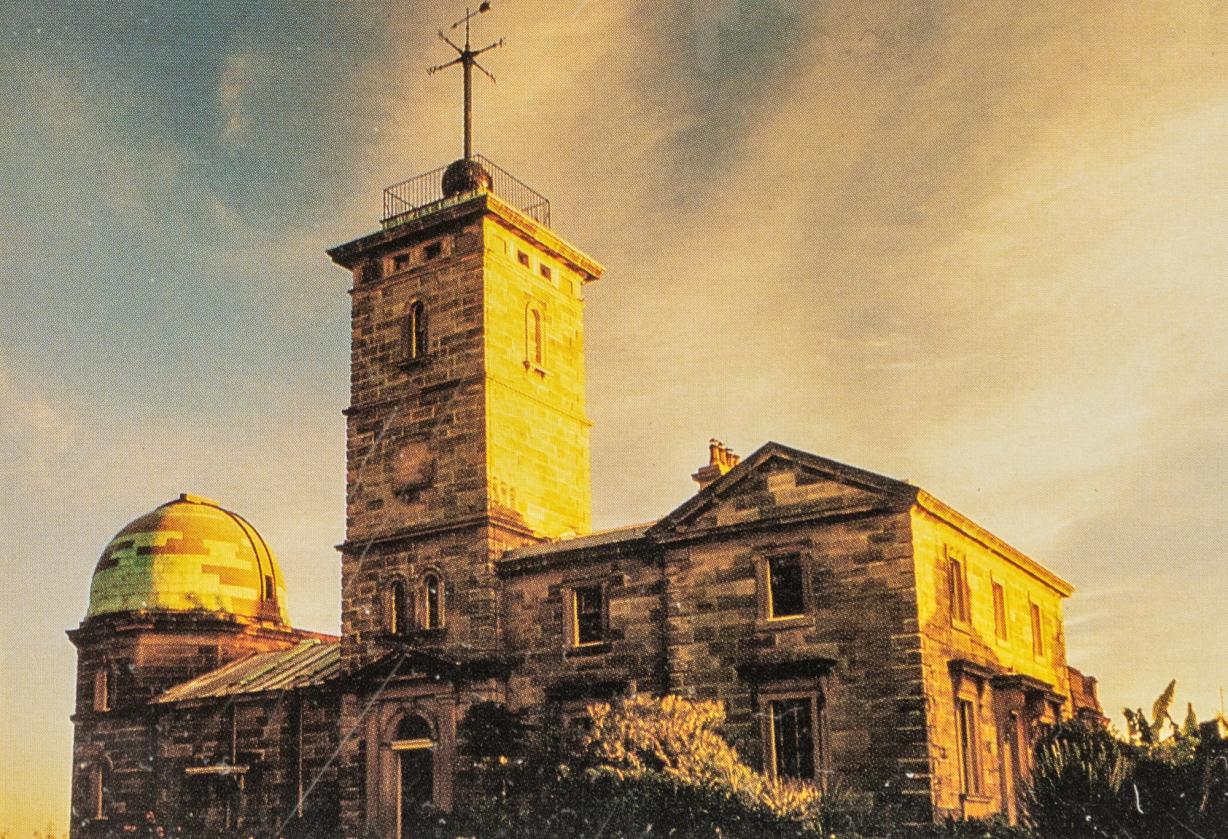




October 2008 night sky podcast transcript
This is a transcript of a podcast of the October 2008 night sky guide. Download and listen to the podcast as you gaze up at the night sky.
Allan Kreuiter: Hello, I’m Allan Kreuiter, Astronomy Educator at Sydney Observatory, and I’m going to be talking to you about what’s visible in the sky for the month of October 2008 – the year of the 150th anniversary of Sydney Observatory.
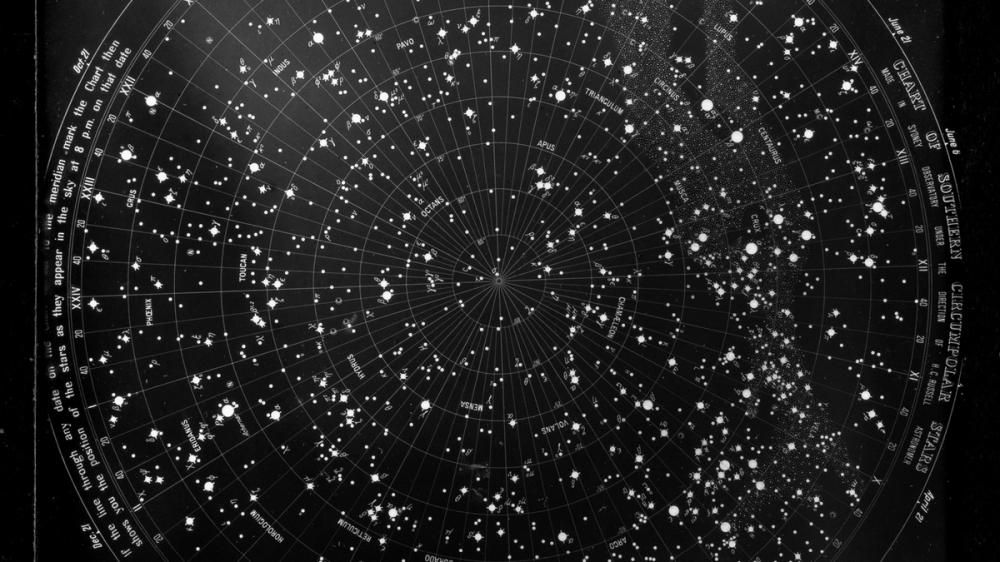
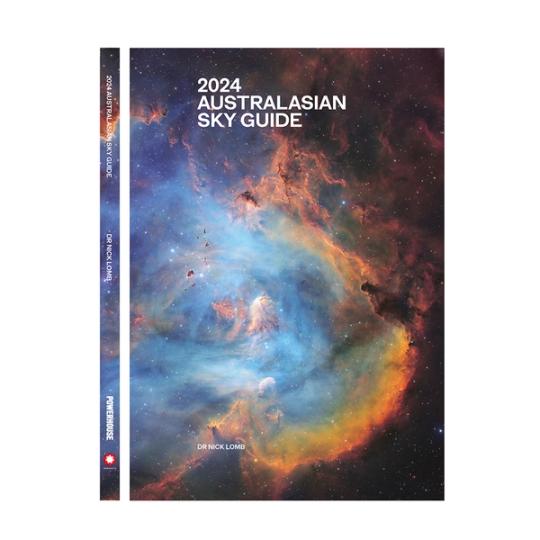
To get the best from this podcast, you need to have a star map, which you can either print directly from our website at sydneyobservatory.com or better still, you could have a copy of the ‘2008 Australian sky guide’, which you can purchase online or from the Powerhouse shop or Observatory shop.
Once you have your star map, and find a comfortable, dark location, then you can start looking at the stars. Obviously, with most of us living in cities or towns, it’s not easy to get a very dark location, but as long as there are no direct lights shining into your field of view, you should be OK. A little red torch (or torch with red cellophane on the end) will allow you to read your star map quite easily.
Now, as the Earth is spinning around at about 1,400 kilometres per hour, the stars appear to be constantly changing position as you look each night. The entire planet is zooming around the Sun at 30 kilometres per second. This means the only way to find the same star on two nights is to learn the shapes and the names of the various groups of stars or constellations.
In fact, you’ll find that the stars are in a slightly different position each night. If you’re really careful, you could actually measure that the stars come back to the same position each night about four minutes earlier than the night before.
Once we have our star map, we’ve gone outside, the best thing is to lie down, and to make sure you’re lying down with your feet towards the south so that, to our left we have east, to our right we have west, and back over our head we have north. Remember in Sydney for example the Harbour Bridge is north-south, and most places you can get an approximate idea during the day which way north is and then remember that for your night’s viewing.
Look straight overhead and you’ll see a group of stars that, with a bit of imagination, looks a bit like a triangle with a bent hypotenuse – or a bent long bit of the triangle. This is perhaps one of the oldest constellations to have been identified and kept the same name. And that is Capricornus, the Sea Goat. Most people just call it Capricorn, the Goat. Capricorn is a very famous constellation. We’ve found pictures of it dating back almost 3,000 years, in Babylonian tablets.
Why is this constellation so famous if it’s not very bright? In the past, at the time of the winter solstice for most of the civilizations in the northern hemisphere, the Sun was in that constellation – the constellation of Capricorn. This means that the Sun was also at its most southerly position. So, if you’re at the Tropic of Capricorn, the Sun was directly overhead at noon on the solstice.
Now this is a very important thing to study for farmers as the winter solstice marks the end of the year and when the days start getting longer again and you have to start getting ready to plant things.
Now, due to procession of the equinoxes – which is a fancy way of saying the Earth’s wobble around the Sun – the December solstice no longer takes place while the Sun is in Capricorn. But the idea remains, and it’s a tradition that we stick with as an important constellation. In fact the Earth does a full wobble around every 26,000 years. So we’ve only got 24,000 year before Capricorn is important again.The brightest star in Capricorn, Alpha Capricorni, actually looks like a double star when you look at it through binoculars. But it’s not – what it actually is is a double of double stars. If you look at it by itself it looks like one star. If you look at it through binoculars you see two and it looks like they are double stars going around each other. Again, they’re not. They’re two separate stars – that are both actually double stars themselves. Two sets of double stars that look like they’re going around each other. Through a powerful telescope you can see four stars where, from Earth with the naked eye you can see one – Alpha Capricorni.
Now snuck in against the constellation of Capricornus is a very faint constellation called Aquarius, the Water Carrier – again one of the 12 original zodiac constellations. Aquarius’ story began as a man, Ganymede, which is also the name of one of Jupiter’s moons. This man Ganymede was kidnapped by the eagle Aquila – which we’ll talk about a little bit later – and taken to Mt Olympus, where he became the water carrier for the gods.
Aquarius is a fairly difficult constellation to spot. There are not many bright stars in it, so to see it we need to look again at Capricornus as a triangle and look off to the side to the east of Capricornus, on your right-hand side if you’re facing south, and all those stars there are Aquarius.
There are really only two bright stars; both have fascinating Arabic names. Now the Arabs were the very best astronomers 1000 years ago, so a lot of the names we use are from the Arabic culture. Those two bright stars are Sadalmelik, about 80 solar diameters a huge star (a solar diameter is the diameter of our Sun – so it’s 80 times the size of the Sun). And that star is about 760 light years from the Earth. The other bright star in Capricornis is Sadalsuud, which is about 610 light years from the Earth. And it’s interesting because it’s a yellow supergiant. And you can actually see the yellow colour if you look carefully.
Now most people probably know what a light year is, but it never hurts to remind people. Light goes very very fast, but not infinitely fast. So it takes one second to go 300,000 kilometres. So one light year is about nine and a half trillion kilometres.
The stars that we’re looking at, at the moment, are all part of our local family, the Milky Way – our galaxy. The stars I’ve just mentioned are very close to us – under a thousand light years away. The Milky Way is actually 100,000 light years across.
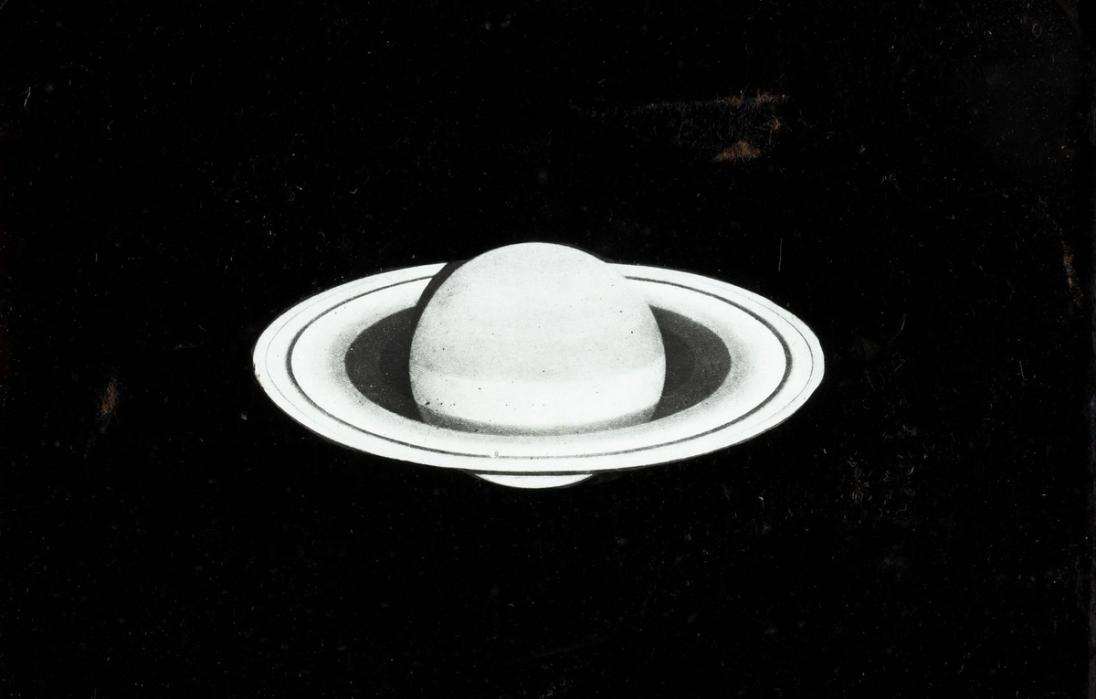
Aquarius, although it’s not terribly bright does have some fascinating objects to look at inside it. Two of them are nebulae. ‘Nebula’ is a Latin word that means ‘cloud’. One of them is called the ‘Saturn Nebula’. Its catalog name NGC 7009. You see, there are so many objects up there that we have to give them catalog numbers. It’s just a simpler way of finding them. ‘NGC’ just stands for ‘new general catalog’.
Well, the Saturn nebula looks like a star that was once similar to our Sun, but has now come to the end of its lifespan and the outer bit of its outer layers have formed a bubble or a disc around it that make it look like a ghostly Saturn sort of shape. That’s why we call them planetary nebulae.
The Saturn nebula is quite tricky to find. But close to it is another easy one to find that’s quite large. This nebula is called the Helix or NGC7293. It is visible through binoculars as long as you’re in a relatively dark area. It can be a little bit tricky to find it, but if you’re patient and you scan the area around Aquarius, you’ve got a pretty good chance of finding it.Again, it’s a planetary nebula. It was a star very similar to our Sun and its outer part of it got jettisoned off like peeling an orange. It’s about 650 light years away, and its size is about 2.5 light years across – about 25 billion kilometres. It looks like a huge red ring and there are many famous pictures of it on the internet if you want to look for them.
When did that star become a planetary nebula? When did it lose its outer covering? As best we can tell by looking at the speed the gas is going, that happened about 10,000 years ago – not very long at all. Interestingly, this is the sort of thing that will happen to our Sun. But, don’t worry, not for at least 5 billion years.
Now let’s go back to the triangle of Capricorn again.What I’d like you to do now is head down towards the south and you’ll see a very bright star all by itself. That star is called Fomalhaut and its name means, ‘the solitary one’ – because it’s a bright star with not much else around it, I’m afraid.
It is the brightest star in the constellation of, Piscis Austrinus or Pisces Australis, if you prefer. Which simply means ‘southern fish’. There are two fish constellations in the sky. Here we have Pisces of the south, the Southern Fish.There’s also Pisces in the zodiac which we’ll talk about in a bit. The southern fish doesn’t look anything like a fish at all. But if you lay there and you look at it enough, simply try and track out a group of stars that looks like a curve, like a paisley swirl. Or maybe a long curling wave. Once you’ve done that, the brightest star is in the mouth of the fish. Or the top of the wave. It’s Formalhaut. When we look at this star through a telescope we see it has a dark ring with a slightly hollow inner ring around it. Which means this could be the start of planetary evolution – the birth of another star and a planetary system similar to our own – very very close; only about 25 light years away.
Still going further south from Fomalhaut, we can see the constellation of Grus, the Crane. It looks a bit like a crane – it’s got a long, slender neck with stars out to either side to form slightly shorter wings. Your imagination is a lot of use here. You’re looking for a fairly simple stick figure.
There are many different stories about all of these constellations but a good one from the South Pacific see Grus as a fishing pole – obviously going out to catch some fish. Going further south still of Grus, you’ll be able to see, towards the south-west, the constellation of the Southern Cross. This is the smallest of all 88 constellations, and getting quite low down. We’re about to lose it for the summer months, so it will be difficult to see.
Don’t forget: you can use the Southern Cross to find your direction. All you need to do is remember that from the top of the cross to bottom – doesn’t matter what time of night, what time of year – you extend that length four times, top to bottom, in a straight line.
That spot four times down the length has a small star in it: Sigma Octantis. Don’t worry – most people can’t see it. But once you’ve found that spot, this is the south pole of the sky. Or the centre of the sky, if you prefer. You simply look at that spot and then look straight down to the horizon, and that’s due south.
Now that we’ve looked at the southern parts of the sky, I want you to turn around 180 degrees and face the north – the other way from where you’ve been facing. The east will now be on your right, and west on your left. Head from Capricorn down towards the northern horizon, remembering that Capricorn looks like that wonky triangle, and you’ll see towards the north a small group of stars – like a funny squashed square, or a trapezium if you remember your geometry. They’re not very bright, and they’re quite small, but if you look carefully, this is the constellation Delphinus, the Dolphin. It’s the 69th smallest constellation of 88. But it’s famous because it’s one of the oldest ones. It was one of Ptolemy’s original 48 constellations developed about two centuries AD.
Looking from Delphis off to your left, towards the left, you’ll be able to see Altair, in the constellation of Aquila, the Eagle. He was the eagle who kidnapped Ganymede we talked about earlier.
Heading further down towards the north, you’ll be able to see the very large northern hemisphere constellation of Cygnus, the Swan. Some people call it the Northern Cross because it does make an enormous cross shape – not nearly as bright as the Southern Cross. Cygnus is also home to Cygnus X-1, the first suspected object to be a black hole.Now from Cygnus towards your right, coming up in the east, you’ll be able to see two very famous constellations: first of all, Pisces, the Fish, which is the goddess Venus and her son Cupid in their fish form, tied together with a piece of thread.
Again, quite tricky to spot, but while you look towards the east, look down towards the north-eastern horizon and see a large square. That square is, of course, the great Square of Pegasus, the Flying Horse. The Flying Horse, Pegasus, was the mount of Perseus, who was riding Pegasus when he went to slay all sorts of creatures including Medusa. If you can find that square, you can see above it two faint circular groups of stars sitting above a V-shaped line of stars. Those circular groups of stars represent the fish, and the V-shape is the string that ties them together, so they don’t get lost as they swim to safety.
One very special event is on the second of October when we will see the crescent Moon setting in the west with the bright planet Venus just below it. Immediately below them is the rusty red planet Mars. Look for this visual line-up around 7pm on the 2nd looking west.
Right now we’re between the setting beauty of the richest part of the Milky Way that we see in winter, and we haven’t as yet got to the outer suburbs of the Milky Way that we see during the summer months. However in between those two there is plenty for us to look at.
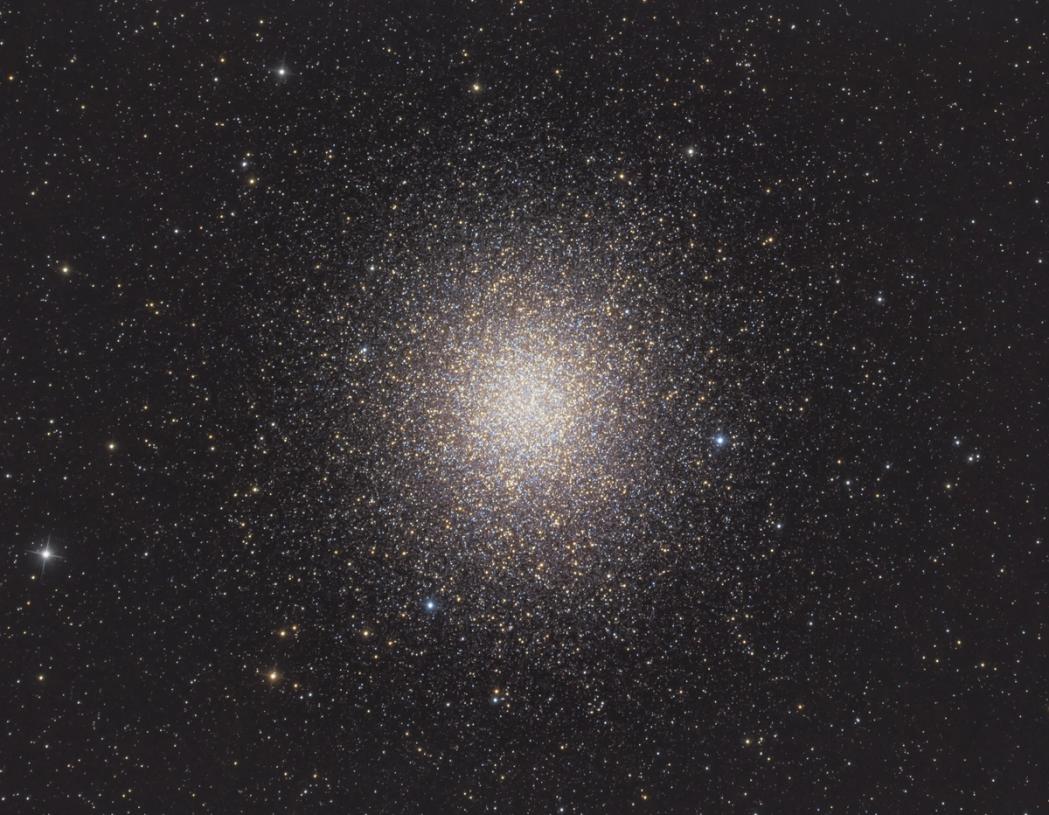
If you’re in a dark enough location and looking clear towards the east, October is a fine time to look at our two next door neighbours, two galaxies, the Large and Small Magellanic Clouds. To find these, it’s quite easy. You look along the magnificent glow of our own Milky Way, a river in the sky, but off to the side, there are two distinct separate patches of light, smaller companion or, if you prefer, parasite galaxies to our own magnificent spiral. Each of the two mini galaxies contains millions and millions of stars. The Large Magellanic Cloud is about 160,000 light years away, and the Small Magellanic Cloud about 200,000 light years away. They may contain up to 100 million stars each; more than a hundred times smaller than our own Milky Way.
It’s a good time to point out that everything we do see in the night sky with our naked eyes, other than those two Magellanic Clouds and the great galaxy of Andromeda, everything else is part of our own Milky Way galaxy.
Those three objects that I mentioned are the only ones that we can see beyond our galaxy with our eyes. And right now we’re lucky enough to see two of them very clearly.
Thanks for listening to this podcast about October 2008 and the skies above Sydney observatory. If you’d like more detail, you can visit our website at sydneyobservatory.com. or you can also obtain your ‘Australian sky guide’ by looking online or visiting the Powerhouse or Sydney Observatory shops. Don’t forget, quite shortly the ‘2009 Australian sky guide’ will be on sale and that comes out ready with observations and star maps and details for December onwards. It’s also got lots of useful information and special events about the International Year of Astronomy next year in 2009. I’m Allan Kreuiter and keep watching the sky.
One Response to “October 2008 night sky podcast transcript”
Leave a Reply


sumi on October 1st, 2008
Thanks again for the transcripts. Keep them coming. I depend on them. The visuals of the Observatory (at the title) are fascinating but fleeting. I wonder if you can offer such realistic visions of the night sky to go with your transcripts, rather than just the star charts which are a bit too sketchy for the lay person’s understanding? Or make such pictures available at accessible outlets like news agencies?