








Harry observes the strange morphing sunspot group AR11089
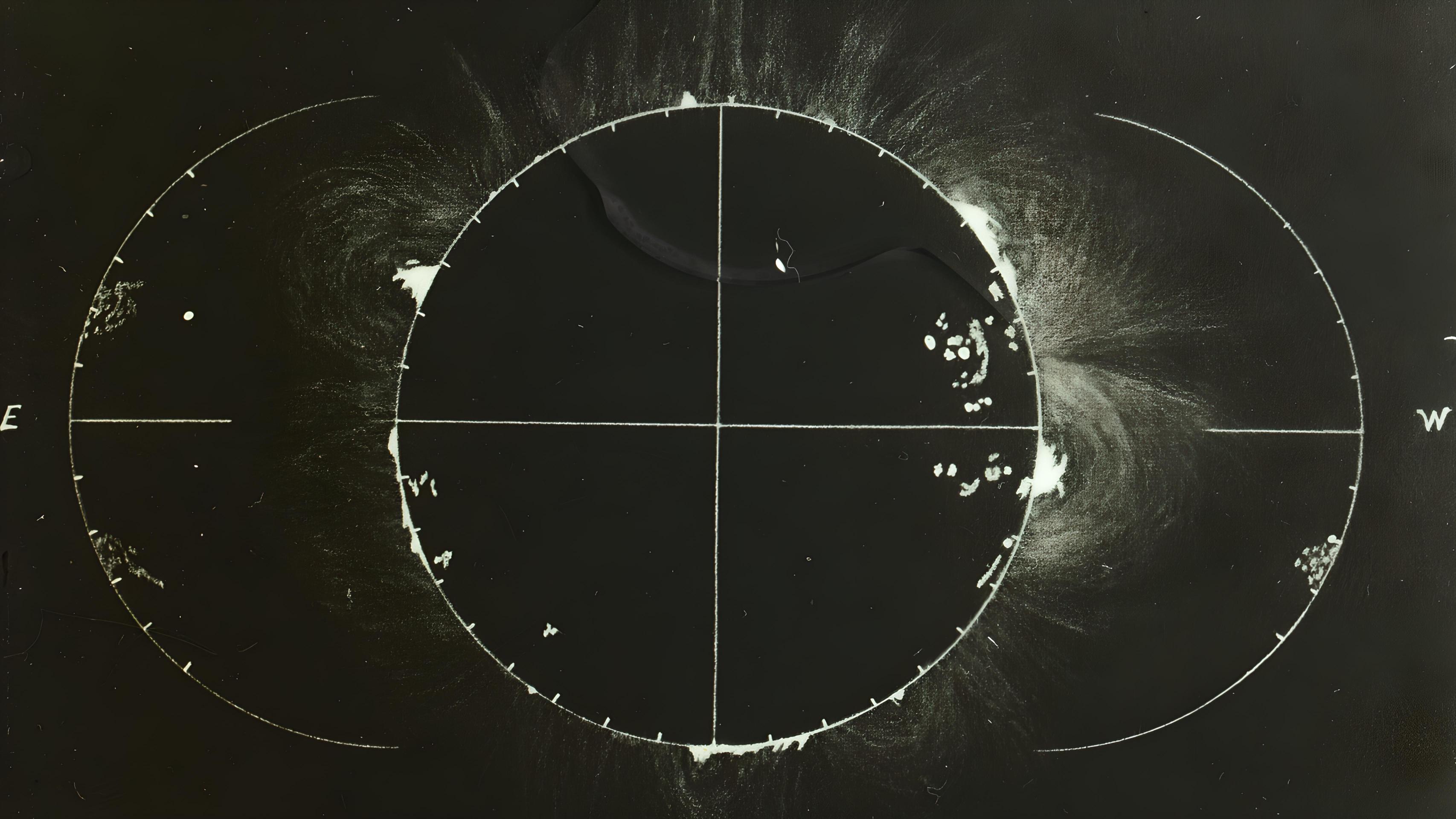
The sunspot group AR11089 as it first appeared on the east limb or edge of the Sun. Drawing. Drawing and copyright Harry Roberts ©, all rights reserved
AR11089 is not the name of an underground rock band, but the label applied by the US NOAA organisation, charged with keeping track of sunspots – as counting spots is still the key way of comparing solar activity across the centuries. Was the sun really spotless during the 17th century? Was its activity in the mid 20th century a four hundred year peak? Such questions are answered mainly by looking at the sunspot count.
The second half of the 20th century was the age of satellites; they imaged the sun in a range of wavebands particularly EUV (extreme ultraviolet). But satellites have short lives (one was even ‘shot down’ by the USAF) and normalising their data with the classic spot count isn’t easy. In fact, the best view of any sunspot is still the one in your trusty 3” or 4” amateur ‘scope with an aperture filter!
While this is titled AR11089 I want to briefly recall AR11085 – the spot group that “nobody saw” (except NOAA and the lucky writer). This small bipolar group perhaps lasted less than ten hours, and then disappeared – but when its locality next returned to the sun’s east limb, there was a large active-looking spot group at the exact site. And now everyone could see it, renumbered AR11089.
There are several odd things about this new group, apart from its Lazarus like reappearance. It’s roughly triangular in layout while most spot groups are bipolar and align E-W on the sun. And AR11089 sits in a large area of faculae (WL) and plage (Hα) that has another such activity patch only a few degrees west of it; this latter area is void of spots. Are they related in some way?
Solar Dynamics Observatory views of sunspot region AR11089, annotated by Harry Roberts
They are; the new SDO satellite views show magnificent arches (field transition arches) connecting both plage regions – the whole being one huge magnetic entity (Fig 3, main spots arrowed). And yet while fields within AR11089 briefly reached a ‘strong-ish’ 2500G the group has produced no flares >GOES C1. Curiously it also has few of the usual dark active region filaments (arf) that attend even the smallest sunspots.
The writer first saw the group at the east limb early in its development amid brilliant faculae – having six spots, the largest sited at –21/204 (Fig 1). The Fig shows changes from 19th to 21st (UT) – the group developing substantial penumbrae and ten or more umbrae, still in a triangular layout.
Sunspot group AR11089 on 23 July 2010. Drawing and copyright Harry Roberts ©, all rights reserved
Twenty-four hours later saw an increase to 20+ spots, with many tiny ones in short chains. The preceding spot (p) had a field of R25G (red 2500 gauss) and the larger following (f) spot to the SE had V24. Both are strong fields; but the trailing spot of the ‘triangle’ was now fading, with a few small spots in a chain. Overall the group seems to be ‘morphing’ into a more conventional E-W arrangement, and the remaining (p) and (f) components with 6º N-S separation may soon feel the pull of the Hale-Nicholson force and undergo some dramatic rearranging.
Harry Roberts is a regular contributor to this blog and a member of the Sydney City Skywatchers.