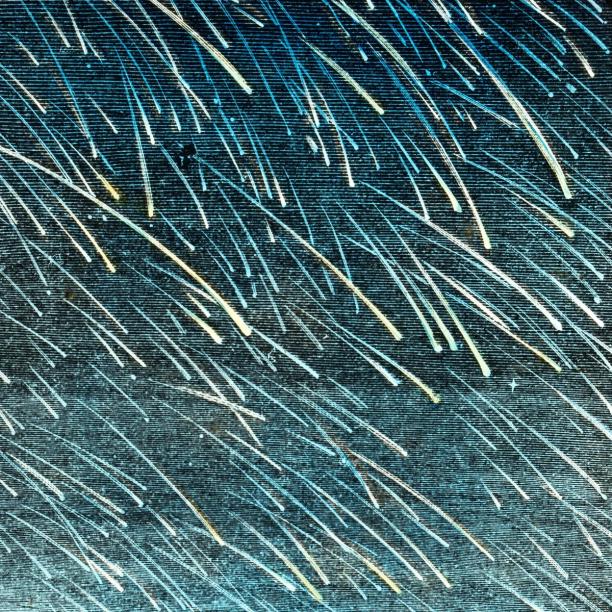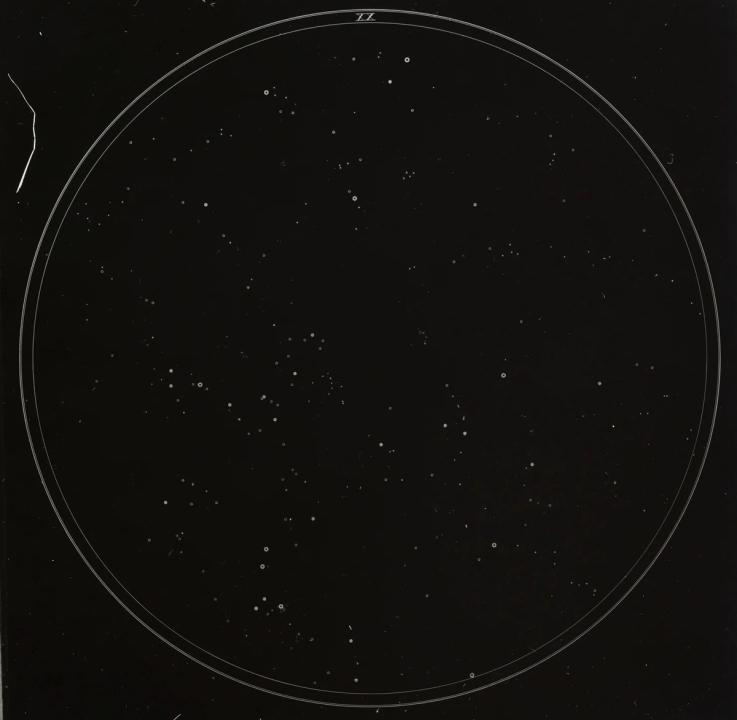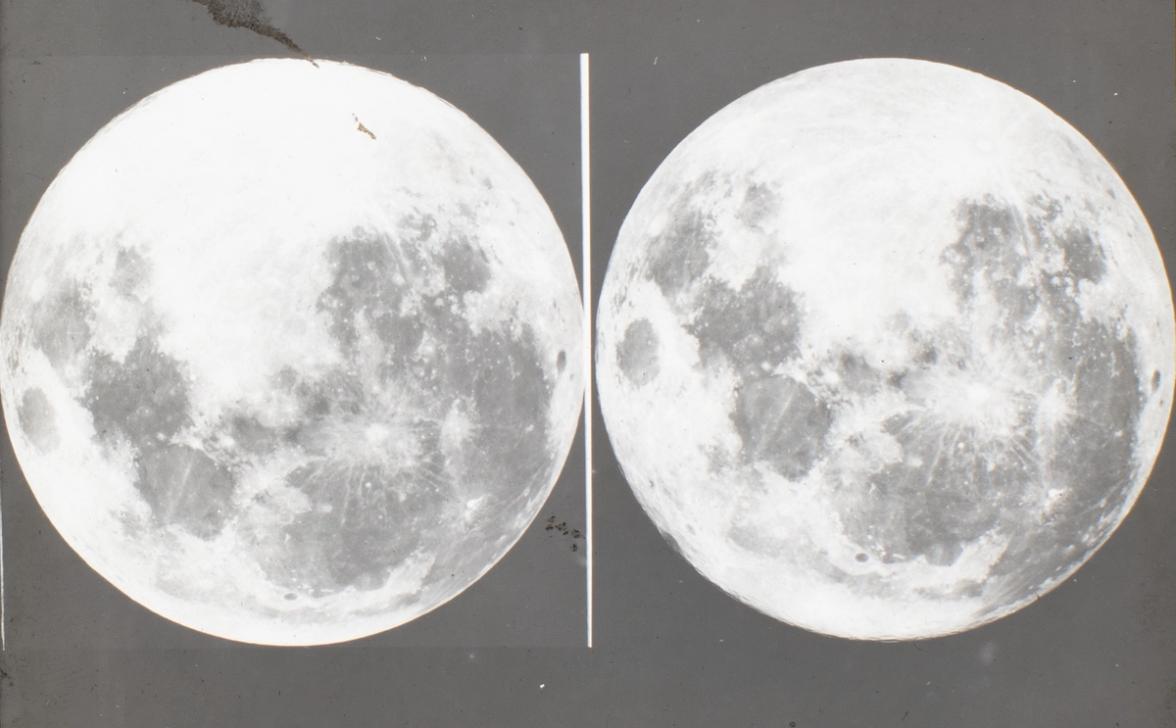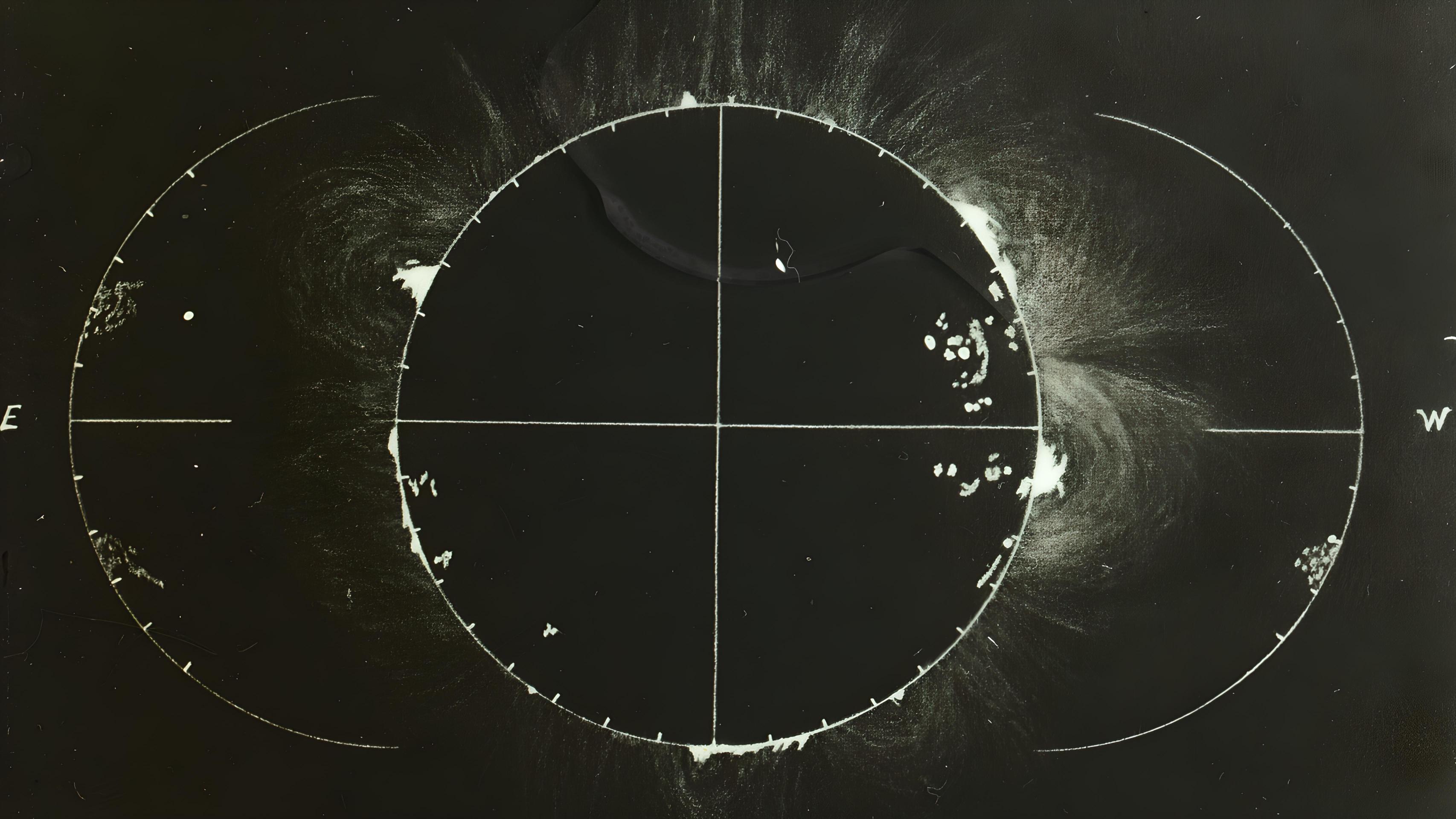
Star field_AAVSO

Star field DSS photo from AAVSO website

Enthusiastic Blue Mountains variable star observer Alan Plummer sends the following job advertisement:

OBSERVERS WANTED: Small telescope only req’d, dark sky or CCD not needed. On the job training. PAY: Beyond your wildest dreams. Immediate start. Apply below.

That’s not a joke. The American Association of Variable Star Observers (AAVSO) have recently published a prioritized list of Stars In Need Of Observation, called ‘Bulletin 71’. The AAVSO is perhaps the most direct way that amateurs like me can co-operate with their professional counterparts, and these ‘Stars In Need’ are a group of objects that are in the middle of an interesting and complicated part of their evolution: They are the red and slowly pulsating Long Period Variable stars (LPVs).

Some of these LPVs have been observed for a hundred years or more, and newer observers are needed to replace the old (who have become even more ‘heavenly’ perhaps?). Continuing observation by visual observers is needed for the sake of consistency with past observers, as obviously, CCD technology is a recent development. Also, a practiced visual observer can monitor many more objects than a CCD observer can, in the same time.

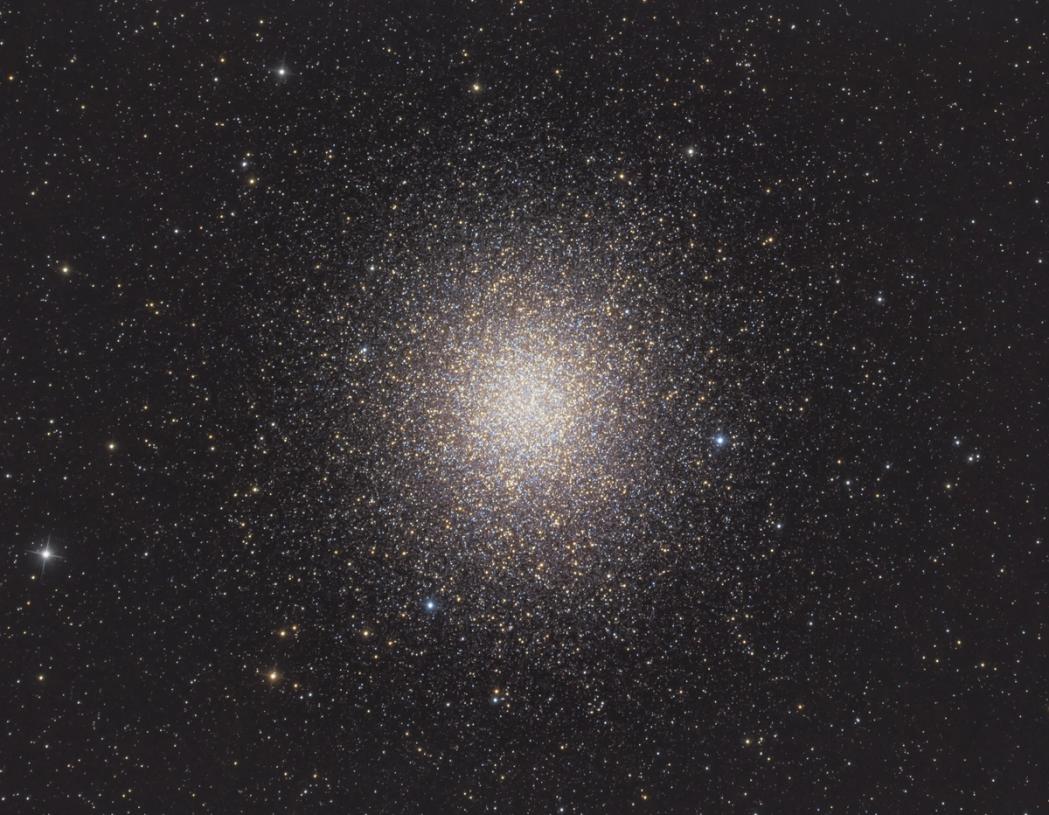
And the pay-off, you ask? When I started, I had no idea that I’d be able to co-operate so closely with the wider astronomical community, and to be contacted by people from around the world for help (often about my messy data, I’m unhappy to say) is special. The beauty of the objects goes without saying. But I can show you, at least. The photograph above is of the field around R Scorpii (in the cross hairs) along with some of the numbered comparison stars used to make an observation, and the globular cluster M80. This one’s on the priority list, and now in my program, so I get to look at this once a week or so! And every field observed has its own attractions.

If you’re interested, first go to the AAVSO website and download the free Visual Observers Manual , then post a reply on this site and we can take it from there.

Alan Plummer
(Sydney City SkyWatchers, AAVSO)


Similar posts:

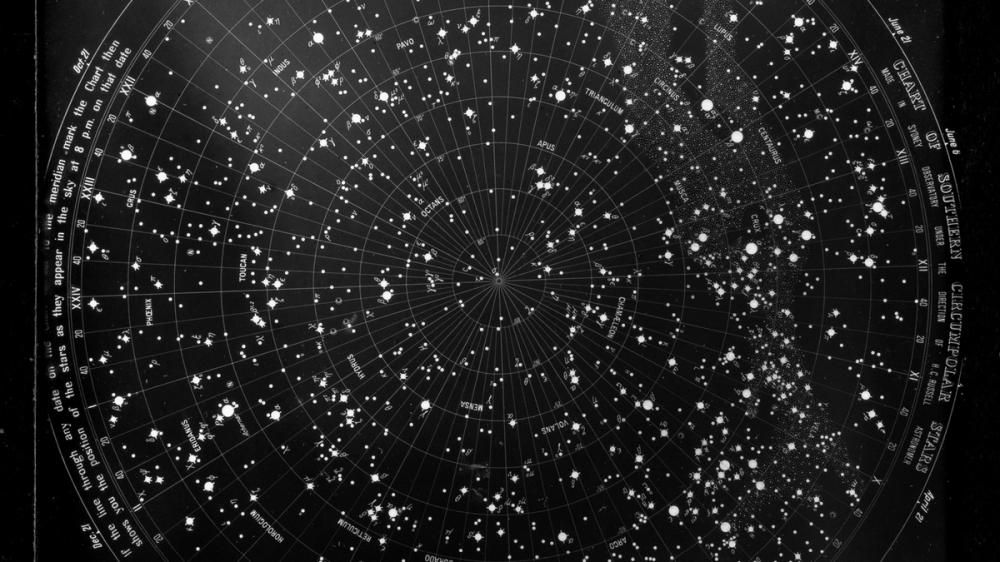
To help you learn about the southern night sky, Sydney Observatory provides a night sky star map or chart for each month of the year. We also provide an audio guide of the month’s night sky, presented by one of Sydney Observatory astronomy experts - this month, Dr Nick Lomb, the Museum’s Curator of Astronomy. You can listen online, or download the audio onto your ipod or mp3 player. Links to the audio and the star map are below.

Among highlights for this month, Nick tells us we should be able to see streaks of light from a meteor shower in early May. This meteor shower, the Eta Aquarids, is caused by particles thrown off by Halley’s Comet. The best time to see it is on the early morning, before sunrise, on Tuesday 6 May. It should be a particularly good opportunity to see it this year as there is no Moon then.

Also visible this month are the planets Mercury, Mars and Saturn (best to catch it this year as the rings will disappear during next year because of the angle Saturn will be at relative to the Earth), and the constellations Orion, Gemini and the Southern Cross.

For much more information and detail in star charts for months from December 2007 until December 2008 inclusive, plus information about the Sun and twilight and the Moon and tides, and a host of other fascinating astronomical information, we recommend you purchase (only $16.95 and available now) the 2008 Australian sky guide by Sydney Observatory’s Dr Nick Lomb. Available online and at Sydney Observatory and Powerhouse Museum shops.

The free monthly night sky map PDF (below) shows the stars, constellations and planets visible in the night sky from anywhere in Australia. To view PDF star charts you will need to download and install Adobe Acrobat Reader if it’s not on your computer already.

pdf May 2008 night sky map

Read the transcript.

icon for podpress  May 2008 night sky podcast (19 mins 38 secs): Play Now | Download

Similar posts:
  • None Found

The Moon and Mars_Brennan

The Moon and the red planet Mars on 27 November 2007. Picture taken by Bonny Foley Brennan, an Aboriginal Artist from the Boolarng Nangamai Aboriginal Corporation, of Gerringong NSW

The above picture was sent to me by Steve to identify the smaller object near the Moon. I calculated what the sky looked like on the given date of 27 November using a suitable computer program and established that the planet Mars was near the Moon that night. So what we have is a nice picture of the Moon together with the red planet Mars.

Mars is fairly bright on the picture, much brighter than Mars is in the sky at the moment. Why does the brightness of the planet change so drastically?

The apparent brightness of a planet in the sky depend on its distance from Earth and its distance from the Sun. For a distant planet like Jupiter there is little change in brightness as there is little change in either distance. With Mars there are large changes as its distance from Earth varies. Mars is further from the Sun than Earth so it moves more slowly. Every two years or so the Earth catches up with Mars as they both circle the Sun and the two planets are in line with the Sun. That is called opposition as the Sun and Mars are then on opposite sides of the Earth. Opposition is when Mars is at its closest to Earth and at its brightest.

Of course, it is more complicated. Mars has an elongated path around the Sun. Sometimes when we catch up with it it is further from the Sun than at other times while sometimes it is closer. If we catch up with Mars at a close point astronomers talk about a favourable opposition. Favourable oppositions occur roughly 15 years apart. Distances of Mars at different oppositions are listed below:

Year Distance
2003 56 million km favourable
2005 69 million km
2007 88 million km
2010 99 million km
2012 101 million km
2014 92 million km
2016 75 million km
2018 58 million km favourable


Similar posts:

Prominence on the Sun 19 March 2008_Monty Leventhal

A spectacular prominence on the Sun on 19 March 2008, a few days before the events that Harry describes below. Image Monty Leventhal

After months of inactivity March 24th was a day to remember – around noon through clouds two spot groups were seen about twenty degrees apart, and next day; a third group joined. The three now spread across ~60º of longitude, and about 10º south latitude; clearly late Cycle 23 activity.

The three groups were surprisingly active, with bursts of flares capped by an M1.8 flare on March 25th (the strongest for years). Two outstanding features of the sunspot trio were a pair of attendant filaments, one a large quiet region filament (QRF) the other a small dark active region filament (ARF).

The QRF appeared on 2008 March 23rd well before the spot groups as a bright prominence at the east limb between –20º to –25º latitude, 232º longitude and 25,000km high. Next day as spot groups AR987 and AR988 were emerging the prominence was seen as a dark filament well south of AR 988.

The QRF grew larger as it neared the central meridian, stretching across 20º of longitude on 28th; the largest for some time. Around the 29th it perhaps ejected from the disc as it became hard to see, and patrol images showed only bits of the original. Events would show it must have quickly reformed.

Drawing of a prominence 5 April 2008_Harry Roberts

A prominence on 5 April 2008 (wrong month on diagram), drawn by Harry Roberts

The spot groups neared the west limb around April 2nd, then passed behind it on the 4th (Fig 1). The view on the 5th was memorable: a large bright and complex prominence stretched around 12º of the SW limb from –17º to –29º latitude, with a very bright central arch rising to ~60,000km, the biggest prominence for a long time. At the base of the prominence parts of the big filament could still be seen near the limb, so there was no doubt that the great filament had become a great prominence. Subtle changes suggested it was ejecting at a snails pace, with the central brightest component separating from its neighbours, but little change was seen before viewing ended at 05:50 UT.

Prominence on 5 April 2008 (wrong month on drawing)_Harry Roberts

Prominence on 5 April 2008 (wrong month on drawing), drawn by Harry Roberts

Resuming at 21:51UT (next morning, but also the 5th) showed the large prominence was in fact still ejecting 16 hours later (Fig 2); the adjoining components had gone, and the central part now described an arc 100,000km high and 70,000km wide at the base, the largest prominence for years.

Activity in this southern zone between 200º to 260º longitude seems, inexplicably, to be increasing. The region has hosted many spots over the past eight months, and is notable for the presence of a coronal hole with strong open northern field that seems to be strengthening. I wonder if the patch of northern field amid the many smaller coronal holes with open southern field is the reason for the increasing sunspot and prominence activity there.

Harry Roberts (Sun and Moon observer and member of the Sydney City Skywatchers)


Similar posts:

Drawing of the new sunspot_Harry Roberts

The new sunspot in white light on Sunday morning 13 April 2008 (note Australian EST is 10 hours ahead of UT), drawn by Harry Roberts

Sunwatching at present is exciting, as Cycle 23 is still active, yet C24 activity is expected daily. Setting up the ‘scope promises the unexpected.

The morning of April 13th (still 12th UT) was such a day; after brief H-alpha observation through passing cloud of some small prominences I switched to white light to search for sunspots, finding none in spite of good seeing and, I thought, a careful search. The phone rang: it was Monty Leventhal to say there was a spot near the NE limb – he had not seen it but emails from US observers reported bright H-alpha plage there and one or two had seen spots at the site. Back to the ‘scope: still set up for white light viewing.

Setting the cross-hair eye-piece on the NE quadrant I searched for bright faculae – recalling that an H-alpha patrol image of the 12th had a small bright patch in the NE.

It was hard to find, since the patch had moved away from the limb and the faculae was faint, yet there it was. It comprised a triangle of facular threads that were fairly bright. No spot could be seen at 80X but at 160X I found a single small black spot. Back to 80X and the spot was now easily seen, making transit timing possible.

The new sunspot in Hydrogen Alpha light_Harry Roberts

The new sunspot in the light of hydrogen atoms, drawn by Harry Roberts

In H-alpha (again) the site was easily seen, with two bands of bright plage, and a dark spot, that seemed in a slightly different position from the white light spot (?).

“Helio” calculations gave the position as latitude 27º N, longitude 359º. Spots this small are not counted by many sunwatchers, and various groups require a spot to visible for more than 24 hours for it to be counted. I felt that Mt. Wilson would have detected the spot but their daily drawing was not yet available, nor was their digital magnetograph. But a Solar Monitor magnetogram showed the new region had reversed polarity and was most likely a C24 group; the high north latitude confirming this.

It is worth noting that the new cycle has produced only northern hemisphere spots so far, while old cycle (23) activity dominates the southern hemisphere. The first accepted C24 spot was AR981 located at 28ºN, longitude 248º on January 6th. The new group glows brightly on SOHO UV and EUV images. The two sketches record the view in white light and H-alpha, and the position on the sun’s disc.

The tiny sunspot group is unspectacular at the time of writing (it might grow more obvious) – but it probably has the distinction of being the second spot group for solar Cycle 24.

Harry Roberts (Sun and Moon observer and member of the Sydney City Skywatchers)


Similar posts:

A sketch of the spiral galaxy M51_Deirdre Kelleghan

A sketch of the spiral galaxy M51 by Deirdre Kelleghan

Deirdre Kelleghan is President of the Irish Astronomical Society and a sketcher of astronomical objects. Here she reports on the COSMOS star party:

20 inch Obsession/ Argos Navis/ Focal Length 2,500mm/ 26mm type 5 Nagler / 96X /White pastel/ Blending stick/ 120gm Black paper
Forgot to make eyepiece circle as it just happened
00:05 UT - 00:10 UT/ 06/04/2008 / -3C / Seeing 2 - 3 COSMOS Star Party,Tullamore,Co Offaly, Ireland.

I was having a wonderful time observing at COSMOS, Ireland’s spring star party organised by Tullamore Astronomy Society on a farm in Co Offaly.

Through David Lillis’s 20-inch I was treated to a feast of galaxies. So many edge on and face on spirals, clusters of galaxies, all hopping into view in the freezing cold night sky of Annaharvey Equestrian Farm in the midlands of Ireland.

This superb instrument filled the fov with many startling white globulars.
These looked like upturned bowls of the whitest sugar you have ever seen.

Saturn was a real treat in David’s scope, with some very distinct shadows on the rings toward the rear of the planet body. Three moons very close to the rings, and one off set a bit, obviously Titan.

When M51 was the target I could not believe the clarity of the spiral arms. I never usually get a chance to sketch at these occasions but I had to have a go at this gem. A lot of people wanted to see this so ye can’t hog the scope but David kindly set it up so I could have a go.

So I got five minutes or so up a ladder with a pad, a blending stick, and some pastel. Five minutes did not really do justice to this fantastic Messier.

It was extremely cold and I do not think my fingers would have lasted the 40 mins or so that I figured the sketch needed.I could see many varied tones within the arms and some areas that were brighter than others, also areas that seemed less dense with a wispy thinness. Its difficult to sketch on a ladder anyway.

Truck loads of thanks to friends David and Michael, I enjoyed the session but after a hot tea at 2am I headed for bed. Other objects viewed included M65, M66, M99, M108, M51, M13, M53, M3, M81, M82 and NGC5053 plus one very large helicopter with lots of lights.

Deirdre Lelleghan

Incidentally, Deirdre is organising an International Astronomical Sketching Exhibition for IYA 2009. The venue will be Birr Castle Science Center Birr Co Offally, time will be October 2009. http://www.birrcastle.com/ Birr at one point in its history had the largest telescope in the world, built by Lord Rosse. Deirdre says that the present Lord Rosse is very interested in this exhibition and that “I am hopeful to gather astronomical sketches from 21st century astronomers for this unique event. At the moment I have work promised from the USA, England, Ireland, Belgium, Iran, Italy and perhaps France.”

All artworks are to be sent directly to Birr Castle:

Jacquie Jordan
Birr Castle Demesne
Birr, Co Offaly
Ireland

Clearly mark package as International Year of Astronomy 2009 Exhibition
Original Artwork to be in by August 30th 2008 to allow for planning et cetra.


Similar posts:

The beginnings of a surge on the Sun_Harry Roberts

The beginnings of a surge on the Sun, drawn by Harry Roberts

Expert Sun and Moon observer, winner of the best poster presentation award at the recent NACAA conference and member of the Sydney City Skywatchers, Harry Roberts reports on surges on the Sun. Harry observes the Sun with a special filter that only allow through the light emitted by hydrogen atoms on the Sun. Note that great care must be taken when observing the Sun:

halpha.jpgPerhaps the most exciting event amateurs can see on the sun is a great flare, but in addition to flares there are many other H-alpha “exotica” that are little known. In this article I will introduce perhaps the strangest of them all, the Surge. While the surge has an uninspiring name, it has very weird behaviour as I will now describe.

Surges arise in small sunspots that form near a big regular one that has strong and opposed magnetic fields. Closed field structures in the small spot are thought to host a modest flare that causes a large impulse within the closed structure, which then expands, and as Prof Zirin says “Because the material is tightly confined as in a gun barrel, it is possible for the internal flare energy to be converted to linear motion” and the surge shoots out into space or across huge distances on the sun’s surface.

Now comes the “crazy” bit - having reached its maximum extent the surge pauses for a while (fifteen minutes say) then shoots back to its starting point along the same path, behaviour that has to be seen to be believed! The flutter-whistle is a good working model of a surge; blow hard and it shoots out, stop blowing and the whistle recoils back, just like a surge.

We read in Zirin’s book “Astrophysics of the Sun” p298 “When the surge does fall back we usually see a splash in the chromosphere” and this is shown in Fig. 1. He warns that surges don’t have to retrace their steps to qualify as surges, and the writer has seen both kinds.

Elsewhere we read “in many cases backflow occurs along the path simultaneous with outflow” and I have recorded this too. Also surges will often employ the magnetic “path” of a stable filament (ARF) that is minding its own business, when suddenly a surge will rocket along the ARF making it darker and broader, then just as suddenly, return along the same path. Often as they emerge from the sun’s surface they turn through a right angle bend (Fig 2). In this figure they are shown in life-like colour, bright H-alpha red. Fig 1 shows a big surge expanding, then retracting along its path, and causing a splash on impact, drawn as a black and white negative view.

A surge on the Sun_Harry Roberts

A surge on the Sun, drawn by Harry Roberts

Surges vary widely in size, and the ones shown are large, about 150,000 km at full length, but Zirin records one in 1976 that stretched “halfway across the sun” say 500,000km – that’s a big surge! The first surge I saw in June 2001 leapt across 80,000 km, split into two parts that each turned ninety degrees and then sped off in opposite directions! But remember, for motion to be detectable in a surge, say, it must be moving faster than 100 km per second; its like watching a comet crossing the sky – though comets only do a leisurely 30 km per second.

Surges are weird and wonderful demonstrations of the properties of MHD (magnetohydrodynamics) the science of high temperature plasmas controlled by huge magnetic fields. The only place in the solar system to see such things is on the sun, in H-alpha (or Calcium K band if you have access – and never view the sun without proper protection).

Harry Roberts


Similar posts:

A page from the Meteorological Journal of William Dawes_Nick Lomb

A page from the Meteorological Journal of William Dawes, courtesy of the Royal Society, photographed by Nick Lomb in January 2005

The manager of Sydney Observatory, Ms Toner Stevenson, is currently on sabbatical in London, working at the Museum of Natural History. Last week, she visited the Library of the Royal Society in London and she had the privilege of inspecting the original manuscript of the first European weather records made in Australia. Here is Toner’s report:

William Dawes Esq. , Lieutenant of Marines, kept a meticulous journal recording wind direction and speed, cloud cover, barometer reading and temperature, rainfall and dewfall taken, in most cases, four times each day, from his observatory erected in 1788 at the place now known as ‘Dawes Point’. Dawes arrived in Sydney 20 January 1788 with the First Fleet aboard the Sirius. He was under instruction from Astronomer Royal, Neville Maskelyne, to set-up an observatory to look for a comet and establish the systematic recording of the weather in Australia. His journal is kept at the Royal Society and I had the opportunity to read it during a meeting to discuss making a facsimile for the Sky and Weather exhibition soon to be opened at Sydney Observatory.

The first entry reads: 1788, 14 Sept. noon, SSW (wind direction), 4 (wind speed), heavy cloud, 29 (barometer reading), 70degrees (temperature in Fahrenheit).

The last entry was made 6 December 1791, after which Dawes sailed back to England, disappointed at the lack of interest in scientific pursuit in the colony. [Dawes left the Colony after a dispute with Governor Phillip about the treatment of Aboriginal people - Nick]

Apart from the daily records the journal has two comments, both relating to Dawes instruments and their accuracy. Dawes compares his thermometer provided by Maskelyne and made by Nairne and Blunts, to Mr Furzer’s thermometer ‘a very good one’ by Ramsden, noting that both were kept in the same conditions. James Furzer was the quartermaster on the Sirius.

On 2 July 1791 Dawes writes ‘…packed up the Board of Longitudes barometer..’ on the last two pages of the journal he explains how the instrument had ‘lost a small amount of quicksilver which I discovered by observing a number of globules directly below it on the floor of the observatory…it seems that the observations made with that barometer cannot be considered as worthy of much dependence”.

The Royal Society is photographing the journal so that a facsimile can be displayed in the exciting weather exhibition that is opening at Sydney Observatory on its 150th anniversary on 5 June 2008.

Toner Stevenson


Similar posts:

Possible meteorite crater in Gippsland Vic_Ivan Parker

A possible meteorite crater in Gippsland, Victoria, courtesy Google Earth annotated by Ivan Parker

A blog reader, Ivan Parker, has sent me the following. It seems a fascinating possibility though I cannot judge its validity. Comments from anyone with relevant expertise are welcome:

I am small miner in the Gippsland Vic, hills, there is a crater not far from my mine area that I always have thought to be a meteor crater, the reasons I believe this is that the crater area has been gouged out circular, there is a small basalt flow close by including a flow of hard metamorpic sandstons as well as numerous dykes and a gold contact zone.

I have been studying the area from a satellite picture from google earth and it shows the crater area as well as the river being diverted, the ancient river flow can be seen downstream approximately 100ft above the present river level.

There is a drive track to the crater area 4 x4 only or can be walked.

Above is the area, the walls of the crater if it is a crater are in places 40 metres high + and as you can see the ancient river was blocked and a new course was formed around the area.

The rock formation of the area is mainly sandstone with large flows of hard metamorphic sandstone, dykes, gold contact zones ( over a mile long) and small lava flows, (about 4 metres wide), studying the rock formations in this area for some years has led me to believe that a major disruption was created and probably not that long ago in historical times, the ancient river can now be seen along the line indicated approx. 30 metres higher than the present river level, this was dug up by the old miners and recently lightly excavated I am not a geologist just a small miner for the last 20 years, so I cannot say with authority that what I believe is true or not, but felt that it is of interest.

Ivan Parker


Similar posts:

NACAA logo

NACAA logos from the NACAA website, courtesy NACAA

Harry Roberts, expert Sun and Moon observer and member of the Sydney City Skywatchers, reports:

I have not been to a previous NACAA conference, aka National Australian Convention of Amateur Astronomers, but this year, with help from Sydney City Skywatchers (SCS) President Michael Chapman I was able to immerse myself in astronomy over Easter Saturday.

With Michael driving we had a good run to the venue, Penrith Panthers Leagues Club, arriving in time for Prof. Matthew Colless’ address on “Future of Optical Astronomy in Australia”. Matthew is an exciting speaker who projects boundless enthusiasm for his topic, near to the hearts of all Aussie astronomers: whither Optical in Oz?

If Matthew is right the future is bright indeed: he covered the next generation of gear for the current AAO ‘scopes, the good prospects for a 2M tower ‘scope on Antarctica’s high plateau, and the role of Australia in equipping the future Very Large (terrestrial) Telescopes. I particularly liked the tiny piezo-electric prisms that would dance around the metal surface at the focus of the AAT, enabling much greater gathering of spectral data with that scope.

This was followed with the “Poster Take 5” where poster presenters briefly described their work. The only catch was that the posters were in another room and could not be referred to by the authors. In spite of this we gave fair descriptions of the works; I managed to scribble a quick sketch of the main graph from my poster “Anomalous Flaring In Cycle 23”. And delegates were able to peruse the posters throughout the day.

Next, Col Bembrick gave a fine talk on asteroid research, with mathematical models that fitted observed light curves, and ended with a plea for more observers to join the small but active group.

Well known identity Rob McNaught came next, not to talk about his magnificent comet, but to show some early results from his meteor camera network. There were some “wow” shots of fire-balls glimpsed through heavy cloud as well as “shower” images in clear skies: inspiring stuff – video cameras are cheap. Why don’t we all have them on our roofs? Around ten thousand meteors have been recorded; but data is yet to be analysed.

Lunch; and Michael and I were able to catch up with SCS member Shirley Rae who, while still enthusiastic, can no longer manage the stairs at Sydney Observatory, and has been missed at recent meetings. Alan Plummer, who was to address the Convention after lunch, had kindly undertaken to bring Shirley to and from the gathering over the four days.

“High Energy Astronomy” was Alan’s topic, and his talk was animated and deeply interesting: I had heard a rehearsal at the SCS, but it was still amazing to contemplate the exotic x-ray “beasties” that inhabit the sky, and can be monitored with little more than a ‘scope and dedication.

Tom Richards followed, also on variables, but his PowerPoint would not work, and Tom had the task of describing his topic without any visual aids - any speakers worst nightmare, but Tom knew his topic and was able to pull it off with minimal loss of “message”. (A task I do not relish.)

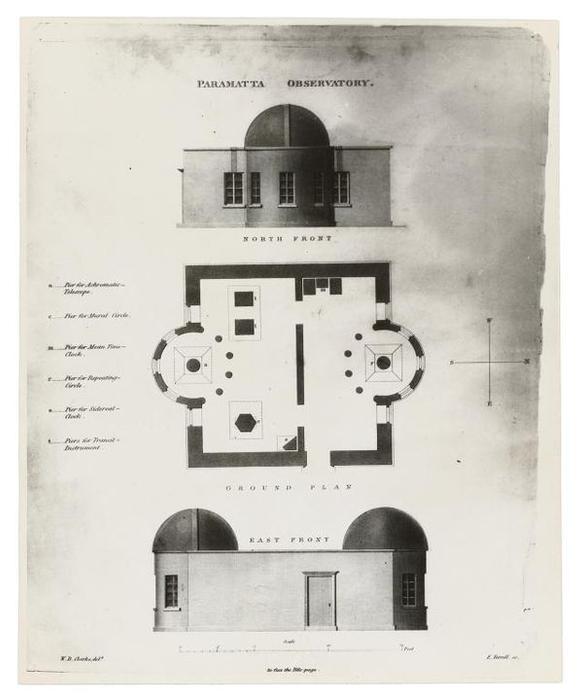
Afternoon saw Byron Soulsby describing the art of lunar crater eclipse timings, followed by two ASNSW members, Richard Jaworski (Double Star Section) talking on double star measurement with very simple equipment, an interesting topic, and Andrew James on the work of the two Thomas Brisbane employees John Dunlop and Charles Rümker – a famous rivalry between two early astronomers working at colonial Parramatta. I found this interesting as I plan to examine the lunar features that commemorate Rümker and Brisbane - Dunlop (the hardest worker perhaps) having “missed out” on a lunar memorial.

Though the Sydney City Skywatchers is a smaller astronomical society, they were well represented at NACAA, with four members attending including president Michael Chapman, one speaker (Alan) and one poster presentation (the writer): an excellent outing.


Similar posts:


About

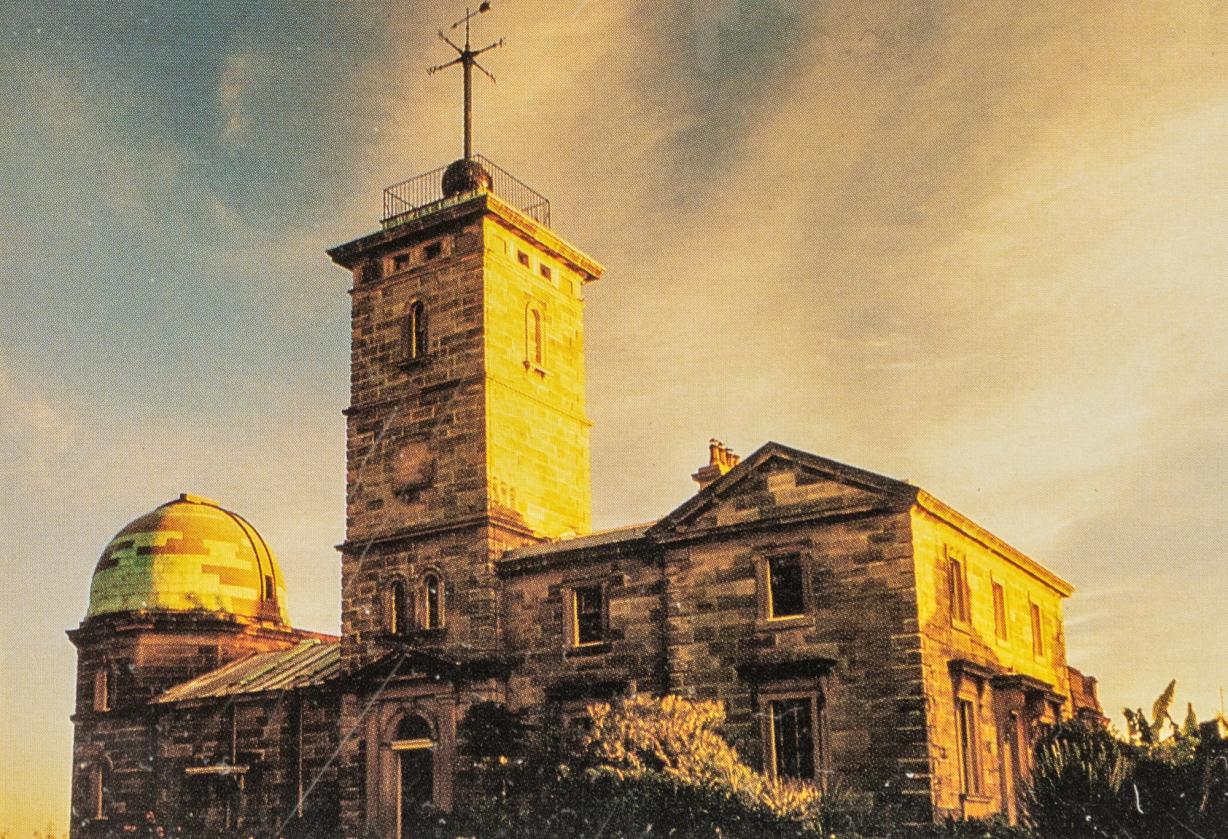
Observations is run by the staff of Sydney Observatory located at Observatory Hill, The Rocks, in Sydney, Australia.

This site is for discussion purposes only and does not represent the official views of Sydney Observatory. Any views expressed on this website are those of the individual post author only. Sydney Observatory accepts no liability for the content of this site.

Please direct any correspondence to sebc [at] phm.gov.au.