





Finding south using the Southern Cross

Finding south using the Southern Cross

Published by Nick Lomb on January 23, 2013 9 Comments

finding south

Two methods of finding south using the Southern Cross. Drawing Nick Lomb

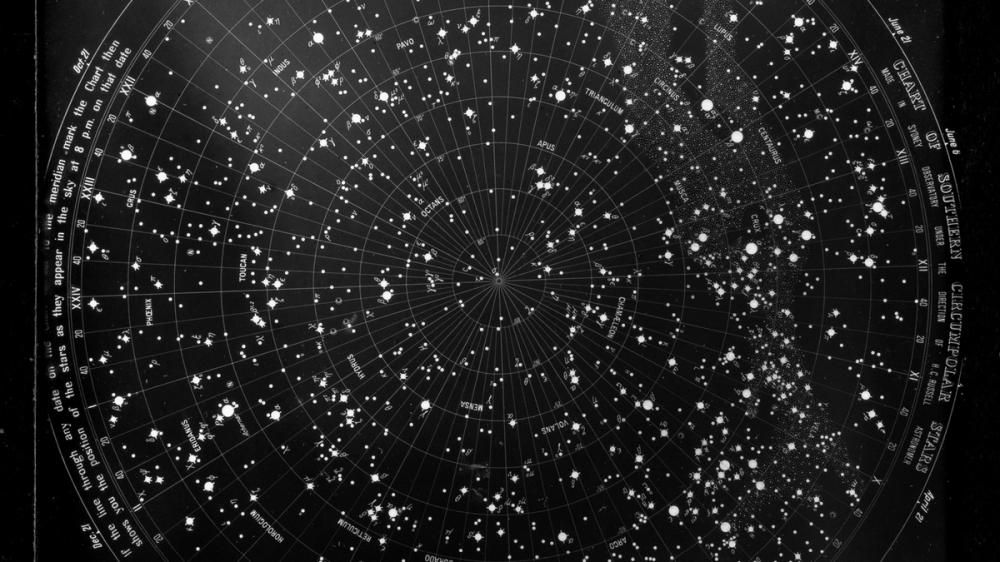
In the Southern Hemisphere we are fortunate in being able to enjoy a view of the bright stars that form the Southern Cross. They are also useful for they can provide a calendar, a clock as well as indicators for finding south.

On this blog we have looked at finding south using the Southern Cross previously, but the drawing included with the post only included one of the two main methods for doing so. A number of people commented that they prefer the second method involving the two pointers. Hence here we discuss both methods and they are both shown on the drawing above.

How do you find south? The first step is to identify the Southern Cross – it is a compact group of bright stars close together in the sky with the two pointer stars always pointing to them from nearby. Note that the Cross, known to astronomers by its Latin name of Crux, rotates in the sky during a night so that it can be found at different seasons and at different times low in the south, in the south-east, high in the south or in the south-west.

Method 1: Extend the main axis of the Cross from and in the direction of its brightest star by four and a half times its length (the span of the main axis of the Cross is approximately 6° while the distance from its brightest star to the South Celestial Pole is approximately 27°). You have now reached the South Celestial Pole – the point about which the Cross and all stars turn in the sky. From the Pole drop a line straight down to the horizon – that is south.

Method 2: Draw a line perpendicular to the line joining the two stars of the pointers and about halfway between them. Where that line meets the line formed by the two most widely separated stars in the Southern Cross is the south point in the sky (the South Celestial Pole). From the Pole drop a line straight down to the horizon – that is south.

It is worth practicing these methods from your backyard as knowing directions would be essential if you were ever lost at night in the bush or in a small boat at sea!

Leave a Reply

9 Responses to “Finding south using the Southern Cross”

  1. January 26, 2013 at 10:25 am, Andrew James said:

    I read all these methods here, but the most obvious one that is missing is simply drawing a line between Beta Centauri (Hadar) and Achernar, and dividing it by two.

    You can also use the half distance between Alpha Triangulum Australis (Atria) and the LMC or between Beta Hydrus and Beta Chamaeleontis.

    Yet another, when Achernar is too close to the southern horizon, is to use Epsilon Carinae (at the bottom of the False Cross) and Alpha Pavonis (named Peacock or humorously Pavlova), whose line is similarly divided in half.

    Actually, Hadar , Achernar, Epsilon Car and Peacock form a celestial cross, whose centre is always the south celestial pole. No matter what time of night or part of the year, at least two of these stars can be seen. An isosceles triangle, with the place of the pole between any of the two selected stars, is always at about 90 degrees.

    All of these work from latitudes of Sydney, -34 degrees, and south of it, finds the south celestial pole.

    You can read of finding directions from an Australian perspective in Harley Wood’s “Elementary Astronomy for Service Use” at my Southern Astronomical Delights website; http://www.southastrodel.com/Page040.htm

    Reply

  2. January 23, 2013 at 7:25 pm, Daniel Moszkowicz said:

    I find it amazing that someone with the ‘full official title’ of ‘curator of astronomy, timekeeping, navigation, meteorology, surveying and the history of Sydney Observatory’, with over 30 years of experience at Sydney Observatory — was NOT aware of Herr Fischer’s method!?

    Are you being modest Mr. Lomb, or have you been using your time with the equipment for more nefarious activities?

    Cheers,
    Daniel Moszkowicz

    Reply

    • January 24, 2013 at 10:58 am, Nick Lomb said:

      Hello Daniel. The above post presents two well-known methods of finding south using the Southern Cross. It is suitable for use in highly light-polluted areas like Sydney and by people who do not have a detailed knowledge of the sky. Daniel Fischer kindly shared another method that may be best suited to darker conditions and for use by people with some familiarity with the sky. Now readers have a choice of methods, which is great.

      Reply

      • January 26, 2013 at 4:25 pm, Daniel Moszkowicz said:

        Hello Mr. Lomb,

        I understand all that, and in fact understand that you not only rectified Herr Fischer’s own calculations, but also found it appropriate to explain the ‘cumbersome’ nature of his method — making the inference that the Sydney Observatory wants to be accessible to all, and hence the selection of your more easily understood method being the best decision to that end. A method I personally found easily understandable, in fact.

        In conclusion; I understand that readers do indeed have a selection to choose from, (an ever-increasing one thanks to Andrew James) but what I don’t understand since you haven’t answered my question, is how you weren’t aware of Herr Fischer’s method, given your master status on Observatory Hill?

        Cheers,
        Daniel Moszkowicz

        Reply

        • January 27, 2013 at 11:22 am, Andrew James said:

          > You are being a little unfair and harsh here. I have been an experienced lecturer on astronomy for many years and I have never heard of “Herr Fischer’s method” either. Many countries often have unique different methods and perspectives on finding south. Also from Namibia, which is much closer to the equator, using Crux to find south celestial pole year round is not very good because it is not circumpolar.
          I can understand why using stars closer to the south celestial pole would be desirable because they would be truly circumpolar. In a city like Sydney, we are lucky to see 2nd or 3rd magnitude stars, but the stars by the method you elude are quite invisible.
          Extensive light pollution in the central city of Sydney is just atrocious, and is now especially poor where Sydney Observatory is located, you are often lucky to see a few dozen stars. (It is better than say, London, where you can’t even see the bright planets!) Most observers living is Sydney have to travelon average fifty or sixty kilometres to even get to dark skies to see 6th magnitude, and over one hundred kilometres to seeing the lower 6.5 magnitude. It is certainly not like the killer dark skies where you are so luckily observing!
          I’ll note here that if you were seriously lost in a city, I have to admit finding south is not really important. There are so many other urban things to use, that doing so would be plainly inane. If you were out in the ‘bush’ such knowledge is certainly necessary, and this even today, could be a matter of life and death – say in a desert region.
          If some method is to be used it must be memorable to the novice, easy to remember, and universally accepted. Being lost a night I would think that Crux is the best home plate for such methods, which in Australia has been used from the early 19th Century to today. (It appears on the Australian flag, so everyone knows about it!) I know of about twelve methods in finding south by the stars, but IMO, using Crux’s long axis is the best of all.

          As a general suggestion too. Kinder word will net you more honey than criticism. Just saying.

          Reply

          • January 31, 2013 at 12:08 am, Daniel Moszkowicz said:

            Hi Andrew James,

            Since your reply is evidently aimed at me I will take the time to respond suitably.

            Is it unkind to ask questions of public figures, nowadays?

            I don’t disagree that kind words may harvest kindness in reply, however my question of Master Lomb was, and is, a legitimate one. Therefore, what you are likely in disagreement about, or what more accurately has forced you into bat for Master Lomb — is the tone of my questioning, going so far as to present a suggestion of how I might become more like the bee — the humble Apoidea.

            Please understand that I am not here necessarily to make friends and clearly if you were to make the customary search of my name through any such internet engine, you would find that I trade in the generic ‘lolz’ or my ‘Ha-ha!’ brand commodity when on these cyber adventures; something I have so far patiently resisted to make an answer to my initial question more forthcoming.

            That you have NOT heard of Herr Fischer’s (I note your regard in setting it into quotation) method does not allay my concern for Master Lomb’s activities at the pre-eminent observatory in Sydney. To be an “experienced lecturer on astronomy for many years” hardly measures up to his mastership, and whilst you make an interesting case for light pollution in Sydney and the irony of not needing the stars if lost in the City, you clearly stumble over “home plate” as being Australian, when Our National Pastime is cricket and therefore more appropriately the end of the wicket which faced the first ball of the first Innings as that of being ‘home’ safety.

            In addition; we both agree that such knowledge and the confidence to use it, is necessary for the lost hoping to find safety in the Bush, as is the understanding that your “killer dark skies” allows one to find South using any method.

            Which makes the conclusion an easy one to find and raise for scrutiny when in agreement that this thread would have served its purpose in presenting the average and novice astronomer an uncomplicated method for finding South in the City.

            Ha-ha!

            Cheers,
            Daniel Moszkowicz. The Troll-King of Chatsitea within the Theatre Cordillera. >

  3. January 23, 2013 at 4:08 pm, Daniel Fischer said:

    O.k., but doubling Alpha Mus / Beta Cha almost does it: ~70°S & 80°S / 80°S & 90°S. An equilateral triangle with the LMC and the SMC should also work well in principle, but their low surface brightness doesn’t like light pollution as I’ve now found out.

    “I hope that you succeeded in observing the total eclipse in November” – what, there was an eclipse? :-) Well, I succeeded in the sense that my planned wide-field views of sky color effects actually came out nicely, only with a certain corona lacking in the middle …

    Reply

  4. January 23, 2013 at 3:51 pm, Nick Lomb said:

    Hello Daniel. That’s a most interesting method that I have not previously come across. Thank you for sharing it. At the same time it maybe a little cumbersome for people who are not completely familiar with the sky. Also the span from Gamma Mus to Beta Cha is 7°13′ while the distance from Beta Cha to the pole is 10°43′ so the extension to the pole should be 1½ times the span from Gamma Mus to Beta Cha.

    I hope that you succeeded in observing the total eclipse in November.

    Reply

  5. January 23, 2013 at 2:41 pm, Daniel Fischer said:

    A much more precise yet easy method to get from Crux to the pole I was once taught in Namibia (by a fellow German amateur astronomer) works like this: use Crux to locate similarly small and obvious Musca south of it. Then extend the line Alpha / Gamma Mus (which kind of continues the long ‘bar’ of the Cross) which points you to the isolated star Beta Cha some distance away. Finally take the line Gamma Mus / Beta Cha and double it: you hit the South pole pretty precisely. I often practice that trick in planetaria as I don’t come to the Southern hemisphere that often (though I visited your observatory last November) …

    Reply

About

The 'Observations' blog is run by the staff of Sydney Observatory which is located at Observatory Hill, The Rocks, in Sydney, Australia.

This site is for discussion purposes only and does not represent the official views of Sydney Observatory. Any views expressed on this website are those of the individual post author only. Sydney Observatory accepts no liability for the content of this site.

Please direct any correspondence about the content of the blog to:
observatory [at] phm.gov.au
and about web matters to:
web [at] phm.gov.au.


Search