






September 2012 night sky guide podcast, transcript and sky chart

September 2012 night sky guide podcast, transcript and sky chart

Published by irma on August 31, 2012 No Comments

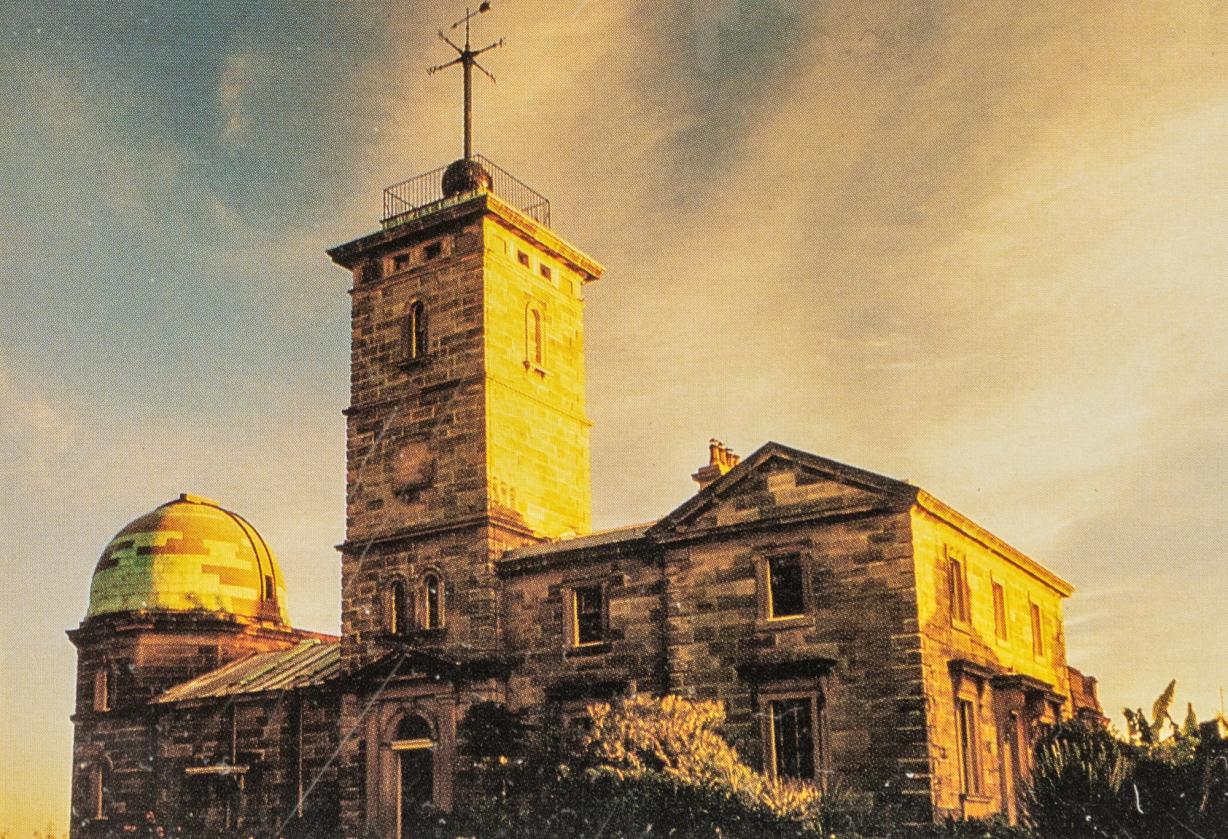
To help you learn about the southern night sky, Sydney Observatory provides an audio guide/podcast, transcript of that audio, and a sky map or chart each month. This month’s guide is presented by Geoffrey Wyatt, Sydney Observatory’s Senior Astronomy Educator.

Geoff fascinates us with his guide to the stars and constellations to look out for in September and also with insight into how astronomy was important to the ancient people of Mesopotamia, Greece and Rome. And you’ll find out what ‘Zuben Elgenubi’, ‘Zuben Eschamali’ and ‘Zuben Elakrab’ mean in Arabic….

Listen to the September 2012 night sky guide audio, or read the transcript below.

HEAR THE AUDIO
You can subscribe with iTunes or upload the (38 mins 03 secs) audio to your iPod or mp3 player, or listen to it on your computer.

SEE THE SKY CHART
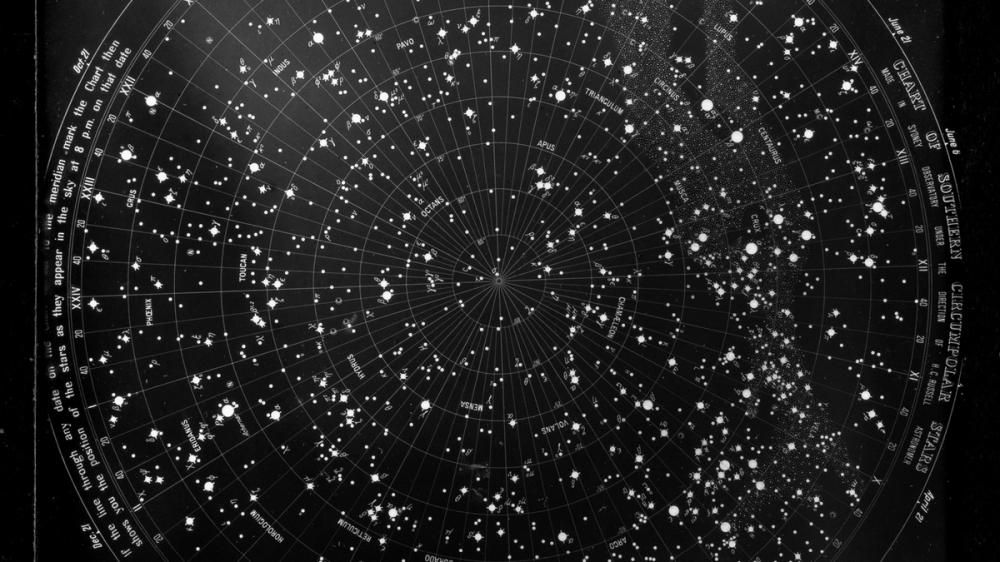
We provide an embedded sky map (below) and a September 2012 night sky chart (PDF) which shows the stars, constellations and planets visible in the night sky from anywhere in Australia. To view PDF star charts you will need to download and install Adobe Acrobat Reader if it’s not on your computer already.

BUY THE BOOK
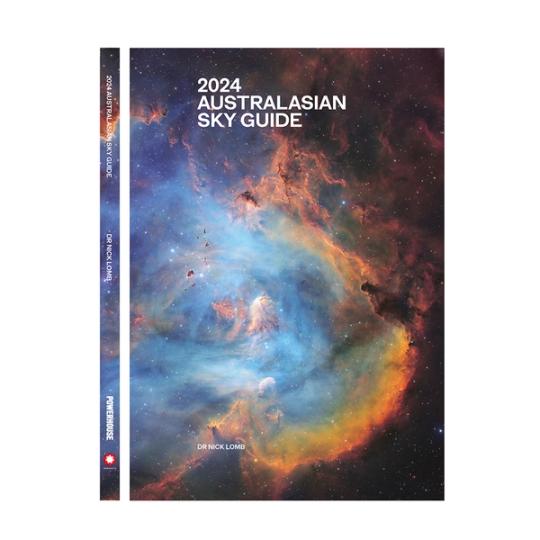
Our annual book, ‘The 2012 Australasian sky guide’, by Dr Nick Lomb has more information and star maps for months from December 2011 until December 2012 inclusive (or wait till November when you can purchase the 2013 book), plus information about the Sun, twilight, the Moon and tides, and a host of other fascinating astronomical information. You can purchase it ($16.95) at Sydney Observatory and Powerhouse Museum shops or other good bookshops, or online through Powerhouse Publishing (additional packing/postage costs apply). ‘The 2013 Australasian sky guide’ is expected to be available in November.

READ THE TRANSCRIPT (after the jump)

Transcript of the September 2012 monthly sky guide audio

Hello. I’m Geoffrey Wyatt, Senior Astronomy Educator here at Sydney Observatory. I’m going to be talking to you about what’s visible in the seventh month of the old Roman calendar before the reform of Julius Caesar in 46 BC, and that is, of course, the month of September. Hold on. September…. seventh month? Yes, that’s right. Things got repositioned just a little bit, and now September is the ninth month. To help you with this tour of the night sky, you need a printed copy of the sky guide map or the book itself, ‘The Australasian Sky Guide’ by Dr Nick Lomb. What we want you to do first of all is wait for an hour or so until after sunset so it’s nice and dark.

I want you to get to as high a position as you possibly can so you’ve got a clear view of all four cardinal directions north, east, south, and west. If you’re in a bit of a valley or up against the neighbour’s house or tree, you are going to lose a significant amount of what we’re going to be talking about, so wherever possible, please go to somewhere nice and high with a clear view all the way around.

What we’re going to do for our tour of September is start by looking about 60 degrees up from the western horizon. West is fairly easy because at this time of the year, we have the equinox, so the Sun is setting fairly close to due west for most of the month.

Sixty degrees up. How do you measure 60 degrees? Well, of course, directly overhead is 90 degrees from the horizon. Halfway up would be 45. But 60? Surprisingly, most of us are really, really bad at estimating angles. You’ll find that most people underestimate severely, so we need something to help us find our way around.

You can actually use your own body to help you find your way around the night sky and measure certain angles. What we’re going to do is hold out your hand at arm’s length and hold up a pinkie against the sky. The typical pinkie, regardless of your age or size because it depends on the ratio of your body parts, covers about one degree or twice the width of a full Moon. If you clench your fist at arm’s length, that’s about 10 degrees. And if you stretch your fingers out, from pinkie to thumb is about 20 degrees.

We’ve started west. We’re looking over that direction and we want to go 60 degrees above the horizon. Quite simply, it’s three handspans straight up.

What you’re going to do is come to the third of the four Royal Stars. This is an intriguing idea. It dates back many, many thousands of years to that great region in the world, the cradle of civilization, as it’s been referred to, Mesopotamia, between the rivers of the Tigris and the Euphrates.

One of the most enduring uses of the stars has been as some form of calendar to mark the passing of the year. Thousands of years ago, we’re talking 4000 to 5000 years ago, people in the Euphrates region used four bright stars close to the ecliptic – I’ll explain about the ecliptic as we go to measure the main points, now the equinoxes and the solstice.

The star we’re looking for here, 60 degrees above the western horizon, was the third of the four Royal Stars. It’s a red supergiant. It’s the 15th brightest star in the night sky and the brightest star in the constellation of Scorpius. Its name is Antares. Antares is quite a spectacular star. It’s about 800 times the diameter of the Sun. Yes, it’s enormously big. It’s about 600 light years away.

I suppose I should explain a light year. A light year is a unit of measurement that we use in astronomy. You and I, of course, are used to using millimetres and metres and kilometres, but the Universe is actually pretty big. You can’t use ‘kilometres’ so we use the term a ‘light year’. It’s simply the distance that light travels in the vacuum of space in one year.

Light travels at roughly 300,000 kilometres per second, so multiply that by 60 seconds in a minute, 60 minutes in an hour, 24 hours in a day, and of course, on average, 365 and a quarter days per year. You’ll end up with the distance that light travels. It’s actually a fairly big number. 600 light years away – for you and me, that’s huge. In astronomical terms, however, it’s actually reasonably close.

This star, Antares, it means ‘rival to Mars’. You see, from here, occasionally, when the planet Mars slides past, as we look at it they look remarkably similar. So, its name has come from ‘anti-Ares,’ or rival to the planet Mars, or ‘Ares’ as it was in Greek.

This star not only marks the position of the autumnal equinox thousands of years ago…. but I’ve got to stress, no longer. You see, the Earth does a 26,000-year wobble on its axis, so that point is no longer near this star. This star is bright. It’s easy to see. It’s golden-orange-reddish, which means it’s coming towards the end of its life. It marks the heart of a small but nasty animal.

Now, throughout this podcast, I’ll refer to several constellations which are simply regions of the sky. It’s best to think of them as something like suburbs in the sky. Most of them are enormously difficult to see. You need not only a stunning imagination, but I think you need some pictorial guide to go with you. Hence, that’s why we recommend you have the monthly sky guide or ‘The Australasian Sky Guide’ by Dr Nick Lomb.

This particular star, Antares, is the heart of this small animal, as I’ve mentioned. I think it’s one of the few that actually looks like what it’s supposed to be. Look carefully. You’ll see the red heart. On either side there’s a dimmer star. Just drop down below those stars towards the west just a little bit and you’ll see three to four stars in a perpendicular line to the three that we’ve just mentioned. That represents the head and part of the claws.

Come back up through that red star, Antares, and you’ll see a big curved line or hook of stars. What you’re seeing is not only the body but the long, curved tail that ends in a sting. It really is, I think, perhaps, apart from the Southern Cross, the easiest of all the constellations to spot, and it is a very famous one.

There’s a great story going with it, too, but the problem is, it’s like anything…. If you pass a story down from one generation to the next, it’s going to change, so you’ll find there are many different versions of some of the stories I mentioned. Please don’t worry over it too much. Just jump onto your favourite website or your favorite book and you’ll see that there are different versions. We no longer really know which one is correct one, if there is a correct version.

The story I like relates to another constellation that we’ll see later in the year, and that is Orion. There was an idea that there was a very handsome man by the name of Orion who was a very powerful, mighty hunter. As a result, he used to hang around with Artemis, the goddess of the hunt. He got a little bit, well, ‘brash’ I suppose you’d have to say, and claimed that he could kill any animal on the planet. This displeased Artemis somewhat, and she created the giant scorpion.

The two then had an incredible battle, so fierce that even Zeus, king of the gods, stopped what he was doing and watched the battle. Ultimately, Orion was killed. Zeus placed Scorpius in the sky for all to see, but Artemis took pity on Orion and placed his body in the sky on exactly the opposite side of the sky from the scorpion, so that the two could never come together and fight again. As I mentioned, there are different versions of that, but that’s one of the more simple ones.

Now that we’ve seen Scorpius, and it is, of course, the scorpion, we’re actually going to go back down towards the west just a little bit. The reason we’ve done this, instead of starting here and then going back up, is because the next few stars we’re going to look at are actually rather faint. But also, they used to be part of the constellation of Scorpius.

Most of the constellations that people are familiar with are the zodiacs, which simple means ‘the circle of the animals’. All but one of them were created thousands of years ago in, again, the area of Mesopotamia. But a little over 2000 years ago, the Romans around the time of Julius Caesar started talking about the group of stars that used to belong to Scorpius and were part of the claws, and broke them off to form a set of scales.

This is the only zodiac constellation that’s not a living creature. It’s the only zodiac that is not from Mesopotamia. Why are we looking at it? Well, it’s a zodiac constellation, which means, of course, that the Sun, the Moon, and the planets throughout the year will drift through this part of the sky. What I love about it is the names that we see.

What’s happened in astronomy is the stories have not only been passed down from generation to generation, but from culture to culture. What we have is a rich mix of cultural astronomy. Many of the names that we use can be traced back to Arabic origins, again, from the area of Mesopotamia.

The three stars that I want you to try and find in Libra are Zuben Elgenubi, Zuben Eschemali, and Zuben Elakrab. Now, I’m pretty sure I haven’t pronounced those correctly, but that’s all right because that’s what’s been going on for years and years and years. The pronunciations have changed.

These are very old Arabic words which mean these stars of Libra used to belong to Scorpius. ‘Zuben’ is an old Arabic word which means ‘scorpion’. So ‘Zuben Elgenubi’ is simply the ‘southern claw of the scorpion’. ‘Zuben Eschamali’ is the ‘northern claw of the scorpion’, and ‘Zuben Elakrab’ simply means ‘scorpion’s claw’.

That’s the constellation of Libra, the Scales. From Libra, go back up so we pass through Scorpius once more. We’ve had Libra getting quite low in the west. Next one up is Scorpius. Now we’re going to go almost high overhead, and we have another one of these zodiac constellations. This one is quite famous. It is, of course, Sagittarius, half-man, half-horse.

Have you got your map? Are you looking carefully? Join the dots, let your imagination go wild, and look for a half-man, half-horse holding a bow and arrow, aiming his arrow at the heart of the scorpion. I’ll give you five seconds to see it.

Actually, I don’t think it matters how long I give you to see it. It’s enormously difficult to see a half-man, half-horse here, and as a result, most people don’t even try. But what you can see high overhead at this time of year is a group of stars that looks a lot like a teapot. Yes, an old fashioned teapot. Those of you who are Sagittarius, according to the time of your birth, well perhaps in future it’ll be demoted or changed, whatever, to ‘You’re a teapot’.

Hopefully not, because these stories have been around already many thousands of years and I’m sure they’ll be around a lot longer. The interesting thing about Sagittarius is it sits very close to what we see as the heart of the Milky Way galaxy, Via Lactea, ‘by milk’. If you’re away from the city at this time of year, and there’s no Moon and you look up, you’ll see the best part of the Milky Way.

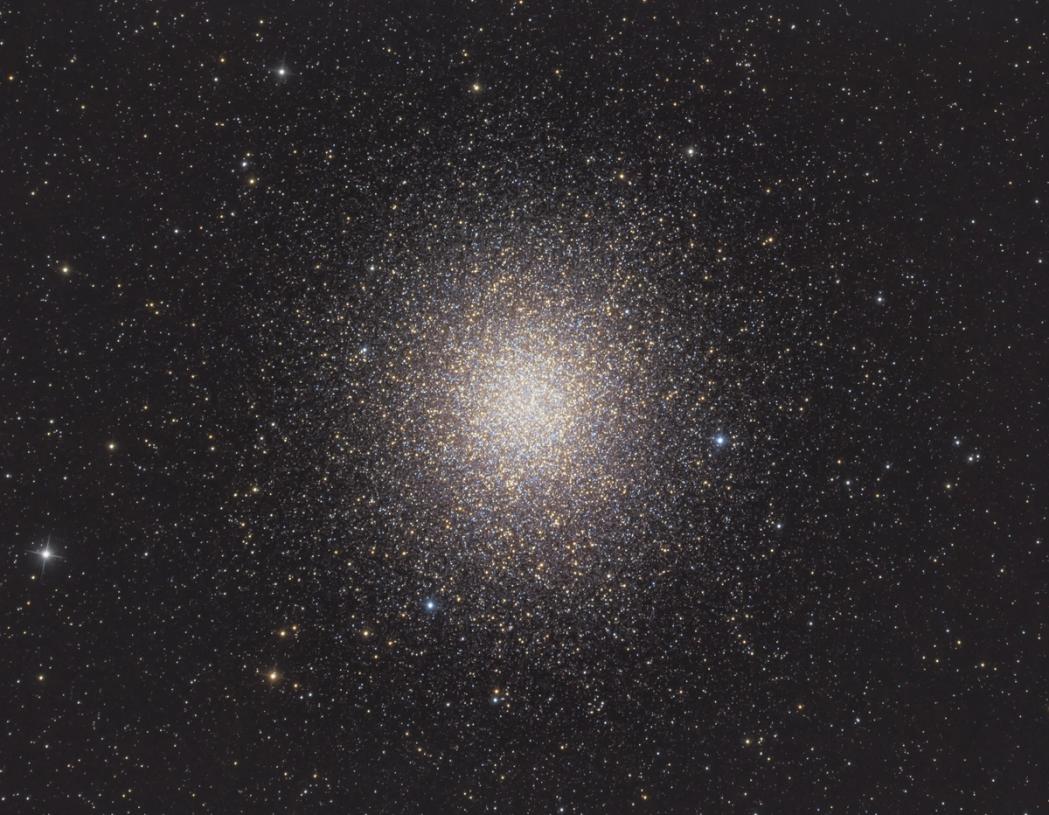
It is our family of stars, several hundred thousand million of them, roughly 100,000 light-years from side to side. The centre of our galaxy, the core, where the action is, is roughly where we’re looking near the spout of the teapot, 26,000 light-years away. What’s there? Something that we’ve given the rather unimaginative name of Sagittarius A* (pronounced ‘Sagittarius Ay Star’). Sagittarius A* is a super massive black hole. It’s mass we estimate to be roughly 4,000,000 times that of the Sun.

If you ever get a galactic pass to go anywhere in our galaxy, I’d strongly recommend that you don’t go towards Sagittarius A*. Once you cross that Schwarzschild radius, or if you like the event horizon, it’s a one way ticket to spaghettification, and therefore oblivion. Kind of cool to think about, but if you get the opportunity, don’t go.

Sagittarius the Archer, let’s continue past that. We’ve now mentioned three zodiac constellations so we’re on a bit of a roll. As we move back across from the zenith, the point overhead, we’re going to be dropping now down towards the east. Rather than sort of bend over backwards, I suggest you just turn around a little bit.

The next constellation we see, sadly, is the second faintest of all zodiac constellations. We’re moving into a part of the sky that for some is known as the sea. The creatures that we’re looking at are all water-based. Actually, they’re quite hard to see. This particular one, half-goat, half-fish, is the second faintest of all the zodiacs. It is Capricornus.

If you look at this region of the sky and, again, you’ll need your map, I think most people can make out a fairly dim, slightly bent or squashed triangle. With lots of imagination, if there are any Trekies out there, you may just be able to pick out the ‘Star Trek’ logo. OK, yes: I’m one of them. Perhaps I’m a little biased and I can say that easily. But, yes, it looks a bit like a bent triangle.

This is what I love about astronomy from the past. The incredible imagination that people use to come up with stories. We should stop and think for a moment why. Why do people make up these bizarre stories? It’s really quite simple. The stars have been used for thousands of years for two, maybe three important purposes. That is as a marker of time, as I mentioned earlier with the four Royal Stars. They’re also used for navigation purposes to find your way around.

Of course, people would sit around the camp fire at night, in the dark, in the past. You’d tell stories to one another as a form of entertainment and to educate children. After all, you didn’t wander around out in the dark too far away from the cave or from the camp fire for fear of being attacked or eaten, or whatever nasty things are waiting for you out in the dark. You’d sit around and you’d look up at the sky. You’d see, let’s have a look…. one, two, three, four…. About 2,000 to 3,000 stars depending on your age and your eyesight. I challenge anybody to memorise 2,000 to 3,000 points of light. If you can do it, well, you’re pretty good. Most of us can’t. If, however, you draw simple dot-to-dot pictures of key groups of stars, and make up stories to go with them, then they have some form of cultural meaning to you and your family and your neighbours. They become far more memorable, and therefore useful.

That’s what people have done. We’re looking at a group of stars that to us now, just looks like a triangle. Albeit slightly bent. The story that goes with this one is that long, long ago, the Gods – now this is obviously a Greek one because we’re going to be talking about Zeus among others – they were all out together when the Earth cracked open, and the demon by the name of Typhon came from hell, and started to attack Zeus.

So fierce was the battle that Zeus’s tendons on his arms and legs were actually torn, and he started to succumb to the attack from Typhon. There was a ram or a goat there by the name of Pan, who had seen this horrible attack, and did the only thing natural. He panicked – which is where the word comes from. He panicked and thought “I’m out of here, and I’m going to change into a fish and jump into a river and swim to safety”.

But halfway through the transformation, he thought, “Well, Zeus is king of the gods. I should help him”. So he played a shrill note on his pan pipes that distracted Typhon long enough for Zeus to recover, and launch a fierce thunderbolt counterattack. So impressed with Pan was Zeus, that he placed him into the sky as he was. Half-goat, half-fish.

The other interesting point about Capricornus is that we should point out that the planet Neptune was discovered in this part of the sky, on September 23, 1846, by the German astronomer Johan Galle.

As we leave Capricornus, just below and sadly snuggled up against it to some extent, we have the next of our zodiac constellations and it’s another one of these water ones, which unfortunately means it’s fairly hard to see. That is Aquarius, the water carrier. This represents the most handsome youth ever seen on the Earth. His name was Ganymede, and he was snatched from the Earth by the eagle Aquila, and carried off to Mount Olympus where he became the water servant, or water carrier for the gods.

You can’t really see too much of Aquarius, I’m afraid, even with our star charts. Basically, you’ve got his shoulders snuggled up against Capricornus, and from there there’s a long line of stars that seems to wind its way across the sky to the nearby bright star and the fourth of our Royal Stars, Fomalhaut. It’s the brightest star in the constellation Piscis Austrinus, the southern fish – but don’t get that confused with Pisces. It’s not the same fish.

There are several of them up there. Aquarius is really, really hard to see. Just follow any line of stars that you can make that seems to wind backwards and forwards, and heads toward this fairly bright star, Fomalhaut. Fomalhaut is a very young star. It’s probably less than about 300 million years old and relatively close. About 25 light-years away. At twice the size of the Sun, it’s pretty big. As I mentioned earlier, it’s the fourth of the four Royal Stars.

They were seen from Mesopotamia thousands of years ago to mark key positions in the sky. Fomalhaut was actually close to a point in the sky marked as the winter solstice. Of course, no longer. It’s really important that we remember that things change, ever so slowly.

Now that we’re looking east, what we do is turn to your left. Which means we’re heading towards the north, and I want you to have a look around the sky, but you will need a clear view, remember. Look for four stars that make up a fairly well defined square. What you’re looking for is the great square of Pegasus, the flying horse. It, too, is a little bit low for us to see at the moment, so we’re not going to hang around here.

We’ll continue a little bit further around towards the north, and we’re going to look for a large, well, it looks like a cross. What you’re looking at is the constellation of Cygnus, the swan. Cygnus is the constellation which is host to the first object that we ever suspected of being a black hole. It was discovered in 1964, and it was designated as Cygnus X-1.

We now know that it’s about 6,000 light-years away, and it has a mass of about nine times that of the Sun. Pretty cool, huh? A black hole only 6,000 light-years away. Cygnus is a very old constellation. Now, again, it’s supposed to be a swan and we’ve all got this lovely idea of what swans look like. They have that long neck, the wings out, if you like, perpendicular. then, of course, trailing behind. But to us, all we can try to see at this time is a cross.

Good luck with that one. But is a very old one, and it’s been around for at least a few thousand years and it’s been mentioned by Claudius Ptolemy in the second century AD as one of the first 48 constellations to be mapped.

As we swing past Cygnus, the swan, we’re going to come across the fifth brightest star in the night sky. That is Vega. Not too far above the north-western horizon, but it should be easily seen because it is so bright. Just like Fomalhaut that I mentioned earlier on, it’s about 25 light-years away. Not too far. Vega is intriguing as the brightest star in Lyra, the harp, because it was the first star after the Sun to have its spectrum photographed.

Astronomers love to take photos, because they produce, if you like, a permanent record. It’s objective, not subjective, and you can take all sorts of wonderful measurements from it. When the art of spectroscopy was developed, of course the first star that was looked at was the Sun. But the next one was Vega, at just 25 light-years away. Intriguingly, Vega was indeed the North Pole star many thousands of years ago, roughly 14,000, I think.

It will be again in another 11,000 to 12,000 years. Don’t hold your breath, but in the future Vega will once again become the North Star.

That change that I’ve mentioned now a few times – it’s called precession of the equinoxes – was discovered by the Greek astronomer Hipparchus, in the second century BC. Really quite an amazing thing to have done more than 22 centuries ago. If you look at Vega, it also highlights something I love about the stars, and that is the multicultural use of them.

Vega, at the moment, about 15 degrees above the north-western horizon, go another 30 degrees or so up. That’s one outstretched hand and one clenched fist, about 30 degrees. Just on the other side of the glow of the Milky Way, as long as you’re away from the city lights and there’s no Moon, you’ll see another fairly bright star. This star is Altair, eye of the eagle. These two stars from the way we look at it, sit on either side of the Milky Way.

There’s been some great stories about it, particularly coming from Asia. In Japan, these stars represent a young prince and princess by the name of Orihime and Hikoboshi, separated by a river in the sky. They are really quite sad that they are apart. But on the 7th of July, yes, we already passed it, but not actually anything happens on that day.

But let’s just imagine that we’re looking at them on the 7th of July. Birds build a bridge over the Milky Way, and Orihime and Hikoboshi can be together for just one day. But it’s not just related to that part of the world.

In China, they’re referred to as Niulang and Zhi nu. They’re also celebrated in Korea and in Vietnam for a very similar story. So think about that. We’ve got stories from Asia. We’ve got stories from the ancient Greeks and the Romans. And, of course, we’ve got these fabulous old Arabic names coming back Mesopotamia. I wonder if there’s any cultural group on this planet that doesn’t have stories about the stars.

After you’ve had a look at Vega in Lyra, the harp, and Altair, the eye of the eagle, Aquila, we’re going to continue back around to the west we’re we first started. Libra, of course, will be a little bit lower and therefore more difficult to see. But I want you to continue around further to the next major group of stars that you want to have a look at, and that is of the mighty Centaur half-man, half-horse.

Did we mention the centaur a few minutes ago? That was Sagittarius. But there’s two. This one, his name is Chiron, and he was the oldest and the wisest of all the centaurs. Sagittarius, that I mentioned earlier on, is a bit of a hot-tempered party animal. Whereas Chiron, the Centaur that we’re now looking for in the south-west, is a very kind, very wise teacher. He was in fact the teacher to Achilles, Hercules, and Jason from the story of Jason and the Argonauts.

It’s a bit hard to see because it’s actually getting quite low in the south-west. But you should be able to see the two brightest stars Alpha and Beta Centauri. These stars are about 30 degrees above the horizon at this point in time. Alpha Centauri, third brightest star in the night sky, is the nearest neighbour to us after the Sun.

So that is, in effect, our next door neighbour. How cool is that? At just 4.3 light years. I mentioned the speed of light earlier on. For those of you that want that in kilometres, you’re talking about 40,000 billion kilometres. Oh deary me, that’s such a big and silly number to use, let’s stick to light-years.

Alpha Centauri is the brighter of the two that we should be able to see in this part of the sky. A little bit lower is the tenth brightest star in the night sky called Beta Centauri. That’s about 350 light years away. Together these two stars are called the Pointers. Why? Well they point out perhaps the most famous of all constellations in the sky and that is the Southern Cross.

The problem is the Southern Cross is only about 14 or thereabout degrees above the horizon at this point in time. Unless you’ve got absolutely spectacular conditions which certainly most of us don’t, you’ve got no chance of seeing it at this time of year unless you get up just before dawn. And even then, it’s going to be hard. So don’t try and find the Southern Cross at this point in time. I think we need to wait several more months.

The two bright stars we’ve had a look at are probably the only easily recognisable stars of Centaurus that we can see at this point in time. So we continue around past the south towards the south-east.

And we’re going to look for the ninth brightest star in the night sky called Achernar. Achernar is the brightest star in the constellation of Eridanus the river, which is a truly amazing constellation because it just winds its way across so much of the sky overhead. Achernar itself is really quite curious, because it’s about 50 percent wider around the equator than over the poles. That make it one of the flattest stars we’ve ever seen.

You see, it spins around 15 times faster than the Sun and is eight times its diameter. So you end up with a very flat bulging around the middle star. Quite curious.

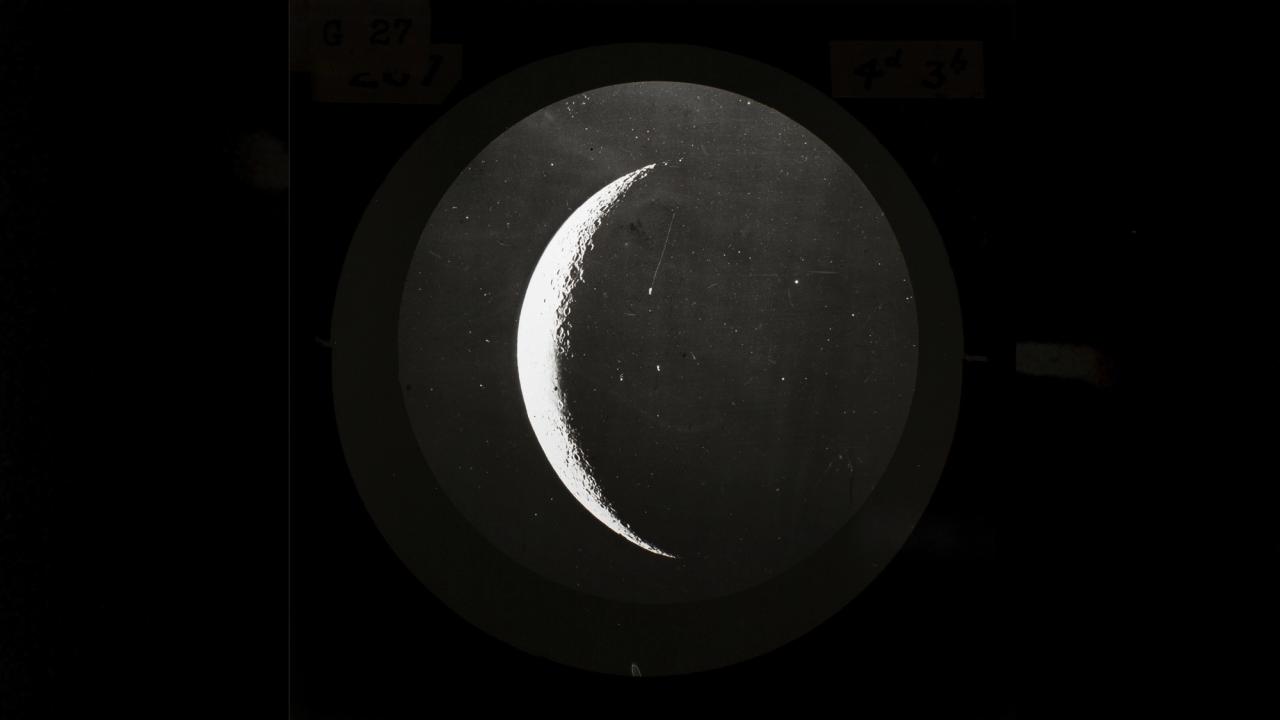
Let’s talk about some of the special events for September 2012. Saturday, 8th September the last quarter Moon will be at 11:15pm. On Sunday, 16th, there will be a new Moon at 12:11pm.

Sunday the 23rd will be the first quarter Moon at 5:41am. Sunday 30th, full Moon at 1:19pm. The spring equinox, meaning equal night, will occur on 23rd September, that’s a Sunday, and that will occur at 12:49am. Remember the equinox is simply when the Sun crosses the celestial equator as we look at it.

And that occurs in the constellation of Virgo, goddess of justice. By the way, the equinox will occur on 23rd September right through until 2020 AD.

Although we didn’t talk about Virgo earlier it is an area of the sky that we can just see after sunset. So you still have got the glow of twilight low in the west. Virgo for this month will actually be host to a few objects.

Although one of them at least is very hard to see. By the end of the month, say for the last week, immediately after sunset, look towards Virgo low in the west and you should be able to see the planet Mercury. However by 6:30pm, it’s only going to be about five degrees above the horizon. So for most of us we’re not going to be able to see that.

But, again, under ideal conditions and if you’ve got a good location you may just catch a glimpse of the fleet-footed messenger to the gods, Mercury. Just above it by about eight degrees will be the brightest star in the constellation of Virgo and that is Spica. But, remember, when anything is close to the ground it gets harder to see and it doesn’t appear as bright.

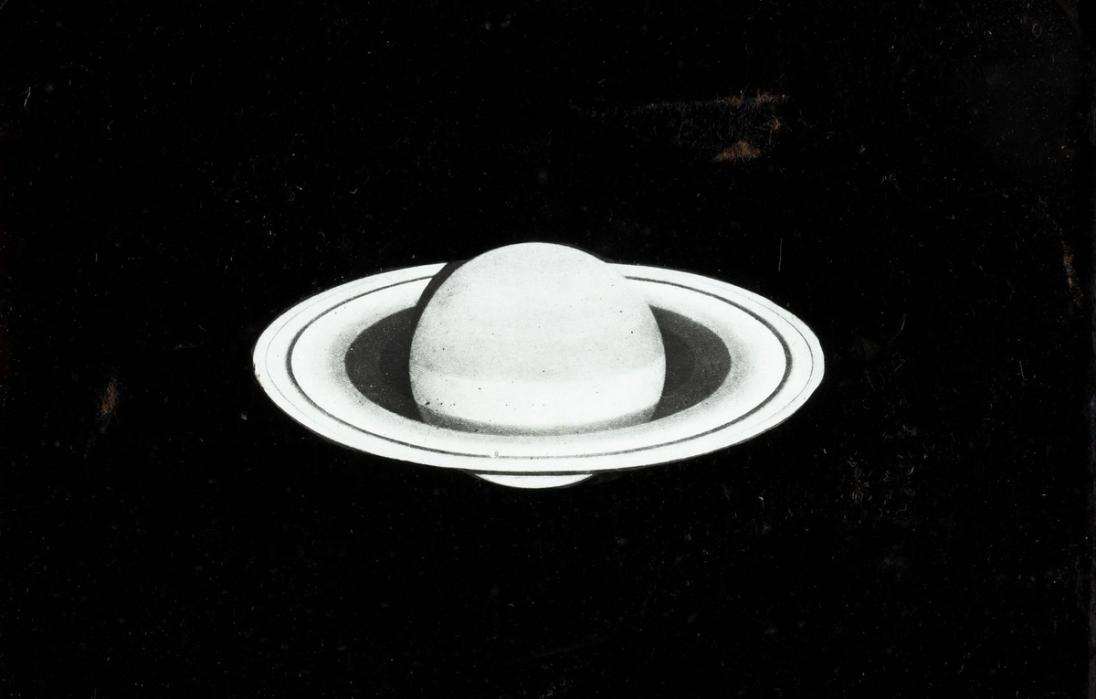
About another 6 degrees up and to the right of Spica will be the planet Saturn. Mars is also in this part of the sky and it’s another 20 degrees up in the constellation of Libra. So there are three not-so-bright planetes aster…. way what? – ‘planetes aster’ – ‘wandering stars’ in the west just after sunset. In the past, before people knew what planets really were, they simply looked like stars that wandered around the sky.

Although they stuck to that imaginary line that I mentioned earlier, the ecliptic. So we have three of them over in the west after sunset, although Mercury is pretty hard to see. Every now and then, the Moon acts pretty much like a pointer by saddling up next to bright stars and planets of interest. And for this month, it actually happens over a couple of days. On the 18th, the Moon is just going to be six degrees below the planet Saturn.

The next day on the 19th, it’s going to be seven degrees below the planet Mars, and on the 20th, it will be six degrees above the planet Mars. So make sure you have a look towards the west on those three days and you may just be able to catch some planets. In the morning we have the incredible bright planet Venus at magnitude -4.2.

Magnitudes are just a scale that we use to indicate how bright something is. The smaller the number the brighter it is. Historically, because we’ve had to tinker with it, we now go into the negatives. So -4.2 magnitude for Venus as we see it is really, really bright. I guarantee if you get up during September and look towards the east you’ll be thinking, “Oh, that’s bright”. That is the planet Venus.

It will start off the month low in the north-east in the morning in the constellation of Gemini, and then move towards the constellation of Cancer the crab, which is the most difficult constellation of them all as far as the Zodiacs are concerned. On the 13th and around 5:00am, the Moon will be about five degrees and to the right of the planet Venus.

So that will be a really great view. The only other planet visible in the morning at the moment will be the planet Jupiter rising after midnight. By early morning it will be in the north in the constellation of Taurus the bull. You can’t go past Taurus without mentioning it just a little. It is perhaps the oldest of all 88 constellations.

It’s the first of the zodiacs as it was made up in Mesopotamia thousands of years ago. It is a great part of the sky to have a look at. Now on the 8th and the 9th, Jupiter will be very close to the Moon. By the way, if anyone is going to South America on the 8th, the Moon will actually occult or block the planet Jupiter.

It will be a great sight, but just a tad far to go for most of us here in Australia. The Moon will also block or occult the planet Mars on the 20th. But, again, this time only visible from South America and from French Polynesia.

Don’t forget, if you’d like to get more information about what’s visible in the night sky, you can purchase a copy of the ‘Australasian Sky Guide’ by Dr Nick Lomb from the Sydney Observatory or the Powerhouse Museum. Or you can buy it online at www.sydneyobservatory.com.au. Click on the bookshop tab at the bottom of the page. The price is $16.95. A little bit more if you’re it online to cover postage and handling.

You can subscribe to these podcasts through iTunes. Just search for Sydney Observatory Monthly Sky Guides. If you search for just Sydney Observatory, you’ll find not only our free monthly sky guides, but also our self-guided walking tour app that for $1.99 will guide you around the Sydney Observatory, the grounds, Observatory Hill overlooking our beautiful Sydney Harbor, onto the bridge, and through the historic Rocks area.

Sydney Observatory is open for booked night visits, which include a visit to our telescope domes and telescope view of the night sky on clear nights. On cloudy nights, we offer a mini planetarium session instead. Sydney Observatory is also open most days from 10am until 5pm. You can visit in the daytime without a booking. It’s free to look around the exhibits in the grounds, but there is a charge for staff-led daytime programs.

Information on all this and more is available at www.sydneyobservatory.com.au. Click on the astronomy tab on the top right, and choose ‘monthly sky guides’ from the left sidebar for the sky guides. My name is Geoffrey Wyatt, I’m the Senior Astronomy Educator at Sydney Observatory and I hope you’ve enjoyed your tour of the September 2012 night sky.

Leave a Reply

About

The 'Observations' blog is run by the staff of Sydney Observatory which is located at Observatory Hill, The Rocks, in Sydney, Australia.

This site is for discussion purposes only and does not represent the official views of Sydney Observatory. Any views expressed on this website are those of the individual post author only. Sydney Observatory accepts no liability for the content of this site.

Please direct any correspondence about the content of the blog to:
observatory [at] phm.gov.au
and about web matters to:
web [at] phm.gov.au.


Search