A visit to Mt Stromlo Observatory

A visit to Mt Stromlo Observatory

Published by Nick Lomb on July 18, 2012 No Comments

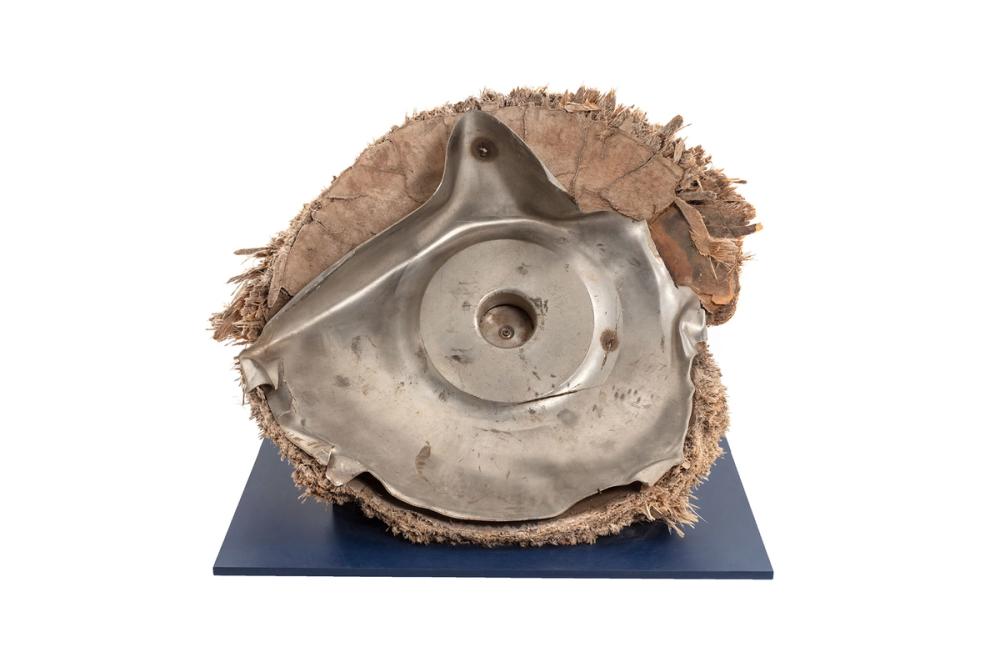
The remains of the Grubb 1_9 metre reflector at Mt Stromlo_Nick Lomb

The ghostly remains of what was once Australia’s largest telescope, the 1.9-metre Grubb Parsons reflector at Mt Stromlo Observatory. Photo Nick Lomb

On 4 June 2012, on the way up to Siding Spring Observatory to see the transit of Venus, our group had the pleasure of a visit to Mt Stromlo Observatory. While the group ate lunch at the Café there, a highly articulate young postgraduate student, who works with Australia’s latest Nobel Laureate Professor Brian Schmidt, gave a most informative talk.

The landscape at the Observatory is dotted with telescopes destroyed in the fire that swept through on 18 January 2003. Some of the domes in which the telescopes were housed survived if they were made of steel while other domes made of aluminium did not. Noting that aluminium has a melting point of 660° C while that of steel is around 1370°C, it is possible to estimate the temperature of the fire. Due to the high temperature the telescopes were all irreparably damaged even if their domes survived relatively intact.

The outside of the 1.9 metre Grubb telescope dome at Mt Stromlo_Nick Lomb

The intact dome of the 1.9-metre Grubb Parsons reflecting telescope. Photo Nick Lomb

One dome that survived is the one housing the remains of the 1.9-metre Grubb Parsons reflecting telescope. This telescope was completed in 1955, but the astronomers found that the mirror was faulty and sent it back to the manufacturer in Britain. When the telescope finally became operational in 1961 it was the largest optical telescope in the country and was used for cutting edge research. Originally, astronomers referred to the telescope as the 74-inch.

Control panel 1_9 metre Grubb telescope

The control panel of the 1.9-metre Grubb Parsons telescope in 1968. Photo Nick Lomb

Visiting the inside of the dome was a sad experience as the shell of the telescope has a ghostly presence. Seeing it brought back memories to me as I was a young Vacation Scholar at Mt Stromlo at the end of the 1960s. One of the tasks for Vacation Scholars was to be night assistants on the telescope. This generally involved sitting at the control desk and operating the controls to move the telescope to the coordinates specified by the astronomer. Pointing was not completely accurate though and once at the specified position according to the dials a search of the area of the sky still had to be undertaken so that the astronomer could sight the object he or she wanted to observe.

Although the loss of the telescopes was most unfortunate by 2003 they were rarely used by the astronomers at Mt Stromlo Observatory as the lights of encroaching new suburbs of Canberra were creating too much sky glow. Instead most of the observing was being made from the Observatory’s Siding Spring site.

The dome of the SkyMapper telescope at Siding Spring Observatory_Nick Lomb

The dome of the SkyMapper telescope at Siding Spring Observatory. Photo Nick Lomb

Insurance payments were inadequate to restore the telescopes. Instead the Observatory has utilised all available funds for the building of a revolutionary new telescope at Siding Spring Observatory called SkyMapper. This is a 1.35-metre reflecting telescope with a wide-angle view of the sky that has been designed as a stand-alone survey telescope. It will continually scan the southern sky in six different colours or wavelengths and send a huge stream of data back to the astronomers at Mt Stromlo. With this data they expect to make many discoveries such as the most distant objects in the Universe and the first stars in our galaxy.

Leave a Reply

About

The 'Observations' blog is run by the staff of Sydney Observatory which is located at Observatory Hill, The Rocks, in Sydney, Australia.

This site is for discussion purposes only and does not represent the official views of Sydney Observatory. Any views expressed on this website are those of the individual post author only. Sydney Observatory accepts no liability for the content of this site.

Please direct any correspondence about the content of the blog to:
observatory [at] phm.gov.au
and about web matters to:
web [at] phm.gov.au.


Search